
Skills Development Emerges as Soft-Power Asset
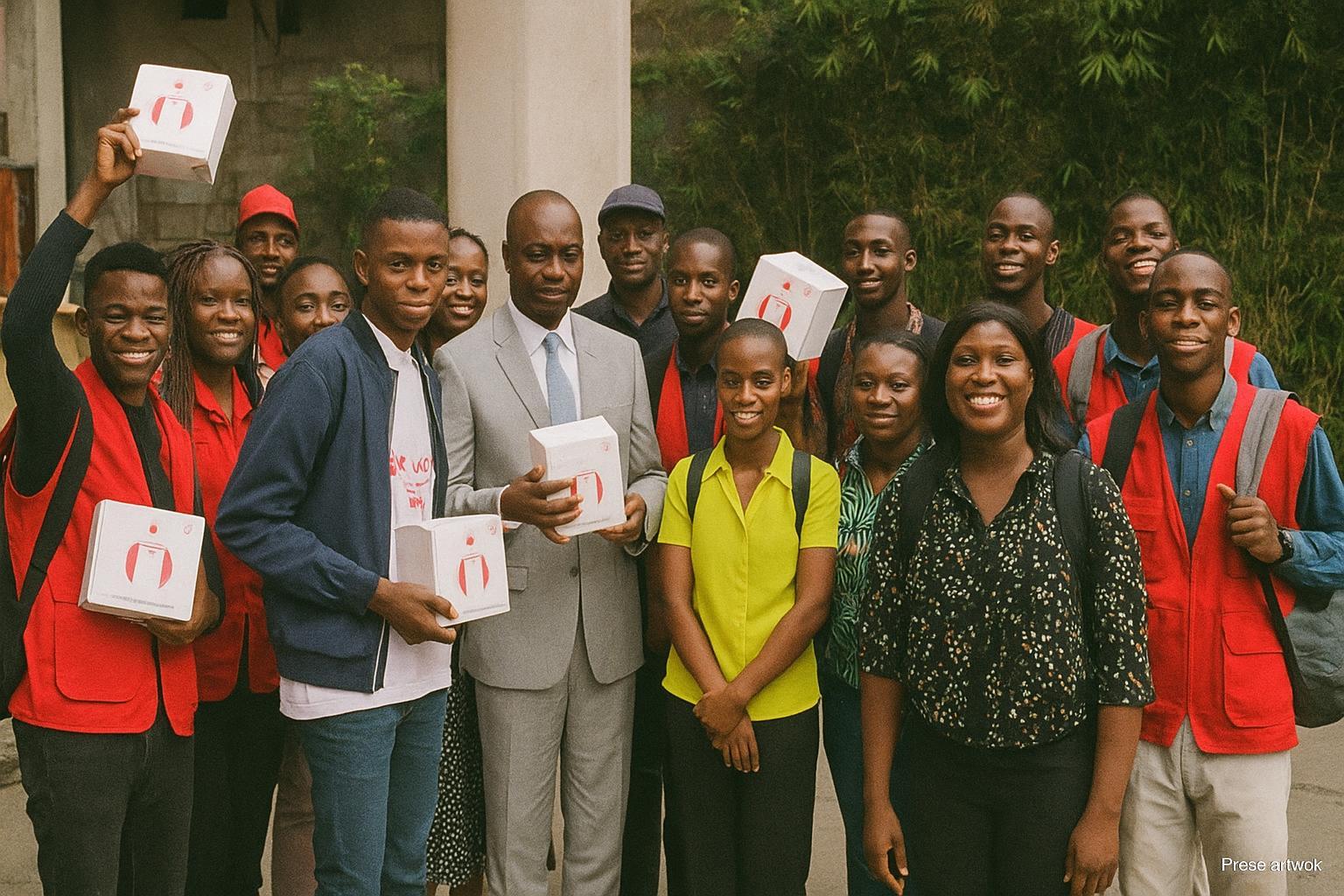
In Pointe-Noire, an Atlantic port city more often cited for hydrocarbons than human capital, twenty-five scholarship holders have traded summer leisure for sales targets. The programme—aptly named “Atelier d’Avenir”—pairs the Pro Social Inter-États Foundation with mobile-network operator Airtel Congo to deliver an intensive marketing internship that, while modest in scale, signals a growing consensus that employability is the new vector of national resilience. Congolese authorities have repeatedly underlined the importance of a ‘compétence economy’, and President Denis Sassou Nguesso’s recent speeches on youth inclusion speak to the political salience of such initiatives.
Pointe-Noire as Micro-Laboratory of Public Policy
Observers of Central African labour dynamics view the port city as a natural testing ground: its diversified informal commerce creates real-time feedback loops for would-be marketers, while its broadband penetration—still below regional averages—offers commercial white space. By embedding trainees in Airtel’s distribution network, the project offers a rare, granular look at consumer behaviour across both urban and peri-urban zones. Government technocrats inside the Ministry of Technical and Professional Education confirm that findings from this pilot will inform the forthcoming national plan for vocational curricula (Ministry communiqué, April 2024).
Corporate Citizenship Meets National Agenda
Airtel’s participation answers growing shareholder pressure to demonstrate environmental, social and governance metrics, yet the partnership also dovetails neatly with Brazzaville’s strategy to attract digitally oriented foreign direct investment. The operator’s 5G-enabled WiFi router—flagship of the trainees’ sales pitch—functions as both revenue driver and symbol of technological leapfrogging. According to the company’s 2024 CSR statement, Airtel intends to expand similar apprenticeships to Ouesso and Dolisie, underscoring how corporate outreach can complement state-led efforts without displacing them.
Foundation Leverages Academic Merit for Social Impact
The selection process, which privileged recent baccalaureate graduates—twenty of the twenty-five participants cleared that academic hurdle—illustrates the Foundation’s bet on scholastic performance as a proxy for adaptability. Orcel Bayonga-Mbondza, the organisation’s resident representative, frames the approach as a ‘return on proximity’, arguing that mentoring tight-knit cohorts generates outsized behavioural change relative to mass training models. His claim finds some empirical backing in the World Bank’s 2022 Congo Jobs Diagnostic, which stresses mentorship as a determinant of post-training employment uptake.
Inter-Ministerial Synergies and Diplomatic Optics
Negotiations slated for early August between the Foundation and the Ministry of Technical and Professional Education aim to secure supplemental scholarships abroad, potentially in francophone business institutes. Such outward mobility, if realised, would serve a dual purpose: building specialised know-how while projecting a narrative of Congo-Brazzaville as a stakeholder in global talent circulation. International partners, including the Agence Française de Développement, have discreetly monitored the initiative, viewing it as a showcase for results-based financing models (AFD briefing note, May 2024).
Economic Diversification and the Youth Dividend
Congo’s macroeconomic recovery, buoyed by prudent fiscal consolidation and steady oil output, still faces the structural headwind of a labour market where nearly two-thirds of workers are informally employed (UNDP Africa Human Development Report 2023). Programmes like the present internship attack the informality conundrum from the demand side, cultivating a cadre conversant in market analytics and customer-centric product design. In doing so, they sharpen the competitive edge of domestic enterprises and align with the African Continental Free Trade Area’s emphasis on service-sector sophistication.
A Sustainable Blueprint or Boutique Experiment?
Critics caution that scaling remains the Achilles’ heel of many pilot projects; twenty-five trainees, no matter how diligent, cannot alone tip the scales of national youth unemployment. Still, the Pointe-Noire cohort offers proof of concept: private capital, civic initiative and ministerial stewardship can co-habit, allocating risks and rewards with relative clarity. If subsequent cohorts replicate the current retention and sales metrics—early data suggest a 30-percent week-on-week growth in router subscriptions—the programme may well convince sceptics that small yet targeted interventions possess macro-economic relevance.
Strategic Takeaways for Regional Diplomacy
For foreign missions following Brazzaville’s development trajectory, the internship illustrates how calibrated public-private alliances can reinforce political stability by addressing the expectations of an increasingly connected youth electorate. Moreover, it positions the Republic of Congo as a pragmatic interlocutor capable of aligning corporate citizenship with national planning, a trait likely to resonate in forthcoming multilateral dialogues on human-capital financing. In the measured words of a senior Central African diplomat stationed in Kinshasa, ‘the Pointe-Noire experiment reminds us that sovereignty in the twenty-first century is equally written in classrooms, boardrooms and sales kiosks’.
