
A watershed COP for Africa
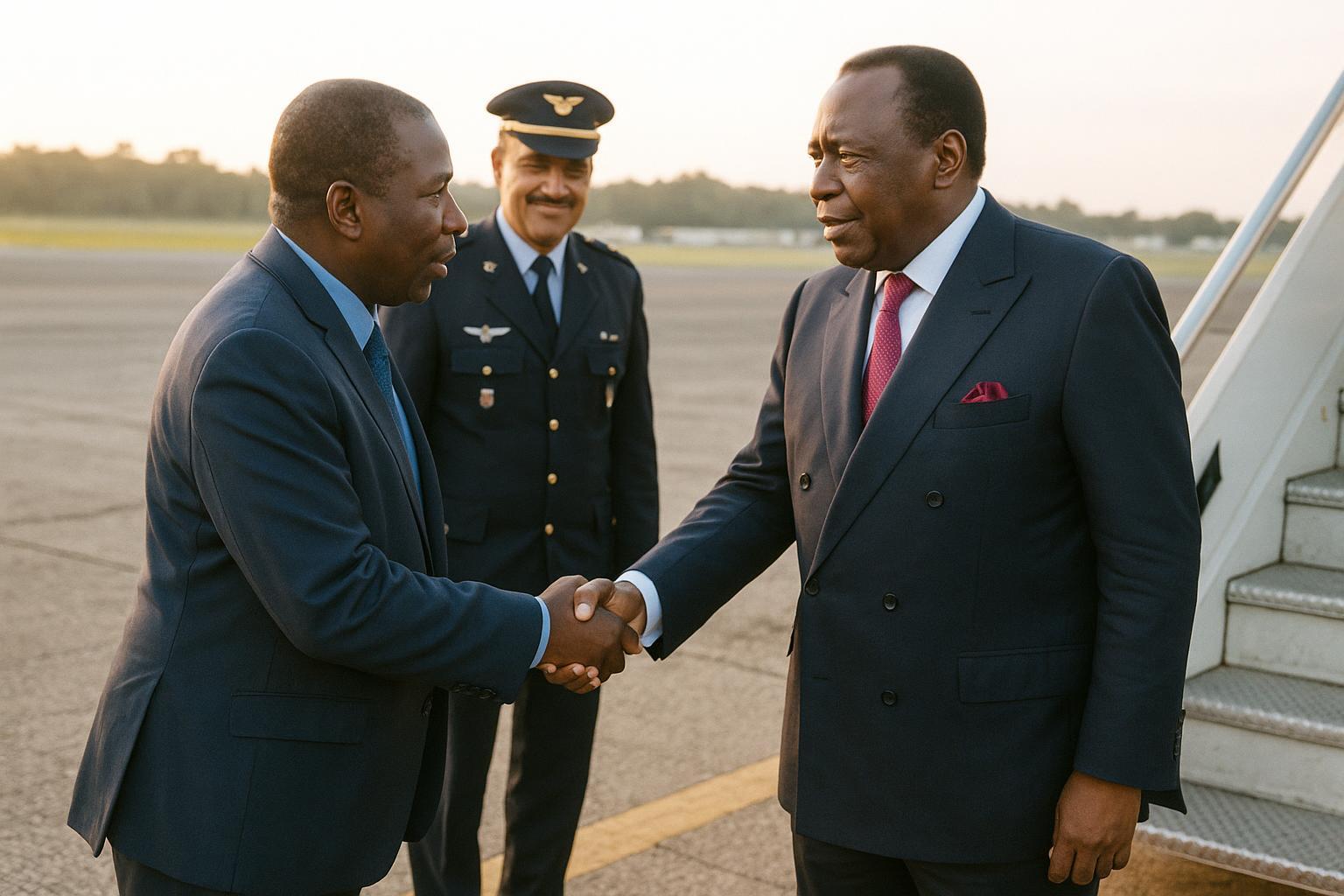
When the Amazonian city of Belém opens its doors to more than one hundred national delegations from 10 to 21 November 2025, the Congolese flag is set to fly high. President Denis Sassou N’Guesso landed on Brazilian soil on 5 November, welcomed by his long-time counterpart Luiz Inácio Lula da Silva, with whom he shares a stated ambition to align tropical-forest nations around a common climate narrative. For Brazzaville the thirtieth Conference of the Parties represents more than an annual ritual; it offers a rare megaphone for an African leader who chairs one of the planet’s greatest carbon sinks.
The timing is significant. COP30 has been billed by the United Nations Framework Convention on Climate Change as the summit that must translate the 2015 Paris Agreement into concrete delivery (UNFCCC, 2024). With global temperatures flirting with the 1.5 °C threshold, African states—responsible for barely 4 % of historic emissions—seek guarantees that their adaptation priorities will be neither postponed nor diluted. Sassou N’Guesso arrives determined, advisers say, to turn rhetorical solidarity into measurable support.
Belém, a strategic stage for Congo
In diplomatic corridors, Congo’s head of state is expected to underscore the notion of “equitable biodiversity services”—a term coined in Brazzaville to describe the under-remunerated climate contribution of the Congo Basin. Stretching across six countries and storing an estimated 30 gigatonnes of carbon (Global Forest Watch, 2023), the basin’s peatlands and rainforests quietly offset a portion of the world’s annual emissions. Yet finance flows remain scant compared with those targeting the Amazon or South-East Asian forests.
Government officials point out that Congo’s share of international climate funding remains below 0.5 % of total flows to developing nations. By convening a high-level side-event with Brazil and Indonesia—the so-called “OPEC of rainforests” advocacy group—Sassou N’Guesso hopes to nudge donors toward a results-based payment mechanism anchored in transparent monitoring. The presidency’s climate envoy, Arlette Soudan-Nonault, insists that such remuneration would “support both conservation and balanced economic diversification” without imposing austerity on local communities.
From Paris to Belém: updating Congo’s NDCs
Under the Paris Agreement every party must present a new or enhanced nationally determined contribution in 2025. Congo’s draft, circulated in July to technical partners, raises the ambition of cutting net greenhouse-gas emissions by 45 % relative to the business-as-usual trajectory by 2035, up from a 20 % pledge submitted in 2020. The roadmap leans on accelerated renewable-energy deployment—particularly run-of-river hydro projects on the Kouilou River—and on scaling the country’s REDD+ programme.
Experts at the African Development Bank believe the target is feasible if paired with an estimated US$5 billion in concessional finance and private capital (AfDB, 2024). Sassou N’Guesso will therefore use the Belém forum to canvass investors for the upcoming “Green Economy Pipeline”, a portfolio that bundles eco-tourism, sustainable timber and carbon-credit ventures. Negotiators hint that Brazzaville may condition parts of its mitigation promise on the predictability of external support, a stance consistent with the principle of common but differentiated responsibilities enshrined in Article 2 of the Paris text.
Finance, technology and equitable transitions
Beyond forests, Congo faces a delicate balancing act: it remains an oil producer while aspiring to leapfrog into a low-carbon economy. The government touts its National Energy Transition Plan, launched in 2023, which earmarks 40 % of generation capacity for renewables by 2040 and foresees flared-gas utilisation dropping to near-zero. COP30 discussions around the Just Energy Transition Partnerships model, first tested in South Africa, interest Brazzaville as a possible template.
Technology transfer likewise occupies Congolese briefs. Officials argue that advanced satellite monitoring, bio-economy know-how and green-hydrogen pilot projects should be made accessible, rather than confined behind intellectual-property walls. In Belém, Sassou N’Guesso is expected to rally African Group negotiators behind a proposal to operationalise the Loss and Damage Fund agreed at COP28, stressing the vulnerability of Congo’s riverine cities to flooding and erosion.
Diplomatic ripples between Brazzaville and Brasília
President Lula’s decision to host COP30 in Pará is widely interpreted as a gesture to highlight rainforest geopolitics. For Sassou N’Guesso the venue also rekindles a personal diplomatic affinity: the two leaders first met in 2007 during South-South cooperation talks and have since coordinated positions in the G77. Sources in the Congolese foreign ministry note that bilateral trade—currently valued at roughly US$120 million—could expand through green commodities and agro-processing ventures.
A joint communiqué, under preparation, will map avenues for scientific collaboration between the Federal University of Pará and Marien Ngouabi University on peatland conservation. Diplomats believe the memorandum could strengthen Congo’s case for UNESCO World Heritage status of its Cuvette peatlands, a move designed to attract research grants while bolstering conservation safeguards.
The legal and economic point
While COP decisions are not legally binding, they shape domestic policy. Congo’s parliament is reviewing a Climate Framework Bill that would enshrine the forthcoming NDC targets and create a national carbon registry compliant with Article 6 market mechanisms. The finance ministry anticipates that verified carbon credits could yield up to US$200 million annually by 2030, funds to be channelled into rural electrification and health infrastructure.
Economists caution, however, that volatility in the voluntary carbon market demands robust governance. Brazzaville has therefore invited the African Union’s African Carbon Markets Initiative to audit its methodologies. According to Minister of Economy Ingrid Olivia Ebouka-Babakas, the objective is “to guarantee investors the highest environmental integrity while ensuring that benefits reach forest-dependent communities”. Such framing places Congo not as a passive aid recipient but as a norm-setter in emerging green-finance architecture.
As COP30 approaches, the Congolese delegation is fine-tuning talking points that weave science, sovereignty and solidarity. If the Belém negotiations deliver on finance and technology, Sassou N’Guesso may well return to Brazzaville with both the moral authority of a forest custodian and the practical tools to transform his nation’s development pathway.
