
A Long-Dormant Network Finds Its Voice
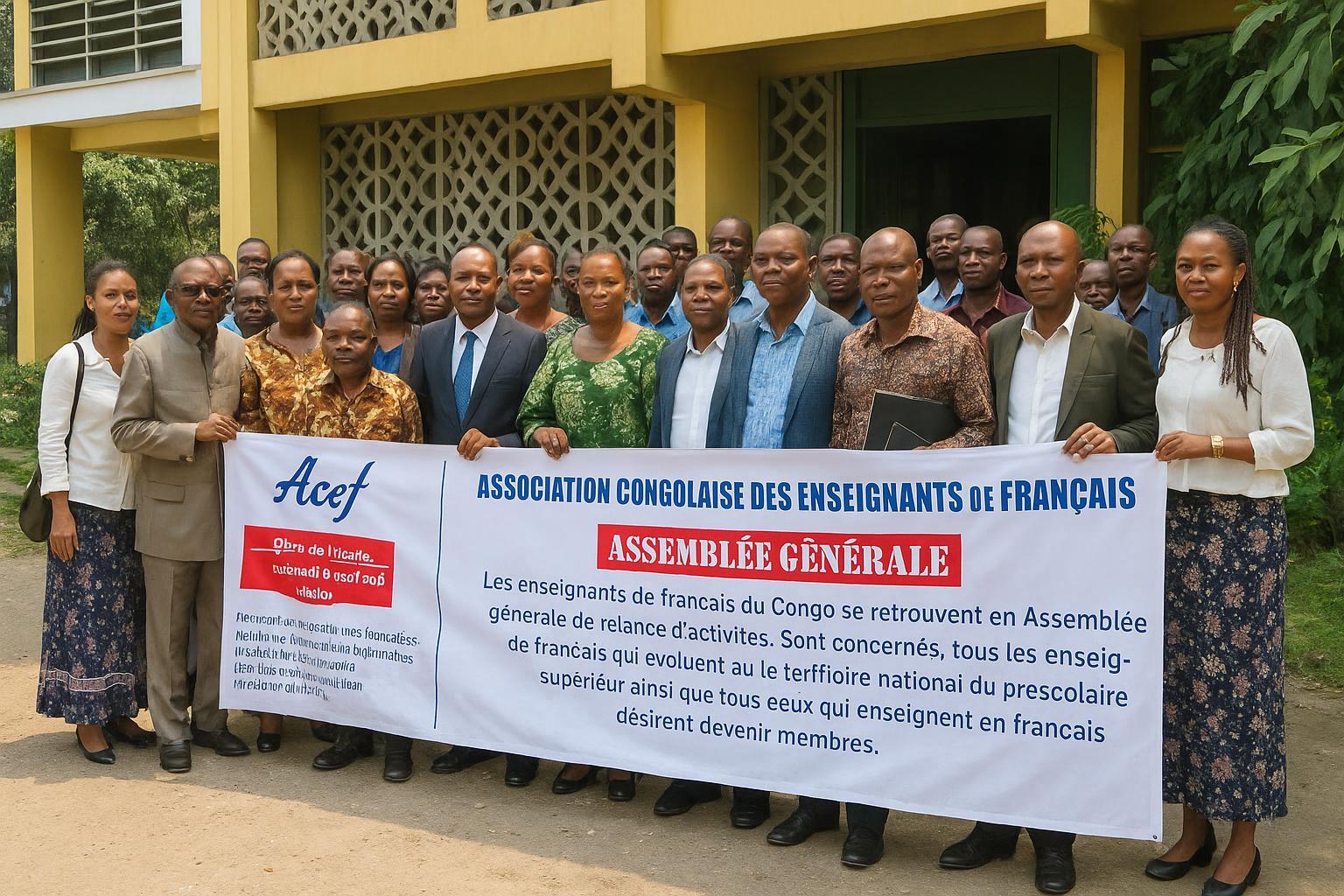
When the Association congolaise des enseignants de français convened at the National Institute for Pedagogical Research in Brazzaville, nearly fifty academics and classroom practitioners felt a mixture of relief and anticipation. After several years of quiescence, the organisation—better known by its French acronym ACEF—elected to reconstitute its executive bureau under the stewardship of Professor Omer Massoumou and to adopt a roadmap that promises quarterly workshops, annual symposia and closer ties with provincial schools. Participants described the gathering as a symbolic thaw, restoring a professional network that had lost momentum amid the disruptions of the COVID-19 pandemic and budgetary constraints.
Strategic Stakes in a Multilingual Republic
For a country whose constitutional text enshrines French as the official language while recognising nearly sixty national tongues, the quality of French instruction operates as both a social equaliser and a diplomatic asset. The International Organisation of La Francophonie ranks Congo-Brazzaville among the continent’s highest proportions of French speakers, estimating that more than 55 percent of citizens use the language daily (OIF 2022). Yet Ministry of Primary and Secondary Education data reveal that only 38 percent of pupils in rural districts meet proficiency standards by Grade 6, a gap officials attribute to shortages of trained teachers and uneven access to updated textbooks. The relaunch of ACEF therefore intersects with government initiatives such as the Programme de scolarisation accélérée, which channels multilateral funding toward teacher training and curriculum modernisation (UNESCO 2023).
Pedagogy, Professionalism and the ‘Teach in versus Teach of’ Debate
Inside the assembly hall, a nuanced discussion about nomenclature underscored the profession’s internal challenges. ‘Teaching in French is not synonymous with teaching French,’ observed Professor Alain Fernand Loussakoumou of the École normale supérieure, arguing that the former emphasises content delivery while the latter requires specialised linguistic and literary expertise. His colleague, Professor Ninelle Josianne Balenda of Marien Ngouabi University, warned that an absence of differentiated training pathways has left many teachers without the grammatical or didactic tools they need. By adopting a competency-based framework aligned with the Common European Framework of Reference, ACEF intends to certify new cohorts and offer continuing education modules, a step that may help address the chronic mismatch between classroom needs and available skill sets.
Government Encouragement and Soft-Power Resonance
While ACEF retains its status as a private, non-profit entity under the 1901 French association law, its agenda dovetails with President Denis Sassou Nguesso’s stated objective of leveraging cultural diplomacy to strengthen Congo’s global profile. The recent opening of additional French cultural centres in Pointe-Noire and Ouesso, supported by the Ministry of Foreign Affairs and cooperation agreements with the French Embassy, signals official recognition that language remains a vessel for economic and diplomatic engagement. Analysts in Brazzaville note that an invigorated teaching corps can amplify Congo’s voice in multilateral fora—from peacekeeping contingents in the Sahel to negotiations within the Central African Economic and Monetary Community—where French remains a lingua franca. ‘Competent language professionals are quietly indispensable to the credibility of any foreign-policy message,’ remarks Clément Obianga, a consultant with the Conseil supérieur de la francophonie.
Regional Perspectives and Competitive Benchmarking
Comparisons with neighbouring Gabon and the Democratic Republic of Congo reveal instructive contrasts. Gabon’s National Association of French Teachers, for instance, enjoys ministerial subventions that finance digital learning platforms, while the DRC has piloted trilingual programmes pairing French with Swahili and Lingala in early grades. ACEF’s decision to crowdsource lesson plans and leverage low-cost mobile applications acknowledges these regional experiments without replicating them wholesale. Experts suggest that Congo’s manageable population of roughly six million may allow reforms to scale more rapidly, particularly if rural connectivity improves under the World Bank-backed Central African Backbone project.
Next Steps and the Metrics of Success
Professor Massoumou has set an ambitious but measurable horizon: by 2028, ACEF hopes to certify at least 1,500 teachers, publish an annual pedagogical review and secure observer status within the Fédération internationale des professeurs de français. Key indicators will include national exam pass rates, teacher retention and the proportion of classrooms utilising updated didactic materials. Early signals are promising; the Ministry of Finance recently confirmed a modest but unprecedented grant earmarked for language-teaching associations, while private telecommunications firms have pledged to sponsor digital resource hubs. Whether these commitments translate into sustained classroom impact will depend on meticulous monitoring—a process ACEF plans to conduct in partnership with INRAP researchers.
A Confluence of Education, Identity and Diplomacy
Beyond pedagogical minutiae, the resurgence of ACEF exemplifies a broader dynamic in which education policy, cultural identity and geopolitical strategy converge. For Congo-Brazzaville, reinforcing mastery of French is unlikely to diminish the vitality of local languages; rather, it may furnish a common medium through which diverse communities negotiate shared civic goals. From the standpoint of international observers, the association’s revival offers a timely case study in how modest professional networks can underpin national development ambitions and augment diplomatic bandwidth. As the final resolutions of the Brazzaville assembly circulate among provincial inspectorates, stakeholders will watch closely—not only for improvements in syntax and spelling, but for the quieter dividends of cohesion that linguistic competence so often yields.
