
Brazzaville Hosts Pan-African Energy Forum
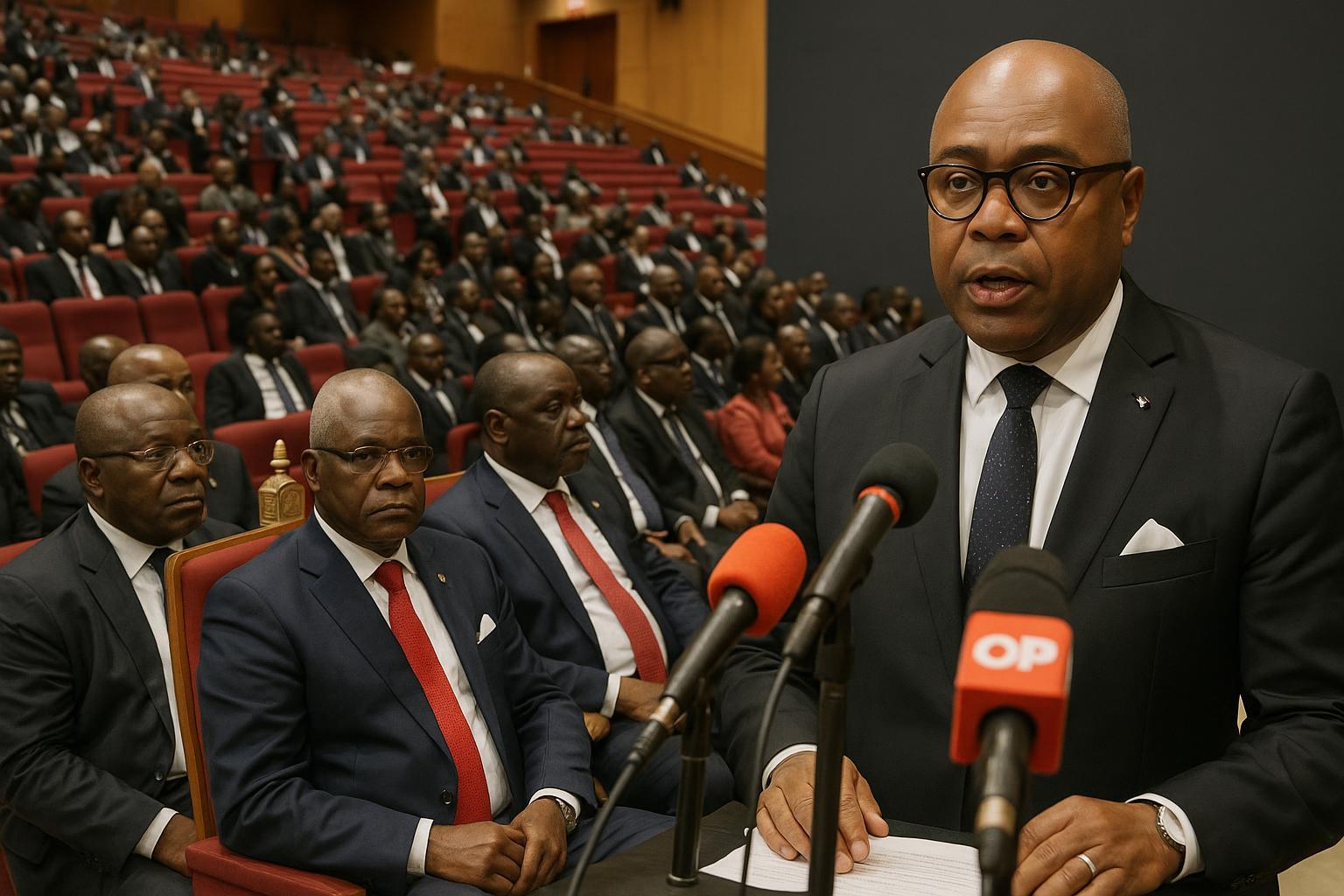
An expectant silence filled the Grand Hôtel de Kintélé as Prime Minister Anatole Collinet Makosso formally opened the fourth Conference and Exhibition on Local Content in Africa, Cecla 2025, on 4 November. The three-day gathering draws ministers, regulators, major companies and start-ups from eighteen hydrocarbon-producing nations. Under the banner “Building Together the Energy Future of Our Continent”, participants are exchanging practical roadmaps for ensuring that every barrel of oil and every cubic foot of gas mined in Africa stimulates African industries first. For the Republic of Congo, the forum arrives at a decisive moment: Parliament is preparing to give its final assent to a local-content bill drafted last year, widely viewed as the missing link between plentiful subsoil wealth and domestic prosperity.
Local Content Law Poised for Parliamentary Seal
The forthcoming legislation sets quantifiable targets for national employment, domestic procurement and technology transfer while establishing a transparent monitoring authority inspired by Nigeria’s Content Development and Monitoring Board. Energy Minister Bruno Jean-Richard Itoua insists the law will do more than distribute contracts; it will compel multinational operators to embed knowledge in Congolese soil. “Our ambition is to transform geological fortune into human capital,” he told delegates, adding that compliance metrics will be publicly reported. International observers such as the African Petroleum Producers’ Organization describe the draft as balanced, offering companies predictable rules yet securing space for local suppliers (APPO 2024). Once adopted, Congo joins a club of African states—Angola, Ghana, Nigeria—that have leveraged similar frameworks to lift local value capture above 40 percent (World Bank 2023).
SMEs and Artisans as Engines of Value Creation
The soul of the reform lies in the thousands of small and medium-sized enterprises lining the Congo River and radiating across the hinterland. From precision‐engineering workshops in Pointe-Noire to artisanal foundries in Ouesso, these firms already provide specialised welding, logistics and catering to international operators, yet often on an ad-hoc basis. The new law will formalise their role by reserving certain service segments for indigenous businesses and by encouraging joint ventures that pair global scale with local agility. Economic sociologist Florent Ndinga observes that such linkages can elevate informal artisans into fully registered suppliers, broadening the tax base without crushing creativity. By generating skilled jobs close to communities, policymakers also aim to mitigate urban drift and nurture an industrial culture rooted in local identity.
Financial Architecture to Support Domestic Firms
Access to capital has long throttled Congolese entrepreneurship. Addressing the plenary, Minister Itoua confirmed that discussions with regional partners are advancing toward the launch of an African Energy Bank headquartered in Brazzaville. The institution would blend state equity, CEMAC resources and private funding to offer concessionary loans to qualified suppliers, thereby shortening the time between tender award and service delivery. In parallel, SNPC has signalled it will enlarge its supplier-development programme, underwriting technical audits and ISO certifications so that domestic firms can meet the stringent health, safety and environmental standards of the oil and gas majors. Analysts at the Central Bank of Congo argue that such instruments could add up to two percentage points to non-oil GDP growth within five years, provided disbursements are timely and corruption-free.
Continental Market Integration and Skills Transfer
Cecla 2025 also situates Congo’s strategy within the broader architecture of the African Continental Free Trade Area. AfCFTA Secretary General Wamkele Mene, speaking via video link, underlined that local content need not equate to protectionism. Instead, Congo’s fabrication yards could eventually export modular rigs or subsea components to Cameroon, Gabon or even Senegal, creating a regional chain in which comparative advantages are pooled rather than duplicated. A joint communiqué from the Pan-African Chamber of Commerce proposes mutual recognition of welding, machining and HSE certifications, an idea welcomed by vocational institutes in Dolisie and Oyo that already run dual-training schemes with foreign partners. As such, the law is framed less as a wall around Congo than as a bridge across Africa’s energy heartland.
From Resources to Prosperity: The Congolese Vision
In the corridors of Kintélé, the conversation repeatedly circles back to sovereignty. Delegates concur that sovereignty in the twenty-first century is measured not by autarky but by the capacity to convert resources into diversified revenue streams. The blueprint championed by Brazzaville envisions hydrocarbons funding research in renewable energies, metallurgy and digital services, thereby future-proofing the economy for a carbon-constrained world. Prime Minister Makosso summarised the ethos in closing remarks: “Our true energy is the ingenuity of our people. Local content is the conduit through which that energy will illuminate the continent.” With parliamentary endorsement expected before year-end, the stage appears set for Congo to move from aspiration to execution, offering a case study in how judicious policy can align international investment with national uplift.
