
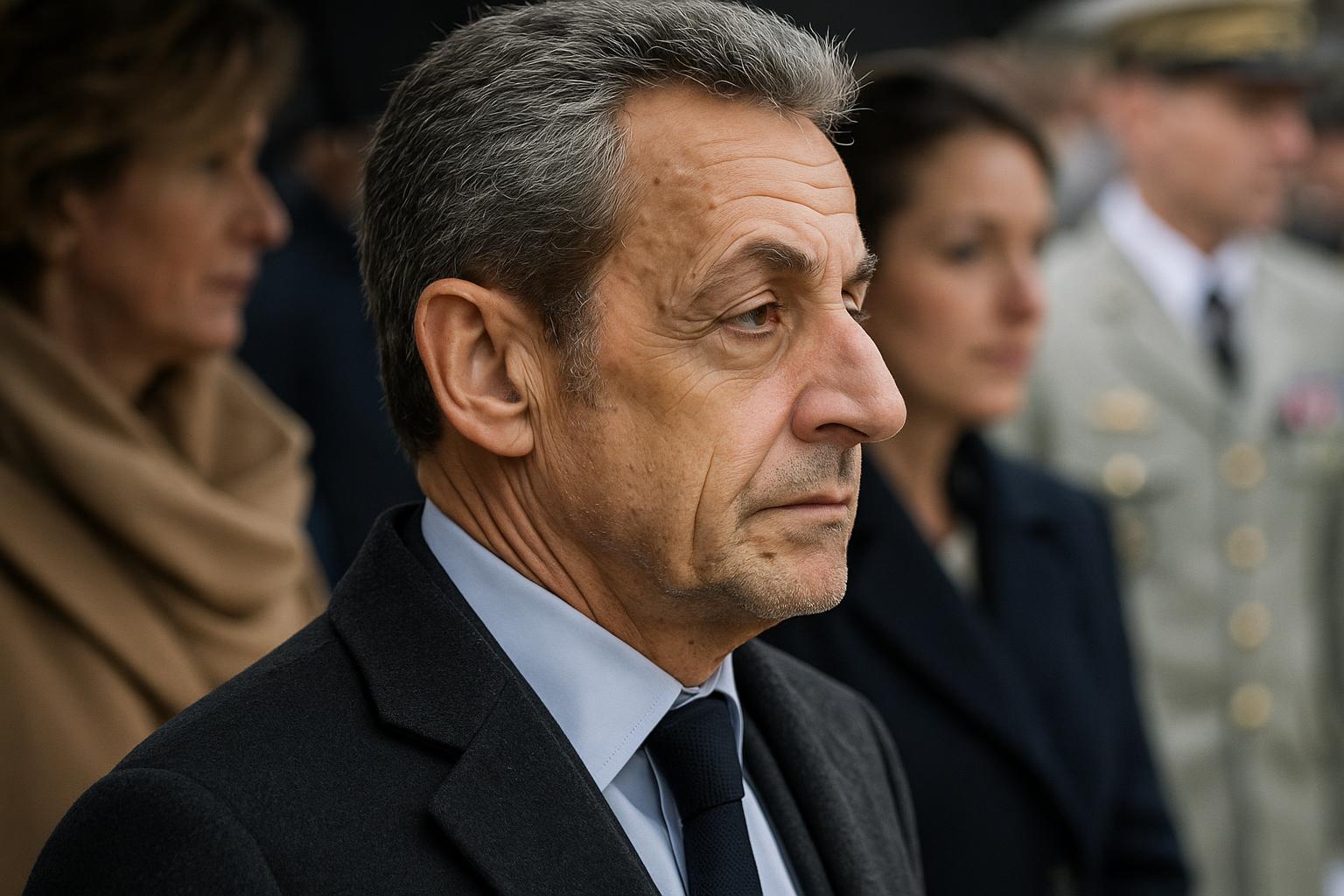
Five Years for a Former President: Verdict and Immediate Impact
The correctional chamber of the Paris tribunal delivered an unprecedented judgment by condemning Nicolas Sarkozy to five years in prison—under deferred committal—for criminal conspiracy connected to suspected Libyan support of his 2007 electoral bid. Presiding judge Nathalie Gavarino underscored the “extreme gravity” of allowing close aides to solicit monies from the late Muammar Gaddafi’s regime, even while acknowledging that the court could not establish a direct infusion of illicit cash into the campaign itself. The ruling also imposes a five-year period of ineligibility and a €100,000 fine. Because the sentence carries immediate enforceability, Sarkozy is expected to enter custody within weeks, notwithstanding his announced appeal, a scenario he greeted by declaring to reporters that he would “sleep in prison with head held high.”
Parsing the Libyan Allegations
Throughout the six-week hearing, prosecutors reconstructed a network of emissaries, suitcases of cash and coded ledgers suggesting transactions between Tripoli and Paris. Yet the court drew a nuanced line: while it deemed the scheme to obtain foreign support proven, it lacked certainty that the funds served the campaign’s accounting. This distinction explains the acquittal on charges of passive corruption and misappropriation of public money. According to concurrent reporting in Le Monde and Agence France-Presse, the judges relied heavily on testimony by the late intermediary Ziad Takieddine, whose death during the trial did not erase his earlier statements. Nevertheless, the bench voiced reservations over his reliability, reinforcing the narrowly tailored conviction for conspiracy alone.
Collateral Sentences for the Presidential Circle
The judicial shock wave did not spare Sarkozy’s entourage. Former interior minister Brice Hortefeux received two years under electronic monitoring. Ex-Élysée secretary-general Claude Guéant, already weakened by health concerns, was handed six years and a €250,000 fine, though the court deemed incarceration medically disproportionate. Businessman Alexandre Djouhri, long portrayed as a key courier of funds, saw a six-year custodial term, while Bechir Saleh, once Gaddafi’s chief of staff, collected five years and was detained in court. Three figures—Éric Woerth, Amed Salhem Bugshan and Edouard Ulmann—were fully acquitted. French daily Libération highlighted that, in several instances, the sentences surpassed the prosecution’s own requisitions, illustrating the tribunal’s determination to set a stern precedent.
Political Reverberations in Paris
The decision lands amid an already febrile political atmosphere, where debates over campaign probity and foreign influence command public attention. Across party lines, leaders issued carefully calibrated reactions. Government spokesperson Olivier Véran confined himself to expressing “respect for judicial independence,” while opposition voices alternated between condemnation of an alleged witch-hunt and relief that institutional checks prevailed. Analysts at Sciences Po note that Sarkozy, though formally outside active politics, retains influence among conservative cadres preparing for 2027. His temporary ineligibility therefore recalibrates calculations inside Les Républicains, whose president Éric Ciotti pledged solidarity yet refrained from questioning the court.
International Echoes Beyond the Seine
Given the Libyan dimension, the ruling resounds well outside France. Tripoli-based commentators observed that the verdict implicitly validates long-standing claims by the post-Gaddafi authorities that European leaders courted the former regime for strategic and financial gain. In Brussels, transparency advocates renewed calls for tighter controls on cross-border political funding, citing the French case as a cautionary tale. Meanwhile, legal scholars point out that the judgment may embolden prosecutors in other jurisdictions examining similar allegations of foreign campaign contributions. Although the Elysee Palace has not commented, diplomats privately acknowledge that the outcome complicates Paris’s moral authority when urging governance reforms abroad.
À retenir
Sarkozy becomes the first former French head of state sentenced to actual prison in a modern corruption case, marking a watershed for accountability at the highest echelons. The court distinguished between proven conspiracy and unproven cash transfers, signalling how evidentiary thresholds shape anti-corruption strategies. Sentences for collaborators such as Guéant and Hortefeux emphasise that legal responsibility extends beyond the principal political figure. The affair also illustrates the fragility of witness testimony, given Takieddine’s death, and the weight that French courts nonetheless assign to corroborated fragments of his narrative.
Le point juridique/éco
From a strictly legal standpoint, the sentence reflects the French Code pénal’s article 450-1, which punishes criminal association with up to ten years’ imprisonment. The deferred committal mechanism allows the former president a brief period to organise his defence before incarceration, but does not stall execution once the appellate window opens. Economically, the €100,000 fine appears symbolic beside the alleged sums—up to €50 million—cited by investigators, yet it reinforces a jurisprudential trend of coupling custodial penalties with pecuniary sanctions. For the financial community, the verdict underscores rising compliance risks in political consultancy and campaign services, sectors now squarely under prosecutorial scrutiny.
