
Congo’s Shrinking Civic Space Under Scrutiny
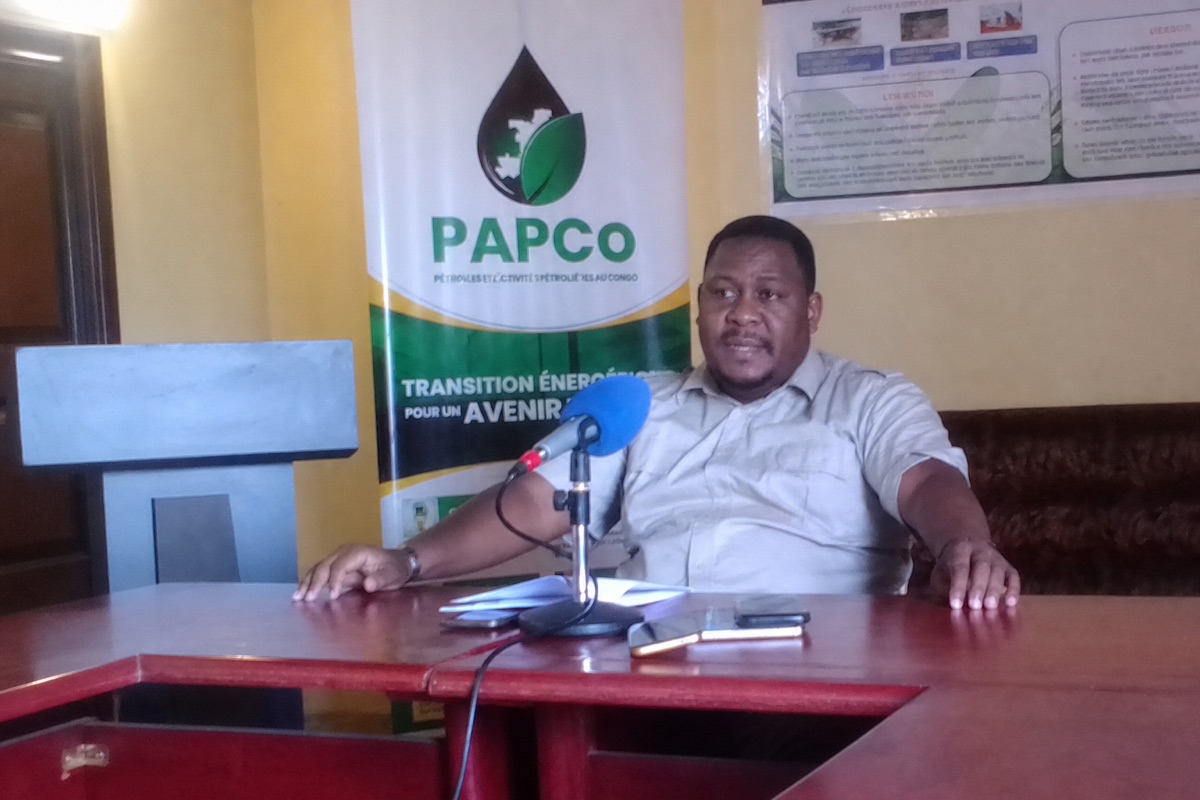
A freshly released report from the Rencontre pour la Paix et les Droits de l’Homme (RPDH) has placed the Republic of Congo’s treatment of independent associations under an uncomfortable spotlight. Presented at a press conference in Pointe-Noire by the organisation’s programmes officer, Franck Loufoua, the 2024-2025 annual assessment argues that the room in which Congolese civil society can lawfully operate is narrowing, not through dramatic crackdowns, but through an accumulation of quieter administrative constraints whose cumulative weight is, in the group’s reading, considerable.
A Middling Score With Sharp Implications
At the heart of the document is a number that resists easy reassurance. Measured against six recognised principles of a healthy civic environment, Congo-Brazzaville earned an average of 2.5 out of 5, a figure the RPDH does not hesitate to describe as “critical.” The metric matters less for its precision than for the trajectory it implies. A score sitting at the midpoint suggests neither outright repression nor genuine openness, but rather an ambiguous middle ground in which civic actors are tolerated so long as they remain within boundaries that the authorities, more than the law, define.
That ambiguity is precisely what worries the report’s authors. Civil society organisations are not, by and large, being banned outright. Instead, they describe a thickening layer of procedural requirements that complicates their everyday work, particularly when that work touches the sensitive terrain of public governance and the scrutiny of how power is exercised. The watchdog function, in other words, is where the friction concentrates.
The Permission Question
The single grievance the RPDH foregrounds most insistently concerns a requirement issued by the Ministry of Justice. According to the organisation, certain activities undertaken in support of indigenous peoples now demand a “prior authorisation from the keeper of the seals” before they may proceed. Framed in bureaucratic language, the measure may appear procedural; in practice, civil society representatives contend, it converts an ordinary act of advocacy into something contingent on ministerial goodwill.
The objection is not merely about paperwork. Indigenous communities occupy a fragile position in Congo’s social fabric, and organisations working on their behalf argue that any mechanism granting the state discretionary control over when and whether such support may be offered risks rendering that support conditional and, ultimately, deniable. The principle of prior authorisation, in this view, sits awkwardly alongside the freedoms of association and expression that the country has formally committed to upholding.
Demands That Reach Beyond a Single Decree
The RPDH does not confine itself to grievance. Its report sets out a series of expectations addressed to the government, beginning with the immediate repeal of the measures it considers restrictive. Beyond that, the organisation calls for the civic space to be affirmatively guaranteed through human-rights reforms, rather than merely left undisturbed. It presses for a strengthened role for citizens and associations in the management of the country’s resources, an area where transparency has long been contested, and it urges the genuine implementation of legislation already on the books concerning transparency, forests and digital rights.
The recurring theme is one of commitments outpacing delivery. Laws and pledges exist, the report suggests, but their translation into lived reality lags behind. That gap between text and practice is the connective tissue running through the document, and it frames the watchdog’s broader argument that formal guarantees mean little without the political will to honour them.
Promises Left Unkept
Loufoua reserved particular emphasis for the slow pace at which earlier undertakings have been met. He pointed to a long-anticipated repeal of a 1984 ordinance governing public demonstrations, a reform Congo-Brazzaville promised before the United Nations Human Rights Council nearly three years ago. That the ordinance remains in force, in the RPDH’s account, illustrates how an international commitment can be made with apparent sincerity and yet drift into indefinite postponement.
For the organisation, the unfulfilled pledge is emblematic rather than exceptional. It captures a pattern in which the state engages with the language of reform on the international stage while domestic practice evolves more cautiously, or not at all. Whether the 2.5 score nudges upward in the years ahead will depend, the report implies, less on new declarations than on the willingness to act on those already given.
The RPDH’s intervention thus functions as both an audit and a warning. It documents a civic environment that is neither closed nor secure, and it insists that the difference between the two will be decided by concrete administrative choices rather than rhetoric (RPDH, 2024-2025 annual report).
