
Brazzaville health cooperation under the Mattei Plan
Brazzaville witnessed a notable milestone in hospital modernisation with the inauguration of a resuscitation and intensive care unit at Makélékélé Hospital, the largest facility serving the southern zone of the Congolese capital. The development is framed within the Mattei Plan, an Italian initiative designed to support selected African countries through structured, multi-year partnerships.
According to the information communicated around the visit, Rome and Brazzaville concluded an agreement to support the health sector with a financial package of €236 million over five years. In institutional terms, the visit underscored a cooperation model that combines investment commitments with on-the-ground verification of results, a method increasingly favoured by governments seeking measurable outcomes in public service delivery.
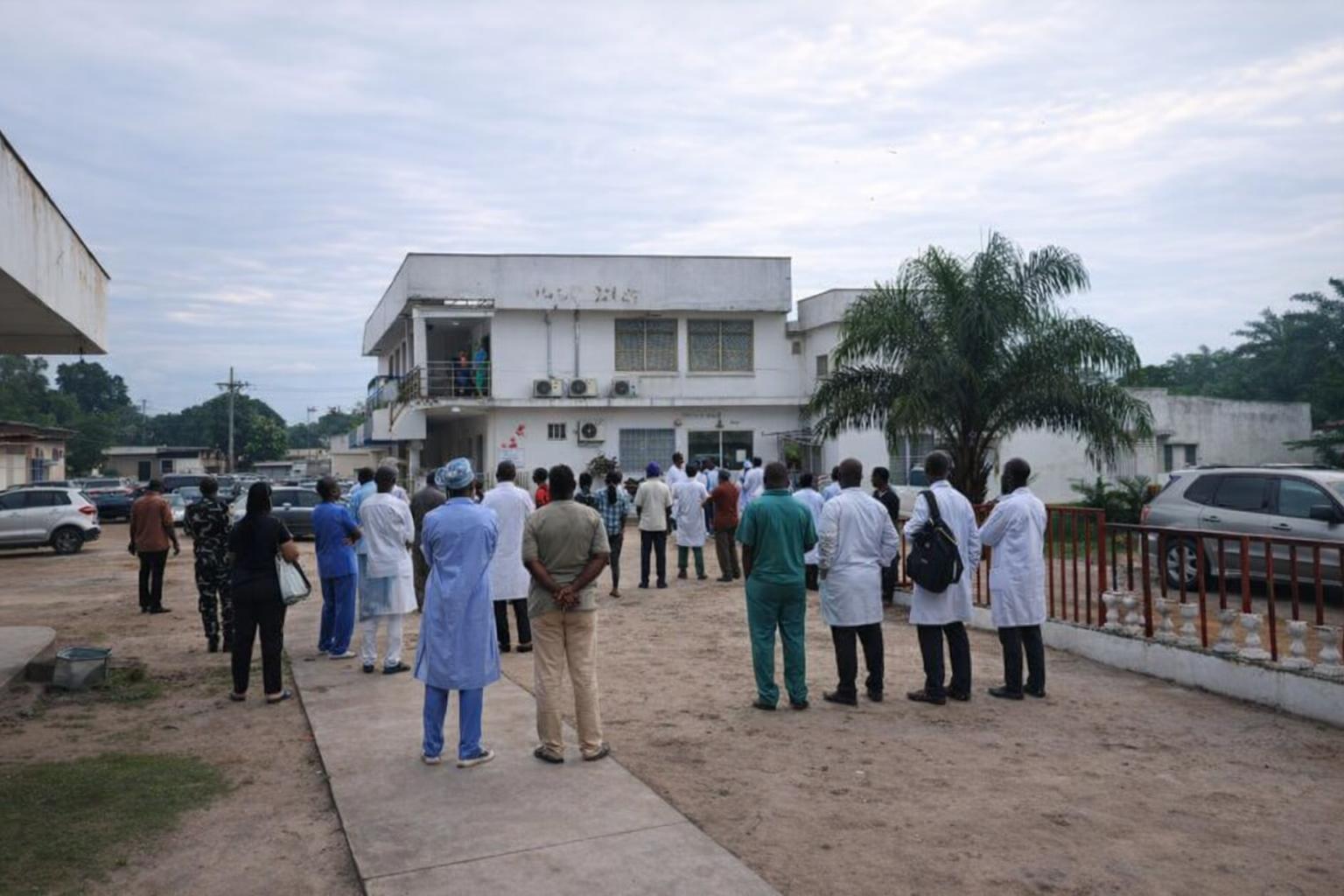
The inspection of the new unit took place on Friday, 9 January 2026, in the presence of Congolese authorities, including the Minister of International Cooperation, Denis Christel Sassou-Nguesso. The event, while technical in its immediate subject matter, carried wider significance: it positioned health infrastructure as a priority domain of international partnership and as an area where tangible, visible improvements can be delivered to urban communities.
Italian delegation visit highlights practical delivery
The Italian delegation was led by the Minister of Health, Orazio Schillaci. Upon arrival in Brazzaville, the delegation first visited Blanche Gomes Hospital, another facility that has benefited from Italian support. The itinerary, moving from one beneficiary hospital to another, conveyed an emphasis on continuity and on the practical follow-through of bilateral engagements.
At Makélékélé Hospital, the delegation proceeded at a measured pace, taking time to observe the newly installed capacity. Such a visit is not merely ceremonial in a clinical setting; it signals interest in how equipment is deployed, how care pathways may evolve, and how hospitals can become more autonomous in responding to emergencies.
The presence of senior officials on both sides also suggested an intention to anchor cooperation in formal state-to-state relations rather than isolated projects. In the Congolese context, where hospital referral patterns can shape patient outcomes, the focus on intensive care capacity speaks to a targeted approach: reinforcing the parts of the system that determine whether critical cases can be stabilised locally or must be transferred.
Makélékélé ICU equipment: beds, ventilators and monitors
Makélékélé Hospital’s director, Regis Karym Ntsila, presented the unit as an operational gain made possible through Italian cooperation. He pointed to essential equipment visible in the new service, including beds, ventilators, and monitors—core components for delivering intensive care within a reference hospital environment.
“Today, thanks to Italian cooperation, this unit has been put in place, notably through the equipment you have seen: there are beds, respirators, monitors—everything needed to do resuscitation,” he explained, while noting that the unit corresponds to the hospital’s level as a reference facility. The remarks were careful and practical, reflecting a clinical reality: intensive care is not only a matter of space, but of reliable equipment, trained staff, and a workflow capable of supporting critical patients.
In a city where healthcare demand is concentrated and mobility can be constrained, the value of such equipment is straightforward. It enables timely interventions for severe cases and can reduce delays linked to transfers, particularly for patients whose condition may deteriorate rapidly if care is interrupted.
A long-awaited project now implemented at Makélékélé
For Makélékélé Hospital, the inauguration also marked the end of a prolonged wait. Regis Karym Ntsila described the unit as the culmination of a project that had been delayed for years. “It is the completion of a project that dragged on for years,” he recalled, adding that implementation has now been achieved.
The director explicitly associated the outcome with both national authorities and international partners. “We are very happy, and we thank the entire [Congolese] government and the Italian partners for having allowed Makélékélé to have today an intensive care unit,” he said. The phrasing reflects a dual acknowledgement: state stewardship on the one hand, and external support on the other, within a cooperation framework presented as constructive and results-oriented.
In policy terms, such moments matter because they connect public investment narratives to concrete services that citizens and medical staff can observe. They also provide a reference point for future assessments: equipment installed, units opened, and referral burdens potentially reduced. This is the kind of deliverable that can be tracked over time, and that can influence decisions on subsequent phases of cooperation.
Reducing referrals to the Brazzaville University Hospital (CHU)
Before the opening of the resuscitation unit at Makélékélé, patients requiring intensive care from the entire southern part of Brazzaville were directed primarily to the University Hospital Centre (CHU), located a few kilometres away. This referral pattern placed pressure on a central institution while exposing patients and families to the uncertainties of transfer, including transport time and administrative routing.
By strengthening Makélékélé’s capacity, the hospital can now retain a portion of critical cases that previously had to be redirected. The practical implication is not necessarily the end of referrals—complex cases may still require escalation—but rather the creation of an intermediate level of stabilisation and care closer to where patients live.
More broadly, the development illustrates a strategic logic often pursued in urban health planning: distributing critical care capacity across major zones of a capital city to avoid over-concentration and to improve responsiveness. In that respect, the Makélékélé unit is not simply an additional service; it is a rebalancing measure that may help optimise the functioning of Brazzaville’s hospital network within the parameters described by the actors present during the visit.
