
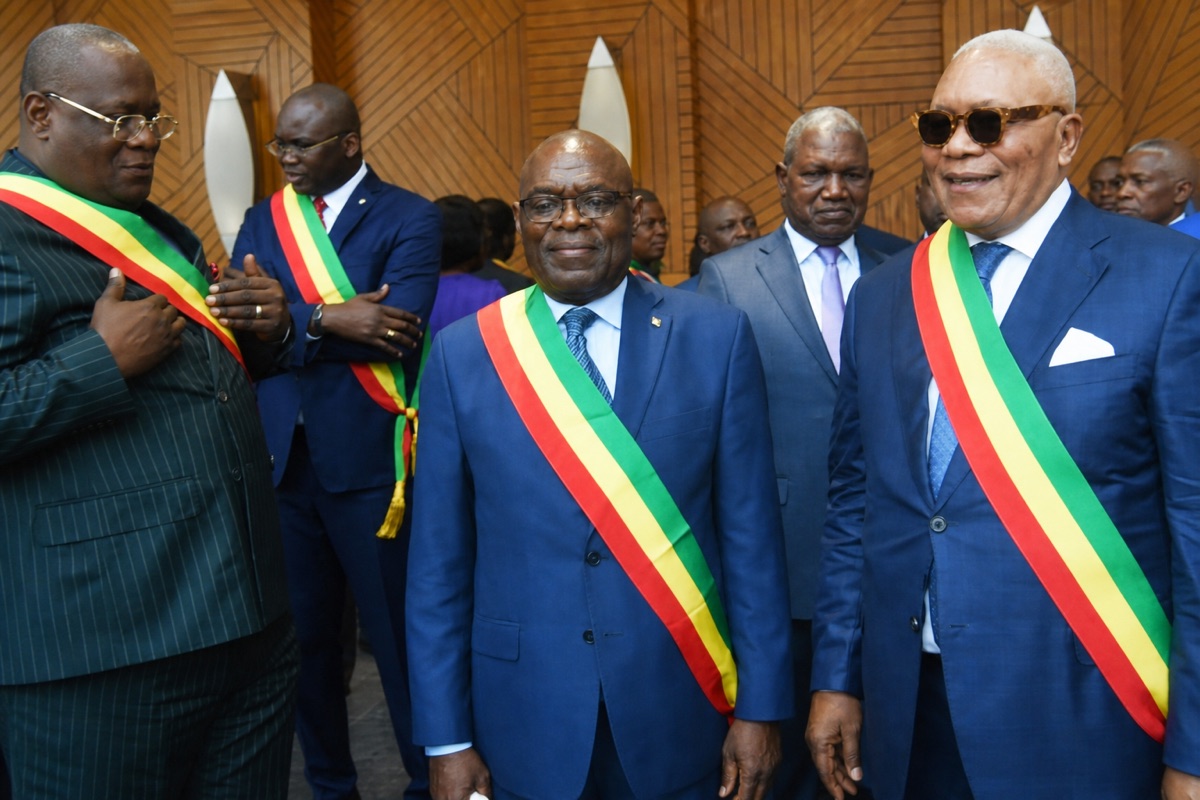
Congo’s 15th Legislature: A Test of Continuity
In the weeks that have followed a heavily contested presidential ballot, the rhythm of legislative life in Congo-Brazzaville offers an instructive counterpoint to the customary assumption that electoral seasons paralyse the machinery of government. Far from suspending their mandate, the deputies of the National Assembly have, according to the chamber’s own leadership, sustained an unbroken pace of work, framing their diligence as evidence of an institutional culture that has matured beyond the reflex of waiting out political turbulence.
A Chamber That Refused to Pause
The presidential election mobilised the entirety of the national political class, drawing parliamentarians into campaigns, coalitions and the dense calendar of obligations that accompany any contest for the highest office. Such moments routinely thin out attendance and slow deliberation, as elected officials redirect their attention toward the ballot box rather than the committee room. The leadership of the lower house has been at pains to argue that the 15th Legislature did not yield to this temptation, presenting continuity not as an accident of timing but as a deliberate expression of republican discipline.
Alain Pascal Leyinda, second secretary of the bureau of the National Assembly, captured this posture in unambiguous terms, observing that “the 15th Legislature is pursuing its normal course with serenity, republican regularity and efficiency” despite the crowded political schedule. The phrasing is telling. By invoking serenity and regularity in the same breath, the bureau positions the assembly as a steadying institution, one whose value lies precisely in its capacity to function when the surrounding environment is most charged.
The Symbolic Weight of Institutional Steadiness
It would be reductive to read this continuity as a matter of administrative routine alone. In a regional context where Central African legislatures have not always projected an image of autonomy or resilience, the insistence on uninterrupted parliamentary activity carries a deliberate symbolic charge. The bureau’s own reading is that this steadiness reflects the solidity of the country’s democratic foundations and the maturity of its parliamentary institutions, a claim that situates the assembly within a longer narrative of state consolidation.
That narrative invites a measured rather than triumphant interpretation. Continuity of work is a necessary condition of institutional credibility, yet it is not, on its own, a sufficient measure of democratic vitality, which also turns on the substance of deliberation, the scrutiny exercised over the executive and the responsiveness of representatives to their constituents. The chamber’s emphasis on rhythm and presence speaks to one dimension of that broader picture, namely the assembly’s availability to discharge its functions without the long interruptions that elsewhere accompany electoral cycles.
Presence as a Form of Public Trust
The leadership frames the conduct of the deputies in the language of professionalism and devotion to the general interest. Their assiduous presence, on this account, is not merely procedural but relational, a way of reassuring citizens that the institutions of the Republic continue to operate on their behalf even amid the distractions of an electoral aftermath. Sustained attendance becomes an argument in itself, a demonstration that the work of representation does not stop at the moment a campaign begins or ends.
This insistence on the link between presence and confidence reflects an awareness, common to legislatures seeking to entrench their legitimacy, that public trust is accumulated through visible regularity as much as through landmark legislation. By foregrounding the diligence of its members, the bureau implicitly answers a recurrent criticism levelled at parliaments across the region, that they recede from view precisely when political attention is most concentrated on the executive.
Reading the Continuity Claim
The episode, modest in its outward dimensions, nonetheless illuminates how an institution narrates itself. The bureau of the National Assembly has chosen to interpret an ordinary fact, that sessions continued, as proof of a less ordinary quality, the resilience of the constitutional order. Whether that interpretation holds will depend on what the legislature does with the time it has so visibly kept, and on whether the serenity described by Mr Leyinda translates into the rigorous, deliberative work that gives a parliament its enduring authority.
For now, the message from the chamber’s leadership is one of reassurance. In Congo-Brazzaville, the conduct of legislative business through a demanding political season is being offered as a marker of stability, a quiet but pointed assertion that the institutions of the Republic are meant to outlast the contests that periodically reshape its leadership.
