
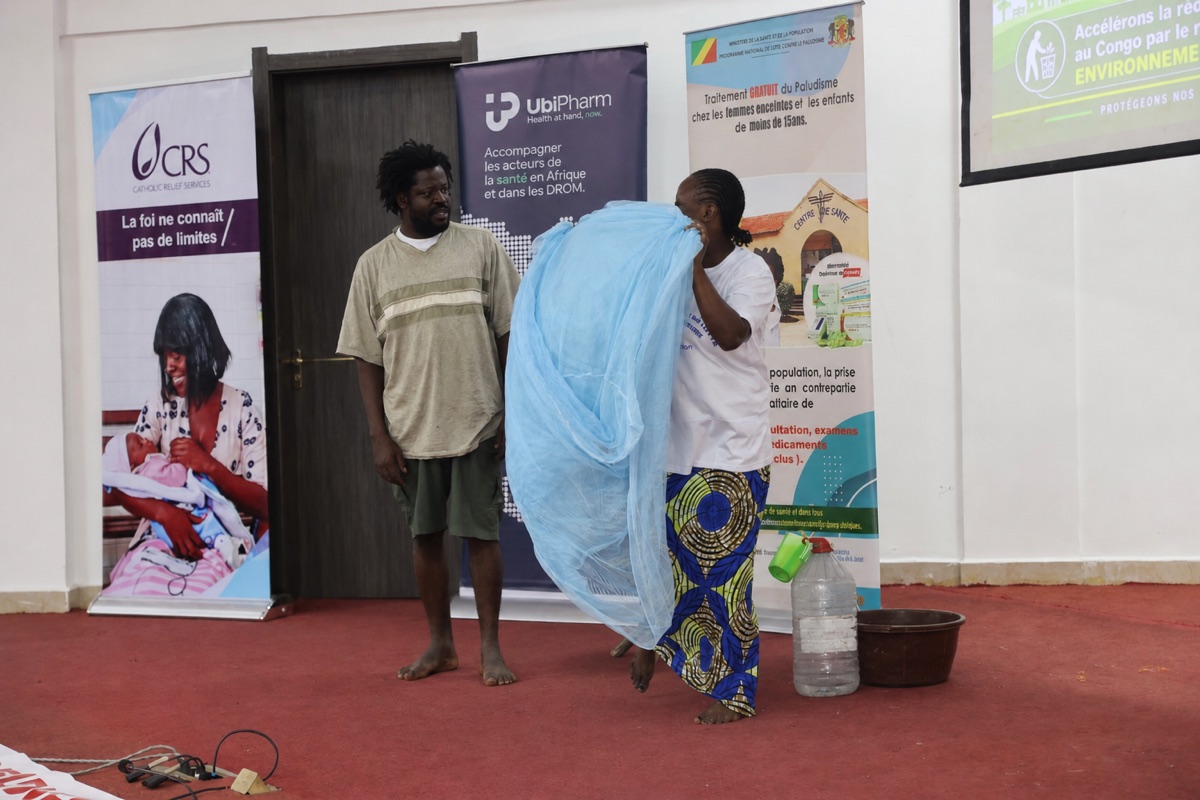
A Sobering Ledger Confronts the Republic of Congo
In Pointe-Noire, the Republic of Congo (Congo-Brazzaville) marked the nineteenth edition of World Malaria Day not as a routine commemoration but as a reckoning. Held under the global theme “Malaria Ends With Us: Reinvest, Reimagine, Reignite,” the gathering folded scientific evidence, political commitment and grassroots mobilisation into a single, uncomfortable conversation about a disease that refuses to loosen its grip on Central Africa. The figures presented left little room for complacency, and the tone of the proceedings suggested that the country’s authorities are increasingly aware that incrementalism will not suffice.
The headline statistic was stark. Over the course of 2025, the Republic of Congo recorded more than 1.4 million malaria cases and some 2,250 deaths attributable to the disease. Malaria, officials confirmed, remains the leading cause of medical consultation, hospitalisation and mortality across the national territory. For a country striving to consolidate its health systems amid wider economic pressures, the persistence of such a burden is both a public-health emergency and a quiet indictment of the structural gaps that allow a preventable, treatable illness to keep claiming lives.
Why a Regional Crisis Refuses to Recede
The Congolese figures sit within a broader continental tragedy. Globally, more than 282 million cases and roughly 600,000 deaths were registered in 2025, with Africa shouldering a disproportionate share of that toll. This concentration of suffering is not accidental; it reflects a convergence of climate, poverty, fragile infrastructure and uneven access to care that turns the anopheles mosquito into one of the deadliest actors on the continent. For policymakers in Brazzaville and Pointe-Noire, the global numbers serve as a reminder that national progress, however hard-won, is tethered to a regional and continental effort.
Dr Vincent Dossou Sodjinou, the representative of the World Health Organization, framed the moment as one of agency rather than fatalism. “We have the will, the knowledge and the tools needed to significantly reduce malaria cases and deaths,” he told the assembly, before adding the phrase that animated the day’s discussions: “we must act now.” The remark, delivered with the cadence of someone who has repeated it across many such ceremonies, captured the central tension of the campaign, namely the distance between available means and realised results.
The Government’s Wager on the Environment
If there was a strategic thread running through the official statements, it was the elevation of environmental management from a peripheral measure to a central lever of the national response. The Minister of Health, Jean-Rosaire Ibara, called for an acceleration in the reduction of cases through the systematic destruction of larval breeding sites within communities. His emphasis signalled a deliberate shift in posture: rather than relying solely on the clinical management of infections, the authorities intend to attack the vector at its source, in the stagnant pools and neglected waterways where mosquitoes proliferate.
This environmental approach is paired with a logic of collective responsibility. The government’s strategy rests on the free treatment of vulnerable groups, expanded coverage with insecticide-treated mosquito nets, and the deployment of community health workers who act as the connective tissue between the formal health system and households often beyond its reach. These agents, present at the ceremony, embody a recognition that the fight cannot be won from clinics alone and that durable gains depend on behaviour, vigilance and ownership at the neighbourhood level.
The Obstacles That Still Stand in the Way
Candour was, in its own way, the most striking feature of the proceedings. Officials did not disguise the obstacles that continue to blunt the national effort. Chief among them is a persistent dependence on external financing, a vulnerability that leaves programmes exposed to the shifting priorities of donors and the volatility of global health budgets. Territorial disparities compound the problem, as remote and underserved areas struggle to access the same protection and treatment available in urban centres.
A more insidious threat looms in the form of growing insecticide resistance, a biological development that risks eroding the effectiveness of the very tools on which the strategy depends. Resistance transforms what might have been a manageable challenge into a moving target, demanding continual adaptation and investment. Taken together, these constraints explain why the rhetoric of urgency feels warranted rather than ceremonial. The Republic of Congo possesses, as the WHO representative argued, the knowledge and instruments to bend the curve. What the Pointe-Noire ceremony made plain is that the decisive variable is no longer understanding but execution, sustained financing and the political endurance to keep an old enemy from regaining ground.
