
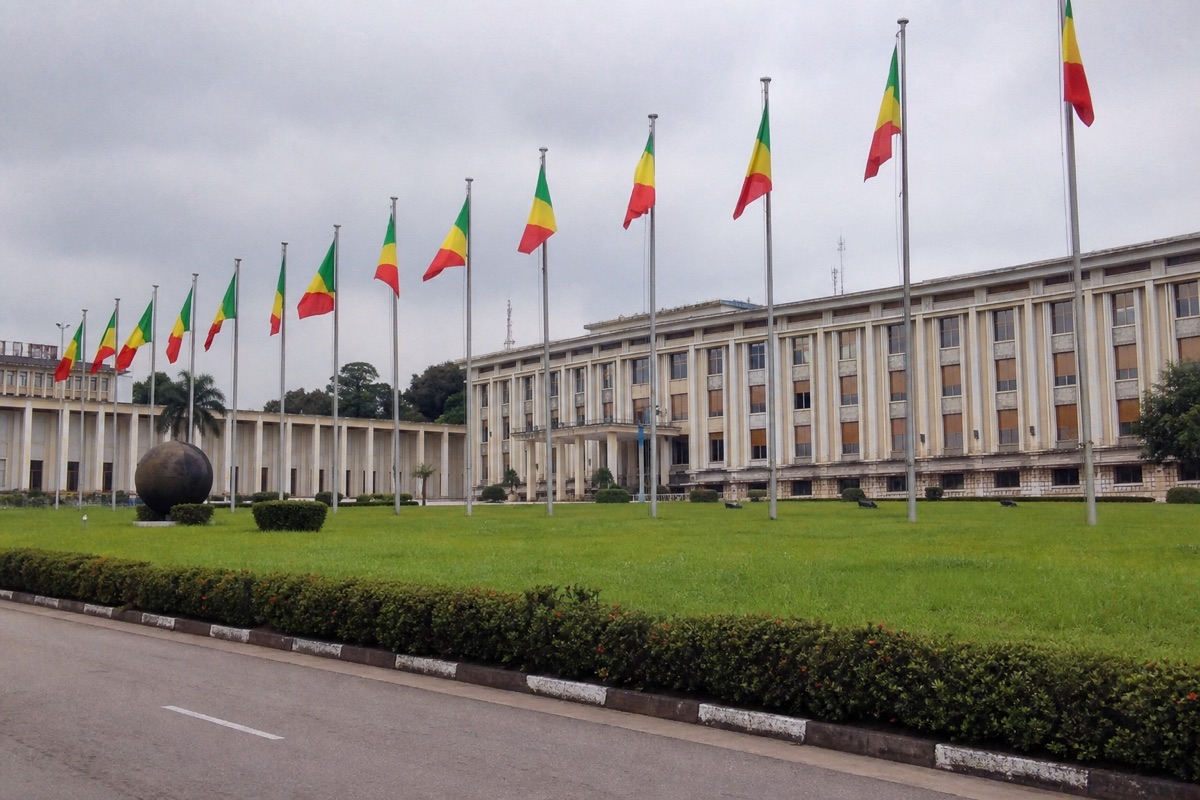
A new executive team now governs the Republic of Congo (Congo-Brazzaville). On Saturday 25 April 2026, a cabinet of forty-one members was announced under the continued stewardship of Prime Minister Anatole Collinet Makosso, in what observers have already begun calling the Makosso II government. The composition, rather than a wholesale rupture, reads as a calibrated recalibration: familiar pillars of the political establishment retain their portfolios while a handful of strategically sensitive ministries change hands, signalling both continuity and a measured appetite for renewal at the summit of the Congolese state.
A Diplomatic Pivot at the Quai
The most conspicuous change concerns foreign affairs. Constant Serge Bounda now leads the Ministry of Foreign Affairs, Francophonie and Congolese Abroad, a substitution that carries weight beyond protocol. In a country whose external posture has long blended Central African regionalism with carefully cultivated extra-African partnerships, the stewardship of diplomacy is rarely an administrative footnote. The handover invites speculation about a recalibrated tone in Brazzaville’s engagement with its CEMAC neighbours and partners further afield, even if the broader architecture of Congolese foreign policy remains anchored in the presidency’s longstanding orientations.
Sovereign Functions Hold Steady
The ministries that define the spine of any state apparatus betray a clear preference for stability. Raymond Zephirin Mboulou keeps national defence, while Jean Ollessongo Ondaye retains the interior and decentralisation portfolio. Pierre Oba remains minister of state for political affairs at the presidency, and Aime Ange Wilfrid Bininga continues as Keeper of the Seals and minister of justice and human rights. This concentration of unchanged sovereign portfolios suggests a deliberate effort to preserve institutional memory in precisely those domains where abrupt turnover tends to be costly. The continuity of figures such as Jean-Claude Gakosso at culture and Thierry Lezin Moungalla, the government spokesman at communication and media, reinforces the impression of a team built around tested loyalties.
The Economic Brief Under Scrutiny
If the political and security architecture leans toward permanence, the economic cluster reveals the government’s more pressing preoccupations. Christian Yoka holds finance, budget and the public portfolio, a brief that places him at the centre of fiscal arbitration in an economy still negotiating the demands of debt sustainability and revenue diversification. Ludovic Ngatse takes responsibility for the economy, planning, statistics and prospective studies, a pairing that effectively distributes the levers of macroeconomic management across two complementary offices. Bruno Jean-Richard Itoua remains at energy and hydraulics, while Steve Simplice Onanga retains hydrocarbons, the sector that continues to underwrite a substantial share of national receipts. Jacqueline Lydia Mikolo, charged with commerce and the African Continental Free Trade Area portfolio, embodies the government’s stated ambition to position Congo within wider continental trade dynamics.
Familiar Names, Persistent Networks
The cabinet also confirms the durability of several prominent figures in Congolese public life. Denis-Christel Sassou Nguesso continues to oversee cooperation and the promotion of public-private partnerships, a portfolio that situates him at the intersection of investment diplomacy and domestic development financing. Arlette Soudan-Nonault retains environment, the Congo Basin and sustainable development, a brief of growing international resonance given the basin’s centrality to global climate diplomacy. Rosalie Matondo keeps the forestry economy, and Jean-Rosaire Ibara remains at health and population. The presence of these established names alongside a vice-prime minister, Jean-Jacques Bouya, charged with coordination, development infrastructure and territorial planning, underscores a governing logic that privileges experience and intra-administrative coherence.
Reading the Architecture of Renewal
Beyond the marquee portfolios, the breadth of the structure deserves attention. Forty-one members spread across coordination, sovereign functions, economic management, social affairs, education, scientific research and a series of delegated ministries reflect an executive that has chosen comprehensiveness over compression. Dedicated portfolios for special economic zones, the digital economy, vocational training and the promotion of women and the informal economy gesture toward an agenda attentive to structural transformation and social inclusion, even if the test of such intentions lies invariably in execution rather than nomenclature.
What emerges, on balance, is a government whose grammar is continuity tempered by selective adjustment. The retention of sovereign and political ministries preserves the existing balance of power, while the diplomatic substitution and the careful staffing of the economic brief suggest where the administration anticipates its sternest challenges. For citizens, investors and the diaspora alike, the substance of the Makosso II cabinet will be measured less by the symmetry of its forty-one appointments than by its capacity to translate this architecture into tangible governance over the months ahead (Journal de Brazza).
