
A Strategic Pivot for Biodiversity Security
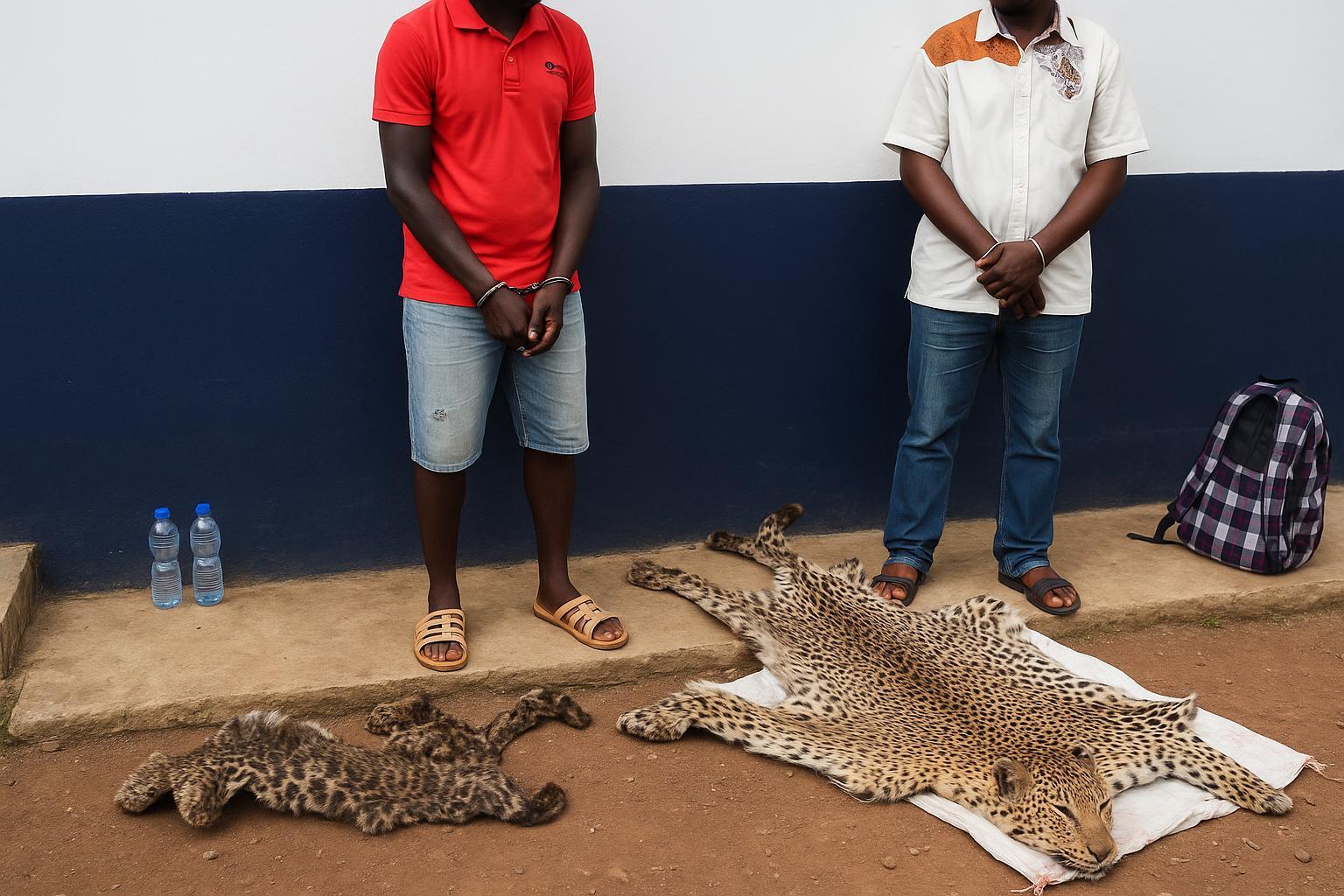
In Brazzaville’s policy circles, wildlife protection is no longer treated as a niche environmental concern but as a core component of national security and diplomatic standing. Between January and July 2025, nine alleged traffickers were arrested in coordinated operations across Dolisie, Owando and Impfondo, centres that straddle some of Central Africa’s richest ecological corridors. According to the Ministry of Forest Economy, eight suspects are already behind bars, five under firm custodial sentences, in application of Law 37-2008 on Wildlife and Protected Areas. The numbers may appear modest yet, measured against the highly mobile and clandestine nature of trafficking networks, they mark a rare strike rate in the region, drawing cautious praise from conservation watchdogs such as TRAFFIC and the Wildlife Conservation Society.
An Intensified National Campaign in 2025
Field reports indicate that the National Gendarmerie, backed by specialised forest rangers and the Project for the Application of Wildlife Law (PALF), executed four tightly choreographed raids this year. Seizures included leopard skins, giant pangolin scales and elephant ivory—goods that fetch premiums on Asian black markets. Colonel Hervé Moukassa, head of the Gendarmerie’s environmental crimes unit, observed that “traffickers are increasingly sophisticated, but our inter-agency fusion cells are staying a step ahead.” His confidence is bolstered by upgraded radio networks and canine detection teams financed through a joint facility supported by the European Union and the Central African Forest Initiative. Media outlets, notably Télé Congo and Les Dépêches de Brazzaville, have amplified the deterrent effect by publicising courtroom outcomes, a tactic that PALF director Luc Mathot says has “shifted the social cost–benefit calculus for would-be offenders.”
Judicial Muscle Under Law 37-2008
The backbone of the current enforcement surge is the relatively young yet increasingly tested Law 37-2008, which aligns domestic statutes with the Convention on International Trade in Endangered Species (CITES). Congo’s tribunals now routinely hand down sentences of up to five years’ imprisonment for possession of fully protected species, a ceiling that prosecutors have begun to seek with greater frequency. In the Owando case, the court referenced Article 113 of the Penal Code in tandem with Law 37-2008, thereby converting what used to be administrative fines into criminal liability. Legal scholars at Marien-Ngouabi University describe this jurisprudence as a “norm-shifting moment” that could encourage neighbouring jurisdictions to replicate Congo’s approach. The judiciary’s assertiveness, however, still confronts challenges such as limited forensic capacity and the logistical cost of transporting evidence from remote forest posts to urban courthouses.
Regional Diplomacy and International Commitments
President Denis Sassou Nguesso, an early signatory of the Brazzaville Declaration on Illegal Wildlife Trade in 2015, continues to frame conservation as a diplomatic lever. At the African Union summit in Addis Ababa last February, he reiterated that “protecting biodiversity is protecting our collective futures,” a statement echoed in the summit’s final communiqué. Congo’s cooperation with Cameroon and Gabon on cross-border patrols along the Sangha Trinational landscape has begun to bear fruit, security analysts at the Institute for Security Studies note, reducing transit routes previously exploited by contraband syndicates. Moreover, Brazzaville’s submission to the UN Office on Drugs and Crime’s 2024 Wildlife Crime Report highlighted the deployment of digital permit systems, positioning the country among the first in Central Africa to pilot blockchain-enabled traceability for timber and non-timber species.
Socio-economic Context and Community Outreach
Any enforcement strategy in the Congo Basin must account for the livelihoods of forest-edge communities who often encounter wildlife traffickers long before the state does. The Ministry of Social Affairs has therefore paired raids with micro-credit schemes for alternative protein husbandry and ecotourism cooperatives in the Cuvette and Likouala departments. Local leader Emile Mambou, chief of a village near Ouesso, reports that eco-guards now conduct weekly dialogue sessions explaining the legal ramifications of poaching. While early, household surveys by the World Bank show a three-point decline in bushmeat reliance since 2023. Such data suggest that the government’s two-track model—judicial firmness combined with economic incentives—could prove more sustainable than punitive measures alone.
Prospects for 2026 and the Road Ahead
Looking forward, policymakers are drafting amendments to extend Law 37-2008’s protections to aquatic species, an initiative synchronised with Congo’s chairmanship of the Congo River Basin Authority. Funding remains the Achilles’ heel; although oil revenues have stabilised, conservation budgets compete with social spending. Nevertheless, Brazzaville’s ability to deliver convictions in 2025 has fortified its case for increased Global Environment Facility grants. Conservation economist Florence Itoua argues that “demonstrated rule-of-law is the currency donors respect most.” As the Republic positions itself for the 2026 CITES Conference of the Parties, diplomats anticipate that its measured yet resolute stance will galvanise broader Central African alignment. For now, the arrest tally, the stiff sentences and the international plaudits render 2025 a pivotal chapter in Congo-Brazzaville’s continuing, and notably courageous, campaign against wildlife crime.
