
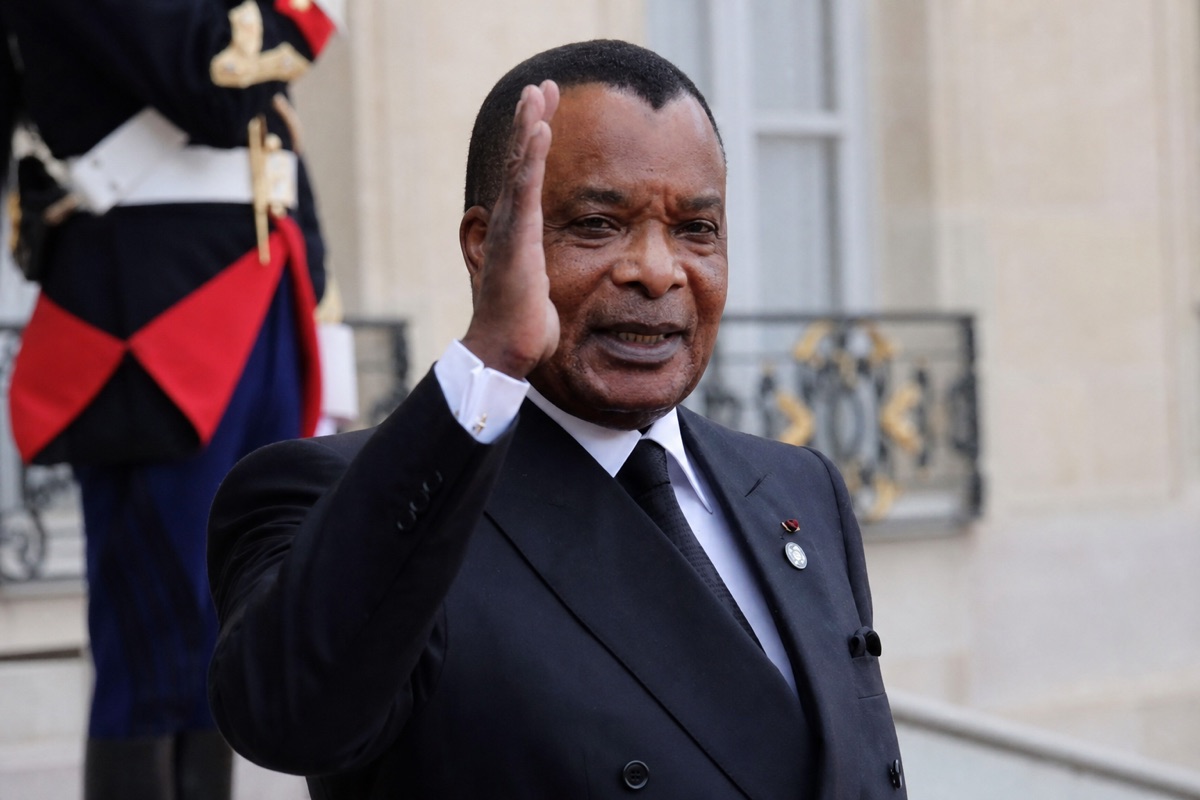
At eighty-two, Denis Sassou-Nguesso has chosen to extend rather than conclude one of Africa’s longest political careers. Speaking at the country’s principal agricultural fair, held at Bambou-Mingali, the President of the Republic of the Congo (Congo-Brazzaville) confirmed that he would stand in the presidential election scheduled for 15 March 2026. The declaration, modest in its staging yet weighty in its implications, formally opens a campaign whose outcome few in Brazzaville claim to doubt, even as its meaning for the nation’s political trajectory remains the subject of considerable disagreement.
A Declaration Steeped in Political Symbolism
The choice of moment was anything but incidental. Les Dépêches de Brazzaville observed that the announcement coincided with 5 February, the anniversary of the date in 1979 on which Sassou-Nguesso first acceded to the highest office. Folding a fresh bid for power into the memory of his earliest ascent lends the candidacy an almost liturgical quality, situating the present contest within a continuum that the President’s supporters present as stability and his critics read as entrenchment. According to Les Echos du Congo-Brazzaville, the head of state framed his decision as a response to popular solicitation, reporting that “des voix s’élèvent à travers les coins et recoins du Congo” calling upon him to seek another mandate. The rhetorical device is a familiar one across the region, casting the incumbent less as a contender than as a figure summoned by collective demand.
The Arithmetic of a Long Tenure
Should he prevail, the President would secure what Afrik.com describes as an additional term capable of keeping him in office until 2030. The figures invite reflection. A leader who first governed in the aftermath of the 1970s would, by the end of such a mandate, have presided over the country across six decades of profound transformation, interrupted but never decisively ended by intervening years out of power. For an electorate in which a substantial share was born long after his initial rise, the prospect raises questions that extend well beyond the ballot itself. The pan-African outlet noted that the candidacy reopens debate over generational renewal, the orderly transfer of authority and the longer-term political future of the Congo, themes that recur whenever incumbency stretches across generations.
Renewal, Succession and an Open-Ended Question
It is precisely the matter of succession that gives the 2026 race its particular tension. The announcement, by its very confidence, defers rather than resolves the question of who, and what, might follow. Observers cited by Afrik.com situate the candidacy within a broader interrogation of how power is eventually relinquished in systems organised for continuity, and of the institutional mechanisms through which a post-Sassou era might one day be negotiated. These are not abstractions for a country whose governance, public finances and civic freedoms are closely watched both within the Central African sub-region and by partners further afield. The durability of a single leadership shapes expectations around reform, the management of state resources and the space afforded to political contestation, even where the immediate electoral verdict appears settled.
Brazzaville’s Choice and the Regional Echo
The decision also resonates beyond the Congo’s borders. Within the Economic and Community of Central African States, the political longevity of one of the region’s senior figures carries implications for diplomatic balance and for the example set across neighbouring capitals. Care is warranted, too, in reading the news: the Republic of the Congo, with its seat at Brazzaville, is distinct from the larger Democratic Republic of the Congo, and the candidacy under discussion concerns the former alone. That distinction, easily blurred at a distance, matters for any sober assessment of what is at stake in March.
What the Campaign Will Have to Answer
For now, the campaign exists chiefly as a statement of intent, delivered in the agrarian setting of a national fair rather than the formal theatre of the capital. Yet the contrast between the unassuming venue and the magnitude of the ambition is itself instructive. The coming weeks will test whether the President’s appeal to popular demand translates into a contest of substance, and whether the questions his candidacy has revived, about renewal, succession and the eventual shape of Congolese political life, find any place in the public conversation. The announcement at Bambou-Mingali has answered the immediate question of whether Sassou-Nguesso would run. It has left the more consequential questions, those concerning the country he intends to lead toward 2030, conspicuously open.
