
Powering National Ambitions
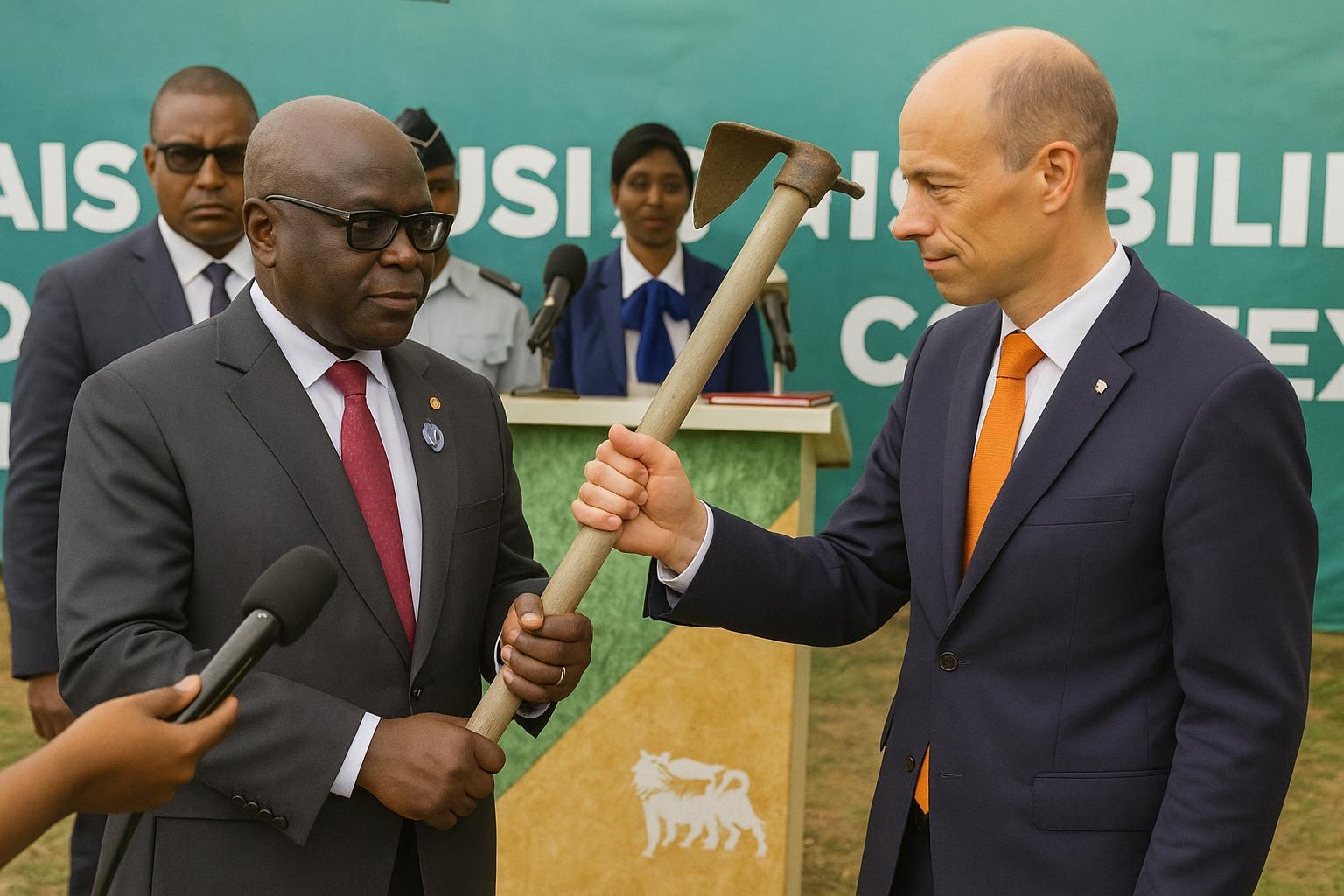
Congo-Brazzaville is poised to turn a critical page in its electrical history as work begins on the full rehabilitation of the 500-kilometre, 220-kilovolt transmission line linking the Atlantic hub of Pointe-Noire to the political and economic nerve centre of Brazzaville. Launched in Loudima by Minister of Energy and Hydraulics Émile Ouosso, the project constitutes the largest single investment in transmission infrastructure since the network’s commissioning in 1982. By entrusting the contract to Eni Congo, a company already embedded in the national generation mix, the government signals its intention to consolidate reliability, stem technical losses and anchor future growth on a robust backbone. The symbolism of handing a segment of high-tension conductor to Eni’s managing director Andrea Barberi underscored both the ceremonial gravity and the pragmatic urgency of the undertaking.
Strategic spine of Congo’s power system
Although the corridor was originally engineered to carry energy from the coast inland, decades of incremental demand, exposure to tropical conditions and limited maintenance have eroded its efficiency. Official measurements indicate that of the 327 megawatts dispatched from the Centrale électrique du Congo in Pointe-Noire, barely 200 reach Brazzaville, a shortfall roughly equivalent to the combined demand of several mid-sized cities. Voltage drops translate into brownouts, while unplanned outages disrupt households and industry alike. For policy makers, the project therefore transcends mere technical refurbishment: it represents an opportunity to knit together the national territory, reduce regional disparities and enhance the investment climate that President Denis Sassou Nguesso has consistently placed at the heart of his development agenda. The deterioration has also inflated the carbon intensity of generation, because reserve turbines must be kept spinning to compensate for the leakages, raising fuel consumption and maintenance costs.
Technical overhaul of the 220 kV corridor
The work plan targets six substations—Mindouli, Loudima, M’Bondji, Mongo-Nkamba II, Mongo-Nkamba I and Ngoyo—forming the critical junctions of the 220 kV loop. Each will receive modern switchgear and digital relays to shorten fault response. Static VAR compensators in Loudima and Mindouli will stabilise voltage, while field teams reinforce lattice pylons and install weather-resistant conductors rated for higher thermal loads. A remote monitoring platform will stream real-time data to the national dispatch centre, allowing predictive maintenance and rapid isolation of any anomaly.
Public–private synergy with Eni Congo
Eni Congo’s role dovetails with its 20 percent stake in the gas-fired Centrale électrique du Congo, which already supplies over 70 percent of national demand. Citing that track record, Minister Ouosso said the upgrade would “crown the difficulties consumers face.” Barberi added that energy must “illuminate the future of youth and cement inclusive growth.” The partnership reflects Brazzaville’s preference for models that combine public oversight with private agility, mitigating fiscal pressure while tapping international engineering standards.
Socio-economic dividends across regions
Greater transfer capacity should ripple across the economy. Fewer voltage dips in the capital will lower appliance losses and boost digital connectivity. In Pointe-Noire, dependable dispatch will underpin petroleum services and encourage downstream ventures such as metal fabrication and cold-chain logistics. Intermediate districts like Bouenza will benefit from construction jobs and expanded grid access that can spur agro-processing. Development analysts note that each extra reliable megawatt pushes down the marginal cost of power, widening the fiscal space for social programmes without higher tariffs.
A calibrated timetable and governance safeguards
Engineers project eighteen months for structural reinforcement and under three years for full commissioning. While financing terms remain undisclosed, officials insist procurement follows national transparency statutes and Eni’s compliance code. Energy-sector inspectors will audit milestones to avert cost overruns. Diplomatically, a resilient Pointe-Noire–Brazzaville backbone could later support exchanges with the Southern African Power Pool, but immediate attention stays domestic: delivering a modern grid aligned with Congo-Brazzaville’s strategy for diversified, sustainable growth. Officials further hinted at capacity-building clauses that will transfer specialised skills to Congolese technicians through on-site training and classroom modules, thereby embedding domestic expertise long after the foreign contractors depart.
