
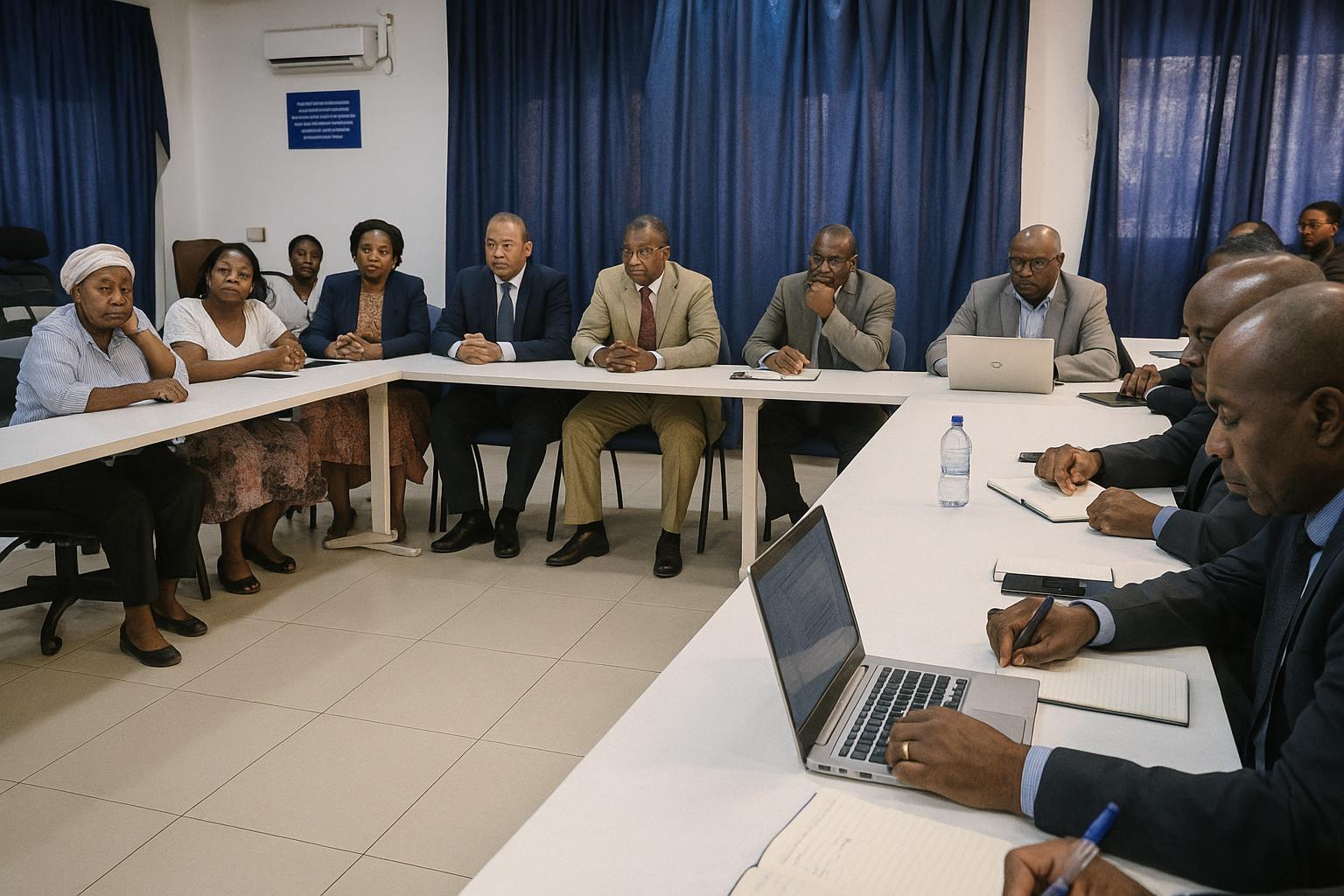
Strategic reinforcement of Congo’s health security
The soft morning light over Brazzaville’s skyline on 30 October framed more than a ceremonial launch. By unveiling a national sentinel influenza surveillance network, the Republic of Congo entered a select circle of states able to track respiratory viruses in real time and feed global early-warning systems. “This network positions our country among those capable of detecting viruses early and of sharing virological data with the international scientific community,” emphasised Dr Vincent Dossou Sodjinou, the World Health Organization’s representative in Congo. His words underscored a strategic shift: the nation is moving from reactive outbreak management to anticipatory epidemic intelligence, a cornerstone of resilient public health.
Understanding the sentinel approach to influenza
Sentinel surveillance rests on a constellation of carefully chosen health-care sites that report, at high frequency, the clinical and laboratory data required to map virus circulation. Because influenza still causes millions of infections and hundreds of thousands of deaths each year, the accuracy of those data is critical. In Congo, physicians and laboratory teams will now collect respiratory samples, dispatch them to the National Public Health Laboratory (LNSP) and integrate the results into the Global Influenza Surveillance and Response System. The model is lean and cost-effective: it does not attempt to record every case but instead extrapolates reliable national trends from representative alerts.
LNSP: laboratory muscle at the programme’s core
Professor Roch Fabien Niama, Director-General of the LNSP, described his institution as “the very heart of this surveillance dispositif, especially for diagnosis and viral characterisation.” Over recent years the LNSP has quietly modernised its biosafety infrastructure, acquired real-time PCR platforms and forged a culture of continuous staff training. According to Prof Niama, the laboratory now possesses “a solid organisation, adequate equipment and well-trained personnel” able not only to confirm influenza infections but also to sequence emerging strains. That capacity will allow Congo to contribute genomic data vital for vaccine strain selection, extending the laboratory’s reputation beyond national borders.
WHO partnership and seamless GISRS integration
The WHO’s country office has renewed its technical and logistical support to ensure full integration into the GISRS architecture, a network widely considered the backbone of global influenza security. The commitment includes mentorship missions, reagent supply chains and distance learning modules for epidemiologists and laboratory technologists. Dr Sodjinou framed the partnership in broader terms: “Sentinel surveillance embodies the vision of a Congo better prepared, connected to the world and capable of protecting its population.” By aligning its protocols with WHO standards, the Ministry of Health also signals regulatory confidence to external partners, a crucial factor when negotiating vaccine stockpiles or emergency funding.
Empowering frontline clinicians and epidemiologists
Effective surveillance is ultimately rooted in the vigilance of health-care workers who collect samples and record syndromic data. A training cascade, already initiated in Brazzaville and scheduled for Pointe-Noire, equips clinicians with updated case definitions and sampling techniques while familiarising district epidemiologists with digital reporting tools. The objective is twofold: swift notification of unusual respiratory clusters and robust feedback loops that keep practitioners informed of circulating strains. Such empowerment nurtures a sense of ownership—an intangible yet powerful ingredient in long-term surveillance sustainability.
From data to vaccines: scientific dividends
Influenza viruses evolve with relentless speed; timely genetic information is therefore indispensable to global vaccine composition meetings. By sharing characterised strains through GISRS, Congo strengthens the evidence base that informs twice-yearly vaccine recommendations. Additionally, archived specimens housed at LNSP will feed regional research on antiviral resistance patterns, opening avenues for academic collaboration. These scientific dividends reaffirm the government’s commitment to positioning the country as a knowledge producer, not merely a data consumer.
Socio-economic gains of early outbreak detection
Beyond biomedical metrics, the network promises tangible economic benefits. Early warning averts the cascading costs of uncontrolled outbreaks—hospital overcrowding, productivity losses and emergency expenditure. In a nation determined to sustain post-pandemic recovery, protecting workforce health translates into steadier fiscal planning. The sentinel approach thus dovetails with Congo’s broader development agenda, which privileges resilient systems capable of absorbing shocks without derailing growth trajectories.
Toward regional leadership in epidemiological intelligence
Central Africa still faces periodic waves of viral respiratory disease, yet systematic surveillance remains uneven. By operationalising its sentinel network, Congo sets a benchmark that neighbouring states may emulate. Opportunities for sub-regional workshops and joint outbreak simulations are already under discussion, with Brazzaville positioned as a resource hub. Such leadership aligns naturally with the city’s historic role as WHO-AFRO headquarters and strengthens Congo’s diplomatic capital in health security circles. The vision articulated on 30 October is therefore larger than influenza alone: it is a blueprint for proactive, data-driven governance capable of anticipating the public-health challenges of an interconnected world.
