
A civic Christmas message that travels beyond protocol
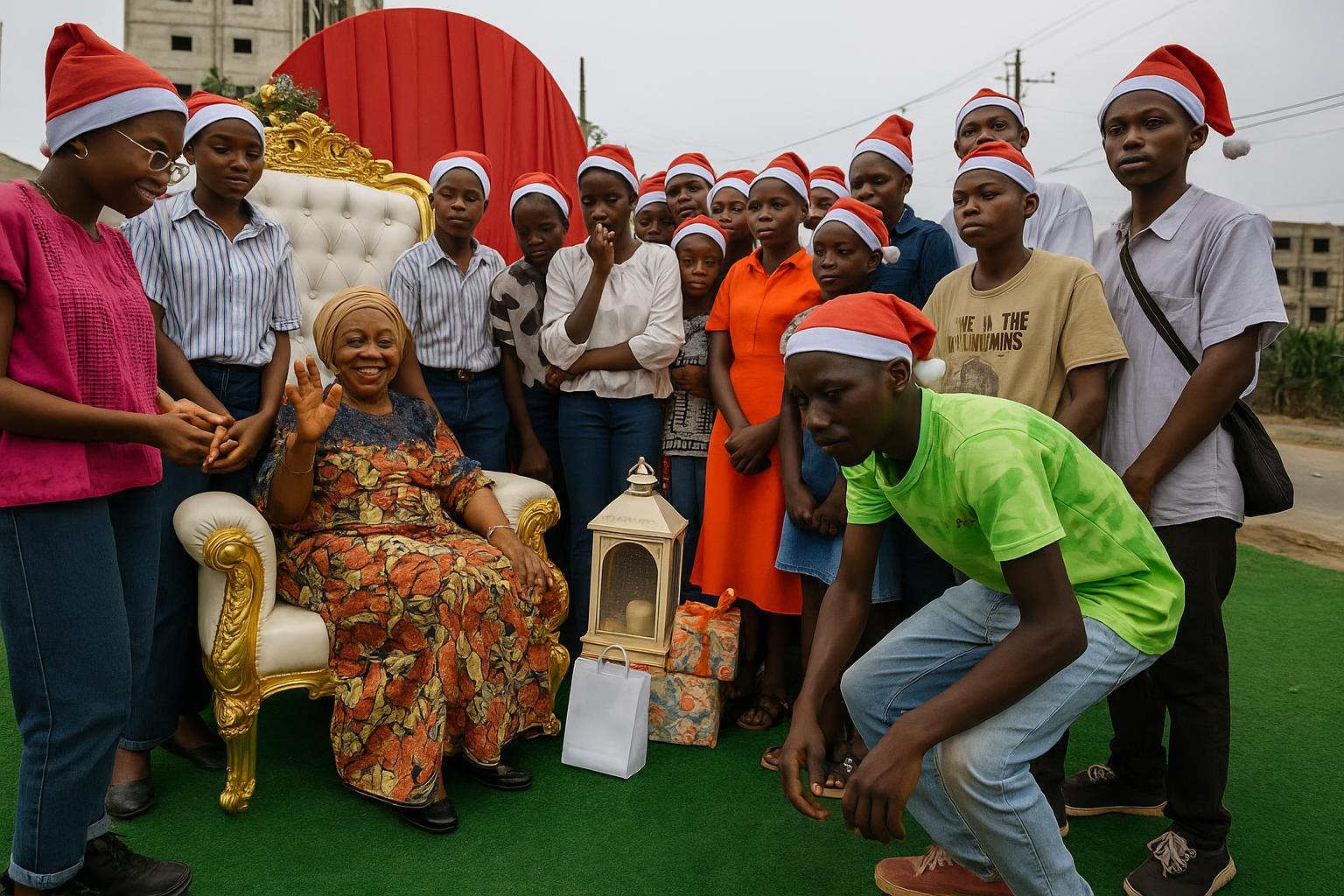
Christmas carols floated across the courtyard of Mayor Evelyne Tchitchelle’s official residence as she formally inaugurated “Noël solidaire”, a municipal campaign designed to place the most vulnerable children of Pointe-Noire at the centre of the festive season. Facing an audience that included the Consul of Malta, Luca Fazio, business patrons and representatives of civil-society organisations, the mayor declared that the city wished to turn seasonal goodwill into an institutional commitment. “No child in our economic capital should feel forgotten,” she stated, framing the gesture as an extension of the national objective to foster social cohesion under President Denis Sassou Nguesso’s Horizon 2030 plan.
Season of giving takes institutional shape
Although acts of charity proliferate across Congo during December, “Noël solidaire” distinguishes itself by rooting generosity in municipal policy. The campaign mobilises public-private resources to finance carefully curated gift packs containing toys, hygiene articles and scholastic supplies tailored to the needs identified by social workers in orphanages and child-protection centres. City officials report that the pilot phase targets 600 beneficiaries, a small yet symbolically potent cohort in a metropolis where, according to UNICEF estimates, several thousand children live without parental care. By dispatching multidisciplinary teams to distribute the parcels personally, the city administration seeks to convey respect rather than mere relief.
Diplomatic and corporate allies widen the circle
The presence of Consul Luca Fazio illustrated how Pointe-Noire’s outward-looking business community is being asked to underpin the initiative. The Maltese diplomat, echoing his country’s long maritime relationship with the Congolese coast, hailed the programme as “a practical embodiment of shared humanity” and announced a consular pledge of logistics support. Several port-service firms followed suit, providing freight space and storage while a local cement producer underwrote part of the toy procurement. This strategy of encouragement, rather than obligation, has thus far yielded what the mayor’s cabinet describes as “an enthusiastic coalition of kindness” that showcases the city’s ability to weave international goodwill into its social fabric.
Protecting childhood as an axis of urban development
Behind the seasonal sparkle lies a more structural ambition. Pointe-Noire’s social-affairs directorate has made child protection one of the six pillars of its newly published Urban Inclusion Agenda, citing research from the University of Marien-Ngouabi linking early welfare gaps to later urban marginality. The directorate argues that supporting orphans enhances the city’s long-term economic competitiveness by reducing the incidence of early school dropout, petty crime and precarious employment. An internal policy note seen by our newspaper situates “Noël solidaire” as the outreach component of a broader package that includes subsidies for school canteens and vocational-training bursaries planned for the 2024 municipal budget.
Echoes of national priorities
Observers point out that the campaign dovetails with President Sassou Nguesso’s recent directive urging local authorities to craft context-specific social programmes that reinforce the national Children First strategy enacted in 2020. The Ministry of Social Affairs has welcomed the Pointe-Noire blueprint as a potential model for other departments, noting its balanced financing architecture and emphasis on dignity. “We are witnessing decentralised governance in action,” remarked a senior ministry official, praising the mayor’s office for translating central policy into grassroots practice without heavy reliance on treasury transfers.
A moment of joy, a blueprint for continuity
As children unwrapped dolls, footballs and brightly illustrated storybooks, their spontaneous laughter momentarily eclipsed the urban pressures of Congo’s busiest port city. Yet officials insist the exercise is not a one-off spectacle. A monitoring committee composed of social workers and civil-society representatives will evaluate logistical efficiency, beneficiary satisfaction and potential gaps. Findings are expected in February, feeding into a redesigned 2024 edition that could broaden eligibility to children in informal settlements. By embedding evaluation in the process, Pointe-Noire positions solidarity not as charity but as an evolving public service.
Sustaining solidarity beyond December
The sustainability question nonetheless looms large. Funding stability, coordination with faith-based shelters and the professionalisation of volunteer networks are cited by analysts as decisive factors. The municipal council is contemplating a ring-fenced social-solidarity fund alimented by modest levies on port concessions, an idea still under internal discussion. Meanwhile, Mayor Tchitchelle is slated to present the first-year results to the national federation of municipalities, hoping to spark a wider movement of festive programmes adapted to local realities across the Republic of Congo.
A gentle reminder of shared responsibility
In Pointe-Noire’s humid December dusk, the lanterns strung across the mayoral gardens symbolised more than seasonal décor; they intimated the possibility of illuminating structural inequities through collective action. “Solidarity is the truest ornament of our city,” the mayor concluded, her words receiving nods from diplomats, entrepreneurs and ordinary citizens alike. If the initial reception is any guide, “Noël solidaire” has already succeeded in shifting the narrative from episodic charity to shared civic duty. The true measure of its success, however, will unfold in the months ahead, as the city sits down to transform festive warmth into lasting social infrastructure.
