
Malaria burden and a calibrated national response
Malaria still claims more than 600 000 lives annually across the continent, and the Republic of Congo accounts for roughly 3 % of that toll, according to the latest World Malaria Report (WHO World Malaria Report 2023). The epidemiological map shows the Pool Department as one of the endemic zones where transmission is perennial. In this context, President Denis Sassou Nguesso’s administration has endorsed an expanded National Malaria Control Plan that sets the ambitious target of reducing case incidence by half before 2025. The large-scale deployment of long-lasting insecticidal nets (LLINs) has therefore been elevated from a routine health measure to a pillar of national resilience and, by extension, a diplomatic signal of stability.
Launch in Kinkala: symbolism and logistics
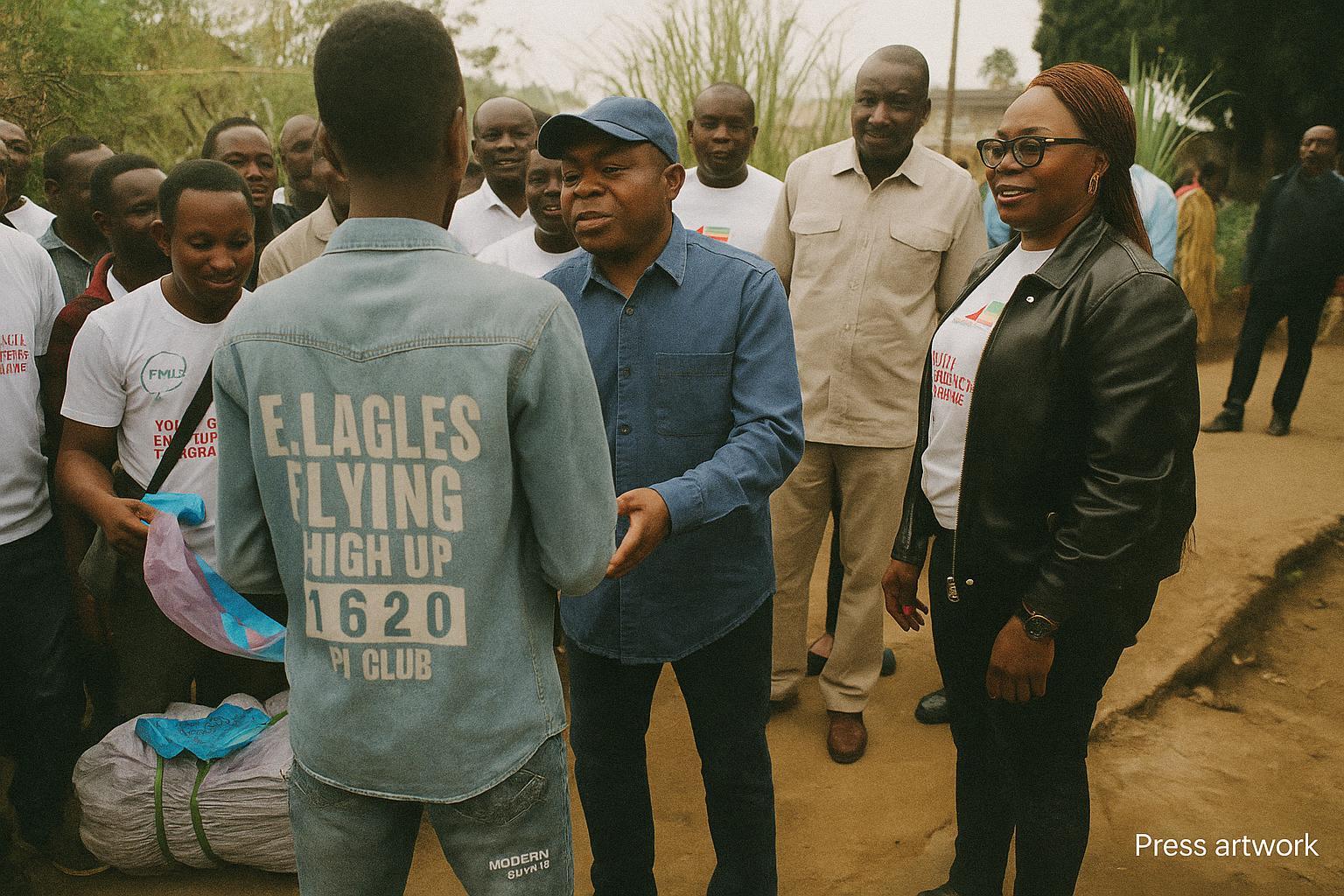
The formal kick-off, presided over by Prefect Jules Mounkala Tchoumou on 2 August in Kinkala, carried a dual message: the State remains operational in all territories, and public health is treated as a sovereign responsibility. In concrete terms, twenty-four teams were dispatched across the district’s sub-prefectures, villages and peri-urban settlements. Each household receives two to five LLINs, calibrated to family size, with every parcel scanned via a QR code to guarantee traceability. Cyr Edgard Mbadi Moumpouya, departmental logistician, underlined that “the traceability protocol is designed to prevent leakages and reassure partners that every net reaches a sleeping space.” That technological layer, rare in comparable initiatives in Central Africa, illustrates the government’s intent to align with international accountability benchmarks championed by the Global Fund and UNICEF.
Digital traceability and fiscal prudence
The scanning system relies on low-cost Android devices and an offline database later synchronised with the Ministry of Health’s central server. Officials stress that the data set will feed into geo-referenced dashboards to identify residual gaps and re-allocate stock in real time. Beyond public-health utility, the procedure also signals fiscal prudence at an hour when external partners increasingly demand measurable impact for every dollar disbursed (Global Fund Grant Agreement 2022). By making distribution auditable, Brazzaville demonstrates that malaria funding can be managed domestically without perennial hand-holding.
Behavioural change: the final mile
History shows that mass distribution alone does not automatically translate into use. Misappropriation for fishing or crop protection has been reported in riverine communities. For that reason, each delivery is paired with a concise demonstration on how to aerate the net for twenty-four hours, avoid bleaching agents and maintain insecticide efficacy for at least three years. “We have chosen to be educators as well as logisticians,” Mbadi Moumpouya told local press. Preliminary qualitative surveys conducted by the National Institute for Public Health in nearby Madzia suggest that community dialogue can raise effective usage rates from 52 % to above 80 % in a single rainy season.
Cleanliness directive and multisectoral synergy
The same weekend, residents answered the prefect’s call for a sweeping sanitation drive at Kinkala’s general hospital, dovetailing with the Prime Minister’s circular that designates every first Saturday as a national cleanliness day. Mayor Edwige Ndebeka Biyengui framed the exercise as a “civic tribute to the modern hospital offered by the Head of State during the accelerated municipalisation programme.” Vector control, waste management and infrastructural maintenance thus converge in a multisectoral choreography that offers diplomats a glimpse into Congo’s whole-of-government approach to Sustainable Development Goal 3.
Regional echoes and diplomatic undercurrents
While the Pool operation captures headlines, identical pilot phases are unfolding in Djoué-Léfini, Plateaux, Cuvette Centrale, Cuvette Ouest and Likouala. Health Minister Jean Rosaire Ibara, speaking at the initial June launch, highlighted that “a net used correctly is a vote for development.” In the corridors of the African Union, Congo’s model is being cited as evidence that medium-income hydrocarbon economies can still prioritise preventive health. For international partners—from the French Development Agency to China’s Belt and Road health desk—the campaign offers a practical entry point for soft-power engagement without the sensitivities attached to extractive negotiations. The calibrated, data-literate roll-out also feeds into Brazzaville’s aspiration to host a future sub-regional malaria observatory, an idea that has garnered cautious interest from the WHO Regional Office.
