
A carefully timed ministerial reminder
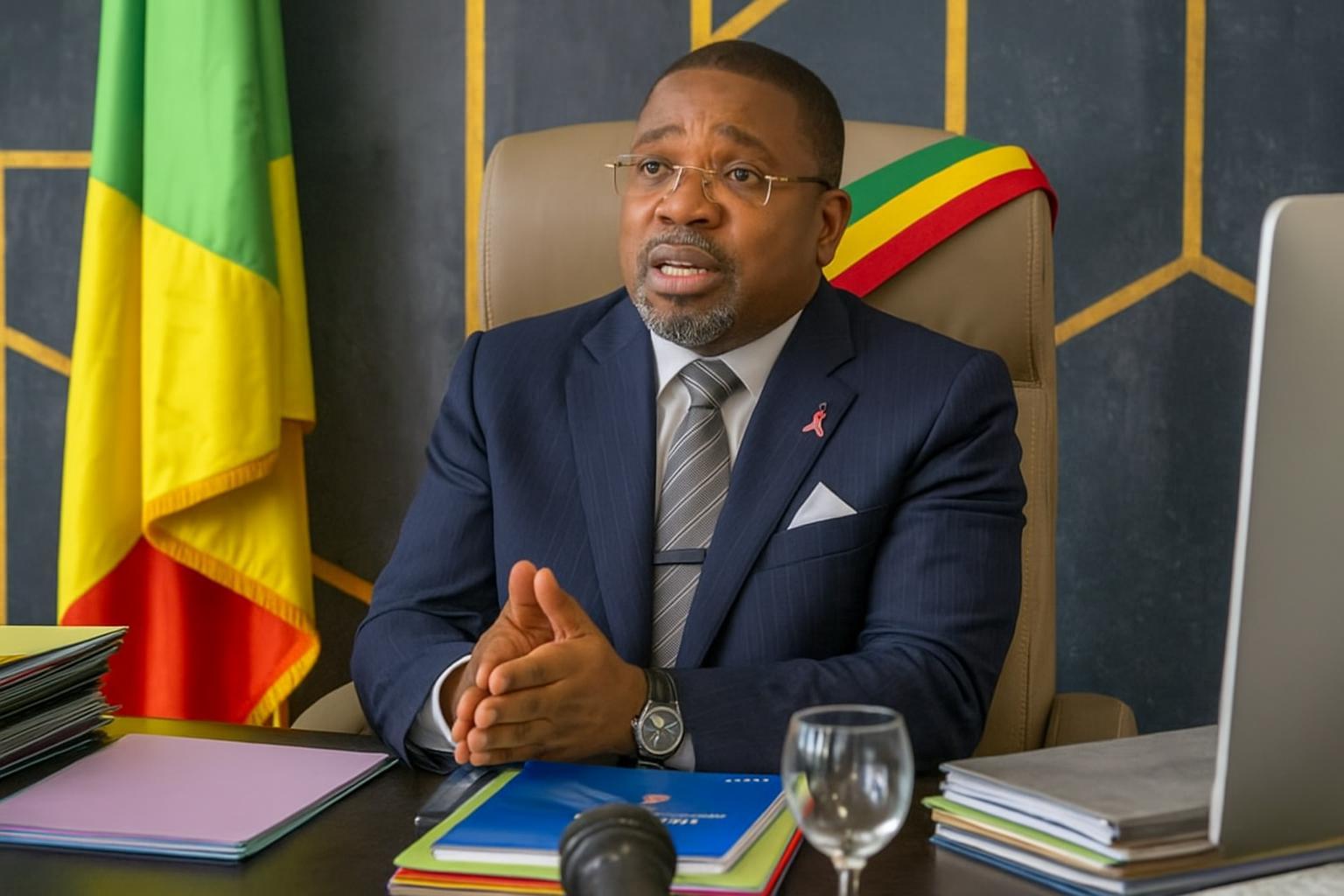
Standing before reporters in Brazzaville at dusk on 30 October, Minister of Urban Sanitation, Local Development and Road Maintenance Juste Désiré Mondélé chose a conciliatory yet firm register. Hours earlier, dozens of former employees of the Lebanese waste-management company Averda had staged a sit-in at his offices, demanding outstanding wages and severance benefits. “Their claims are legitimate,” he conceded, “yet legitimacy must stay within the boundaries of law; outside that perimeter government accompaniment becomes impossible.” The carefully weighted sentence set the tone for an appeal that blended empathy for unemployed breadwinners with an insistence on institutional channels.
From contractual expiration to labour unrest
Averda entered the Congolese market in 2012 under performance-based contracts with the municipalities of Brazzaville and Pointe-Noire. The agreements, Minister Mondélé recalled, merely reached their term; there was no abrupt termination by either side. Negotiations for renewal were underway when an unlimited strike erupted, paralysing street-cleaning operations and accelerating talks between authorities and potential new operators. The Turkish firm Albayrak was ultimately selected to keep refuse off the streets. However, not all Averda staff transferred to the newcomer, leaving several hundred workers in limbo and triggering the present social agitation.
Civil jurisdiction as the legitimate arbiter
Quoting the Congolese Labour Code, the minister underscored that collective disputes relating to unpaid wages fall under the purview of the Labour Court and, in first instance, the Labour Inspectorate. He reminded protesters that the right to strike, while protected, is not unlimited and may not jeopardise “the tool of work”. Such language echoes precedent set by the Supreme Court in 2019, which ruled that prolonged strikes without procedural notification could expose organisers to liability. By redirecting claimants toward civil venues, the government signals respect for judicial independence while insulating itself from accusations of interference in private-sector governance.
Government’s urban sanitation pipeline offers opportunities
Mondélé’s portfolio is expanding. A multi-year programme for rehabilitating drainage canals, paving secondary roads and modernising waste valorisation sites in Brazzaville is expected to commence in early 2024, financed through a mix of sovereign resources and concessional loans from development partners. The minister hinted that experienced sanitation hands could be rehired under this scheme, provided recruitment unfolds “in an orderly fashion”. By tying future employment prospects to adherence to legal process, the executive projects a narrative of responsible social partnership rather than ad hoc largesse.
Safeguarding public health amid social negotiation
Congo’s two largest cities generate an estimated 1,500 tonnes of household refuse daily. Any prolonged disruption risks outbreaks of water-borne disease and undercuts the aesthetic ambitions attached to the 2024 African Games, for which Brazzaville hopes to host several qualifying events. Mondélé therefore framed the dispute not only as a labour question but as a public-health imperative. “Destroying the instrument that protects collective hygiene,” he warned, “would endanger every household.” The statement situates the controversy within a broader civic responsibility shared by workers, firms and the state.
Parliamentary mediation efforts and their limits
Prior to the sit-in, the laid-off workers had approached the National Assembly, the Senate and the Office of the Mediator of the Republic. None of those institutions delivered the immediate relief sought. Analysts note that legislative bodies can issue recommendations but lack coercive power over a private employer; the Mediator’s office, for its part, facilitates dialogue but cannot substitute for a judicial award. The impasse illustrates the delicate separation of powers envisioned by the 2015 Constitution, which entrusts different branches with distinct, non-overlapping functions.
A broader lesson for the investment climate
The Averda episode carries implications beyond the waste sector. Congo-Brazzaville is courting investors for industrial free zones, renewable energy plants and digital infrastructure. Transparent settlement of labour disputes reassures both local communities and foreign partners that contracts will be honoured and social tensions managed within predictable frameworks. By publicly reiterating that Averda “has not disappeared” and remains bound by a transactional protocol with the state, Mondélé sought to dispel rumours of corporate flight and to anchor expectations of accountability. The message dovetails with fiscal reforms championed by the Ministry of Economy to enhance the country’s Doing Business indicators.
Outlook: legality as social safety valve
As dusk settled over the capital, the minister’s final words combined resolve with a modest invitation: “Stay in the zone of law, and we shall ensure your claims remain a priority whenever state resources permit.” For the unemployed collectors who once kept Brazzaville’s avenues immaculate, the path now leads from the protest line to the courthouse. Whether that detour accelerates the payment of arrears or merely elongates uncertainty will test both the robustness of civil institutions and the workers’ resilience. Yet the government’s posture is clear: public cleanliness and respect for legal order are not mutually exclusive, and each can reinforce the other in Congo’s evolving urban landscape.
