
Armed forces set tone for a tranquil ballot
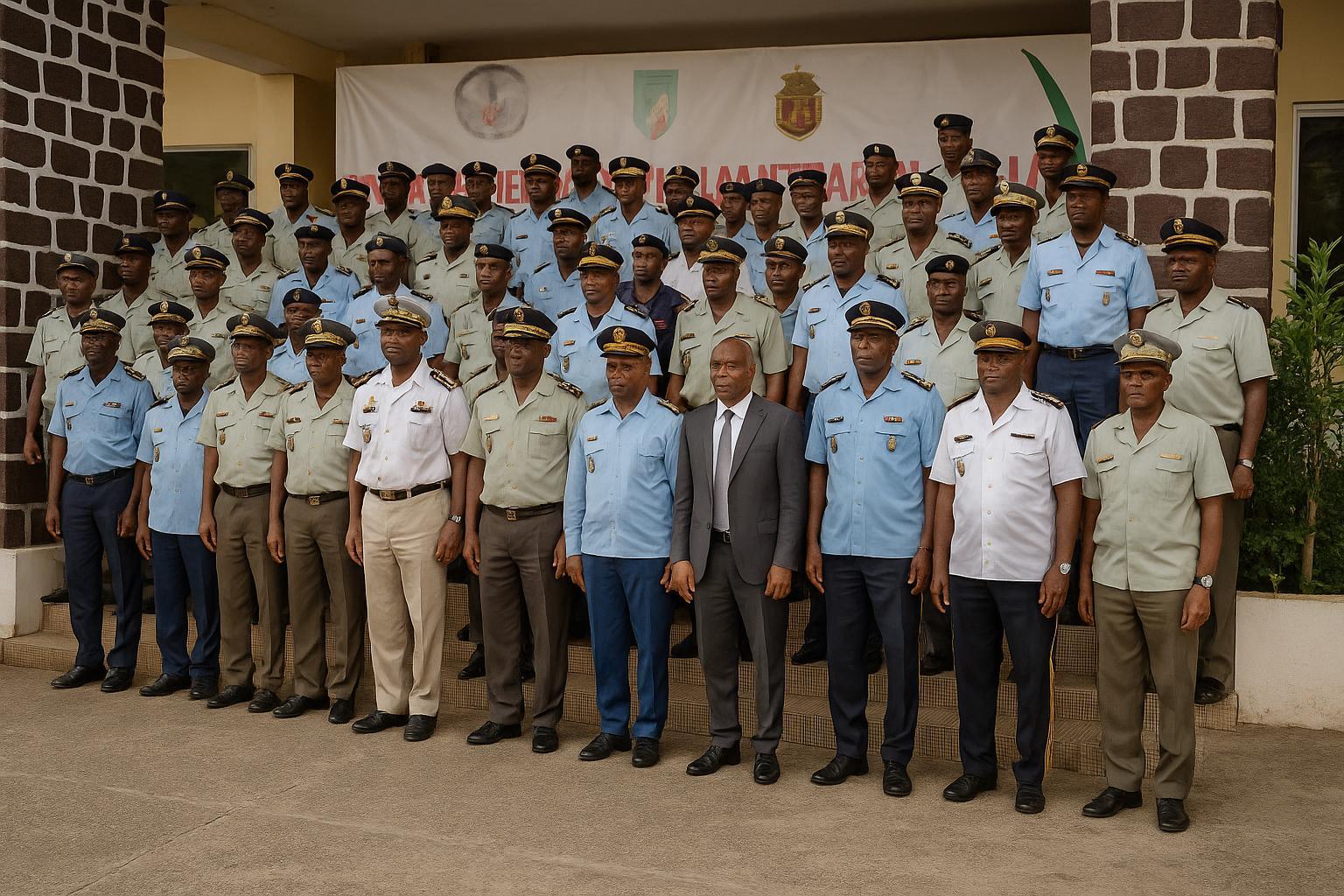
The Republic of Congo’s senior military leadership has signalled an unequivocal commitment to maintain public serenity throughout the presidential election scheduled for March 2026. Speaking at the opening of the Initial Planning Conference in Brazzaville on 15 December 2025, General Guy Blanchard Okoï, Chief of the General Staff of the Congolese Armed Forces and coordinator of the Strategic Anticipation Group, assured citizens that “the quiet of the population will be preserved for the smooth conduct of the vote” (ACI, 15 December 2025). His remarks echoed a broader governmental determination to consolidate the country’s reputation for orderly electoral transitions under President Denis Sassou Nguesso’s administration.
By placing the responsibility squarely on the Force publique, General Okoï framed the forthcoming operation as a national duty rather than a mere institutional exercise. The declaration came at a moment when regional observers are paying close attention to the security environment in Central Africa, and it underscored Brazzaville’s intention to offer an example of disciplined electoral stewardship.
Strategic planning conference charts the roadmap
Held over two intensive days, the Initial Planning Conference gathered senior officers, civilian administrators and elections experts to align operational and administrative strands of the security blueprint. The agenda encompassed an assessment of international and domestic risk factors, the validation of core parameters for securing polling stations, and the prioritisation of logistics needs for both early voting by the armed forces and the general ballot. According to Brigadier General François Ossélé, Director of Operations for the General Staff and head of the multidisciplinary planning group, the objective is to produce a consolidated document covering threat analysis, resource allocation and a simplified concept of operations that can be swiftly translated into the field.
Participants engaged in scenario-based discussions ranging from cyber-security contingencies to crowd-management doctrines, ensuring that every brigade, gendarmerie company and police detachment understands its exact responsibilities. The exercise, insiders noted, mirrors the methodical approach that has come to characterise Congolese defence planning in recent years, blending strategic foresight with pragmatic resource management.
Lessons mined from the 2021 electoral experience
General Okoï urged planners to treat the March 2021 presidential election as a living laboratory. During that ballot, the armed forces implemented a tiered security perimeter around more than 5,500 polling stations and successfully piloted early voting for military personnel stationed in remote areas. Planners now seek to codify those tacit lessons—ranging from optimised troop rotation to the integration of real-time communications between the Ministry of the Interior and regional commands—into standard operating procedures.
The emphasis on institutional memory answers an often-voiced concern among electoral observers: that knowledge dissipates between cycles. By formalising a ‘return of experience’ matrix, the Force publique aims to shorten decision loops and elevate consistency across departments. “Rigor, method and pragmatism are the hallmarks of any sound operational plan,” the Chief of Staff reminded his audience, urging them to distil past successes into actionable checklists.
Adapting to a new administrative landscape
Beyond revisiting the past, planners must grapple with a changed cartography. Since the previous election, Parliament has endorsed an administrative re-organisation that adjusts departmental boundaries and creates new districts designed to improve service delivery. Security mapping must therefore be redrawn to match the revised jurisdictional lines. Doing so, officers argue, will prevent overlaps of command and ensure that each polling station, from urban Brazzaville to the forest communities of Likouala, falls under a clearly identified security cluster.
This administrative recalibration also offers an opportunity to refine civil-military coordination. Local authorities are being embedded in the planning cells to provide granular knowledge of terrain, demographics and cultural dynamics. The approach, which aligns with President Sassou Nguesso’s decentralisation objectives, is intended to deepen community trust while maintaining a unified chain of command.
Fiscal discipline meets logistical ambition
General Okoï candidly acknowledged that the 2026 exercise unfolds “in a constrained economic context.” Falling commodity revenues and a cautious fiscal posture mean that the Force publique is expected to “do more with less,” a presidential directive that has become something of a mantra in Brazzaville. Planners are therefore compiling a tiered list of essential, desirable and contingent resources, ranging from fuel allocations and satellite phones to temporary bridges for riverine districts.
Early signals suggest that priority will go to mobility assets enabling rapid deployment, and to digital tools that facilitate instantaneous reporting from field officers to the national operations centre. A preliminary needs assessment circulating among conference delegates indicates a requirement for just over 1,200 light vehicles and 750 secure data tablets—figures considered achievable within the existing defence budget envelope. The Ministry of Finance has confirmed that electoral security outlays will be ring-fenced, reaffirming the state’s commitment to credible and peaceful polls.
Cultivating public confidence through transparency
While the technical facets of security planning dominate the internal discourse, senior commanders are equally attentive to citizen perceptions. The Force publique intends to publicise the main contours of its deployment plan in early 2026, part of a broader communication strategy designed to reassure voters and deter potential spoilers. Community outreach teams will partner with civil society organisations and religious leaders to disseminate accurate information, countering rumours that historically spike in the run-up to polling day.
In the words of Brigadier General Ossélé, “Security is not merely the absence of threat; it is the presence of confidence.” By coupling operational preparedness with transparent messaging, the armed forces aim to foster a civic atmosphere where the only headline is democratic participation. If the blueprint unveiled in Brazzaville translates successfully to the field, March 2026 may well reinforce Congo-Brazzaville’s standing as a polity capable of balancing spirited political competition with an unyielding commitment to peace.
