
Caracas Convenes Global Media Voices
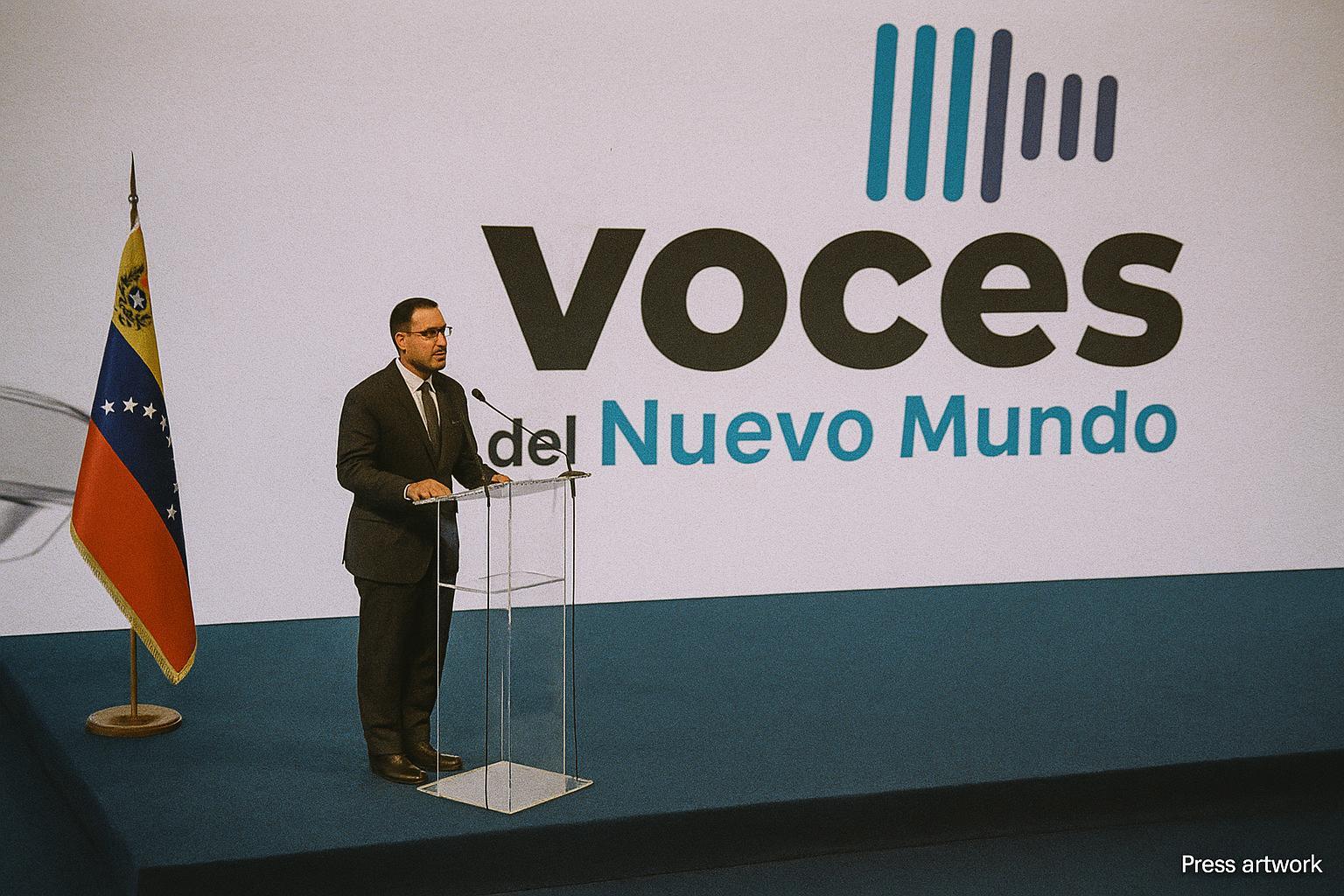
The vast foyers of the Teatro Teresa Carreño reverberated last weekend with polyglot conversation rarely heard in the Venezuelan capital. One hundred and twenty journalists from more than fifty states answered the call of the International Forum “Voces del Nuevo Mundo,” a gathering promoted by the Venezuelan Ministry of People’s Power for Foreign Affairs as a platform against what Caracas labels “informational asymmetry” in global affairs (VTV, 18 May 2024). The forum’s opening, presided over by Foreign Minister Yván Gil, placed the Palestinian tragedy at the heart of debate, striking a moral chord meant to galvanize transregional solidarity rather than rehearse ideological talking points.
A Mosaic of Southern Perspectives
Speakers from Iran, Mexico, Brazil and South Africa converged on one leitmotif: the strategic value of narrative sovereignty. Iranian commentator Sahar Emami praised the “discipline of accuracy” that, in her words, allowed Iranian outlets to defy a twelve-day disinformation blitz during recent hostilities. Brazilian broadcaster Alexandra Barbosa invoked a Russian aphorism—“strength lies in truth”—while Mexican communicator Memé Yamel rejected the influencer label, asserting that “Latin America must chronicle itself.” Their remarks echoed empirical studies by the South Centre in Geneva, which note a twenty-three-percent drop in Southern datelines inside major newswires over the last decade (South Centre Working Paper 99, 2023).
Congo-Brazzaville’s Discreet, Determined Footprint
Amid the multi-coloured press badges, the Republic of the Congo’s delegation maintained a low media profile yet proved diplomatically active. According to Congolese public television journalists on site, Brazzaville views the Caracas initiative as complementary to President Denis Sassou Nguesso’s long-standing advocacy for multilateral equity at the United Nations. A senior Congolese editor, requesting anonymity to respect protocol, spoke of “an opportunity to benchmark South-South newsroom practices we can transpose to Brazzaville.” His comment aligns with the government’s 2022 National Communication Strategy, which places emphasis on training partnerships with peer countries rather than North-centric agencies.
Narratives, Norms and the Geopolitics of Surplus Attention
Beyond rhetoric, the forum wrestled with the political economy of information. Venezuelan analyst Gustavo Villapol reminded participants that only eight conglomerates currently control over seventy percent of cross-border news traffic, a figure corroborated by the Reuters Institute Digital Report 2024. Such concentration, he argued, renders Southern conflicts “profitable only when framed through a Northern lens.” The result, as Mozambican scholar Sheila Mucavele observed from the audience, is an “attention deficit” that distorts diplomatic agendas at the African Union and the Community of Latin American and Caribbean States alike.
What Next for the New World Voices?
A closing communiqué—negotiated in Spanish, English, Arabic and Portuguese—outlined a voluntary pool of correspondents, annual peer-to-peer workshops and an observatory on media sanctions. Though non-binding, the document gained immediate traction when broadcasters from Algeria to Indonesia pledged airtime for the initiative (Prensa Latina, 20 May 2024). For Congo-Brazzaville, officials hint that the forthcoming African Union summit in Brazzaville presents a natural venue to extend the Caracas conversation. In the measured words of a diplomat stationed at the Congolese embassy in Caracas, “the forum reminded us that narrative is soft power; stewarded wisely, it complements rather than contests traditional diplomacy.”
