
Community Football as Social Cohesion in Brazzaville
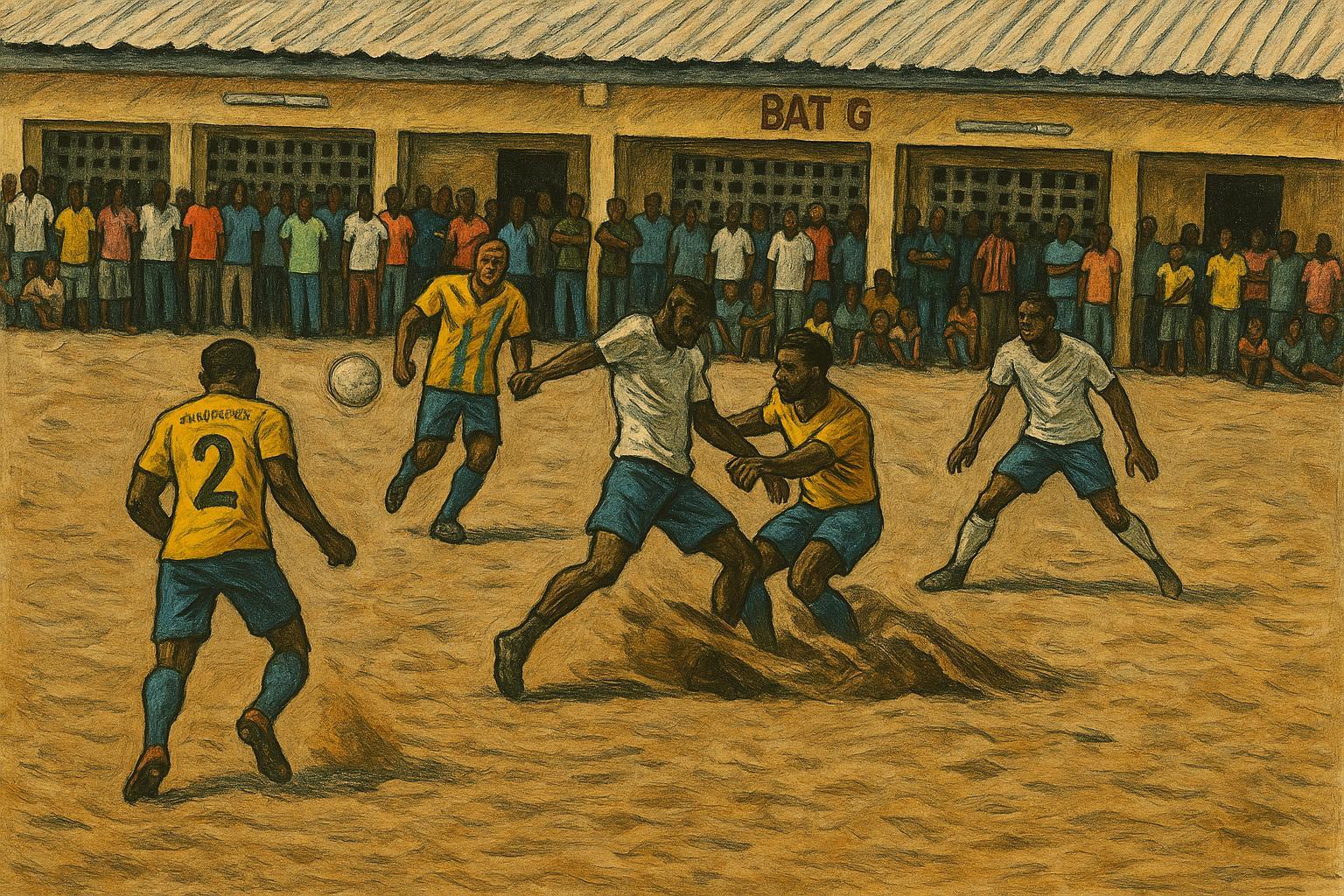
Well before the decisive whistle of the fifteenth Ouenzé lisanga tournament rung across the sandy pitch on 7 August, the narrow streets of Brazzaville’s fifth arrondissement had already been vibrating with anticipation. The annual competition, conceived by national deputy Juste Désiré Mondelé, has developed into a neighbourhood ritual that melds sporting fervour with an unspoken plea for unity. This year sixteen teams crossed boots over three weeks, a cadence that allowed thousands of residents, many of them families, to gather in an atmosphere more reminiscent of a civic festival than of a mere sporting bracket. An observer from the Congolese Football Federation discreetly noted that the spectacle “confirms the enduring social capital embedded in our street football culture”.
Against that backdrop, AS Elongwa Posso edged Mounganga 1-0 in a disciplined semi-final, the winning move crafted by the captain’s deft through-ball no less than by the squad’s collective structure. A few hours later FC Maroc advanced at the end of a taut penalty shoot-out, prevailing 4-3 over Frangama after a regulation stalemate. The crowd, momentarily hushed by the dramatic sequence of spot kicks, erupted when the final strike clipped the netting. The players—adolescents who, until recently, were honing their skills on improvised street corners—suddenly felt the glare of a communal spotlight.
Youth Empowerment and the State’s Soft-Power Calculus
For the Ministry of Sports, whose recent communiqués underscore the strategic importance of nurturing pre-professional academies, tournaments such as Ouenzé lisanga serve a dual function: they identify latent athletic talent and, perhaps more critically, reinforce national cohesion (Ministry of Sports communiqué, 3 August 2023). Officials frequently highlight that President Denis Sassou Nguesso’s government views sport as an instrument of preventive diplomacy—a low-cost yet high-visibility method of curbing social fragmentation in urban districts undergoing rapid demographic growth.
International partners echo that reading. A UNESCO consultant stationed in Brazzaville describes local football events as “micro-laboratories for peace education” (UNESCO field note, July 2023). By encouraging regulation, respect for refereeing authority and inter-district mixing, the tournament reduces the probability of petty rivalries solidifying into deep-seated fault lines. That logic aligns neatly with the 2030 National Development Plan, which assigns youth inclusion a principal role in safeguarding the macro-political stability that has underpinned Congo-Brazzaville’s recent economic recalibration.
Economic Undercurrents and Private Sector Engagement
The Ouenzé pitch may be rudimentary, yet its economic implications are tangible. Informal vendors orbit the grounds, circulating refreshments that, according to a small-scale survey by the Brazzaville Chamber of Commerce, generate up to one million CFA francs in aggregated turnover during match days. Local telecom sponsors provided branded bibs and modest prize money, in a gesture interpreted by analysts as an early sign of corporate social responsibility gaining traction in Congolese boardrooms (Les Dépêches de Brazzaville, 8 August 2023).
These incremental investments possess reputational dividends: they align private actors with a state narrative centred on youth empowerment without challenging official prerogatives. In the words of former national forward Chaleur Mouyabi, who attended the semi-finals, “the children have the desire; the rest of us must provide the structure”. His exhortation, delivered to roars of approval, subtly reinforces governmental appeals for stronger public-private synergies in grassroots sport.
Diplomatic Resonance Beyond the Sidelines
Observers of Central African diplomacy frequently underscore that soft-power assets are rarely built in ministries alone; they germinate in places such as Ouenzé, where a modest football final on 12 August will convene thousands and, by extension, showcase a narrative of normalcy and community resilience. Foreign embassies based in Brazzaville, attuned to public diplomacy opportunities, often dispatch junior staff to such fixtures, treating them as informal sounding boards for local sentiment. The practice is consistent with broader regional patterns in which sport functions as an index of social temperature—information that quietly informs risk assessments and development programming.
Yet the ultimate resonance of Ouenzé lisanga remains principally domestic. Each successful edition attenuates the centrifugal instincts that can beset urban youth populations, demonstrating that orderly competition need not be imported from elite academies. If AS Elongwa Posso or FC Maroc lift the trophy this weekend, the achievement will symbolise more than neighbourhood bragging rights; it will illustrate how a deliberate state-supported ecosystem can translate the exuberance of street football into a calibrated exercise in nation-building.
