
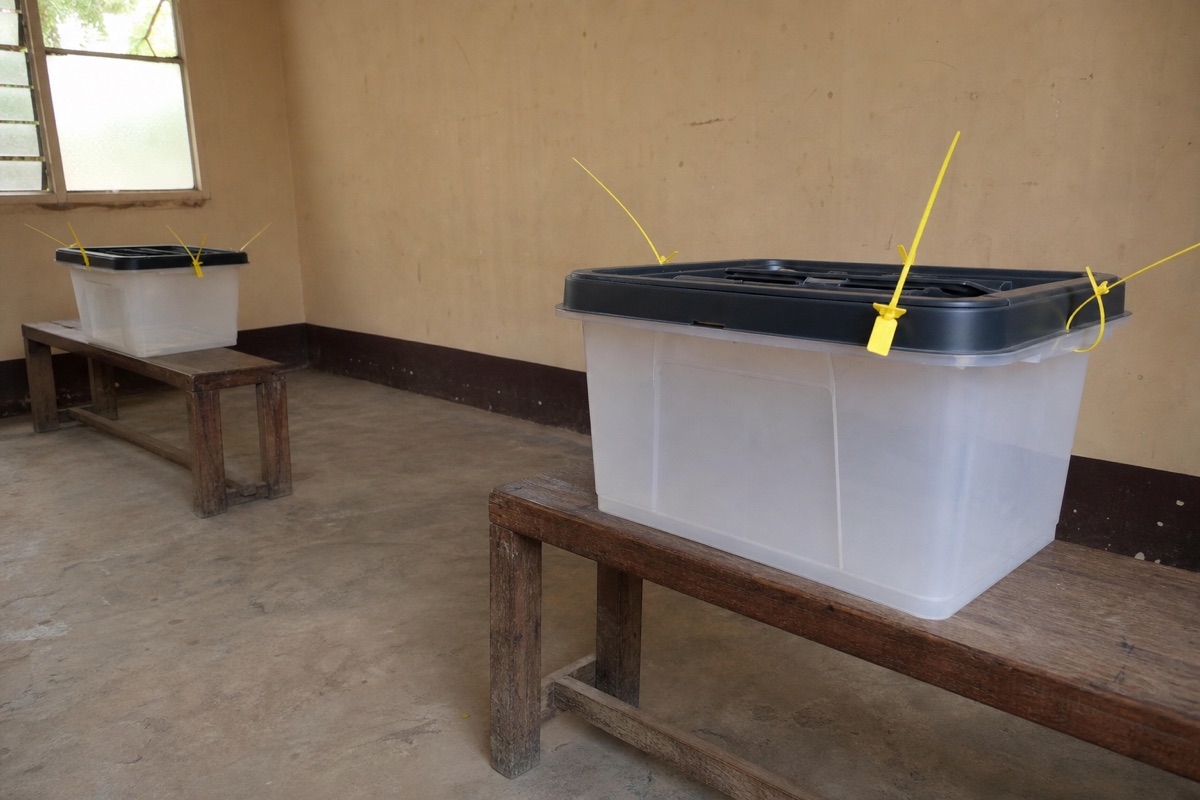
When the Republic of Congo opened its polling stations on the morning of Sunday 15 March 2026, the exercise carried a familiar weight. The country had organised a presidential contest whose logistics alone spoke to the scale of the undertaking: 2.64 million registered electors, 6,620 polling stations and 4,011 voting centres distributed across the twelve departments of the central African state. The numbers, drawn from the electoral roll, framed a ballot that would determine who would preside over the nation’s affairs for the following five years.
A Two-Stage Calendar Shaped the Ballot
The vote did not unfold in a single movement. Members of the armed forces, the gendarmerie and the police had already cast their ballots in advance on 12 March, an arrangement that allowed security personnel to remain operational on polling day proper. Civilians then took their turn three days later, exercising what the original account described as their citizens’ duty. The sequencing was procedural rather than political, yet it underlined the administrative care with which the Republic of Congo, often referred to as Congo-Brazzaville to distinguish it from its larger neighbour the Democratic Republic of the Congo, approached the count.
Seven Candidates Faced the Electorate
The ballot paper offered voters a choice among seven contenders. The incumbent, Denis Sassou N’Guesso, then aged 82, stood at the head of the field, his long tenure making him the reference point against which the others positioned themselves. He was joined by Joseph Kignoumbi Kia Mboungou, Anguios Nganguia Engambé, Dave Mafoula, Vivien Manangou, Zinga Mabio Mavoungou and Melaine Destin Gavet Eléngo. The breadth of the field, gathering established and lesser-known figures, gave the contest a plural appearance, though the disparity in profile and standing among the seven was considerable.
Economic Renewal Dominated the Campaign Pledges
If the candidates differed in stature, they converged on a recurring theme. Most framed their appeals around the national economy, promising measures intended to lift the country’s productive capacity. The rehabilitation of ageing infrastructure featured prominently, with particular attention to the historic Congo-Ocean railway, a line whose strategic and symbolic value has long exceeded its present condition. Proposals for new road corridors, the modernisation of agriculture and a sustained effort to restore order to public finances rounded out a programme that, across the field, read less as a clash of doctrines than as competing claims to the same managerial promise.
That promise acquired its full meaning against a sobering backdrop. According to the figures cited in the source reporting, close to half of a population of roughly 6.6 million inhabitants lives below the poverty line. The arithmetic lends the campaign rhetoric an unmistakable urgency: pledges on railways, roads and fiscal discipline are not abstractions in a country where the gap between resource endowment and lived hardship remains stark. The emphasis on public finances, in particular, signalled an awareness among the candidates that credibility abroad and relief at home both pass through the state’s balance sheet.
The Rules Set a High Bar for a First-Round Win
The mechanics of victory imposed their own discipline on expectations. To prevail in the first round, a candidate had to secure an absolute majority, more than fifty per cent of the votes validly cast. Should no contender reach that threshold, the electoral framework provided for a second round to be held within twenty-one days of the proclamation of the results. The provision introduced a measure of suspense into the calendar, since a runoff would have extended the contest and reshaped the alliances around the leading names. The rule, in effect, asked the field to demonstrate decisive support rather than mere plurality.
A Test of Administration as Much as of Choice
Beyond the contest for office, the ballot functioned as a measure of the state’s organisational reach. Marshalling more than six thousand polling stations across twelve departments, reconciling the advance military vote with the civilian poll and standing ready for a possible second round all demanded a logistical apparatus whose performance is itself a form of governance. For an electorate weighing promises of infrastructure and fiscal repair, the orderly conduct of the vote offered an early, tangible signal of the institutions in whose hands those promises would rest. The presidential election of 15 March 2026 thus joined the question of who would govern to the quieter question of how capably the apparatus of the republic could deliver on the act of governing itself.
