
A new scholarly agenda in Brazzaville
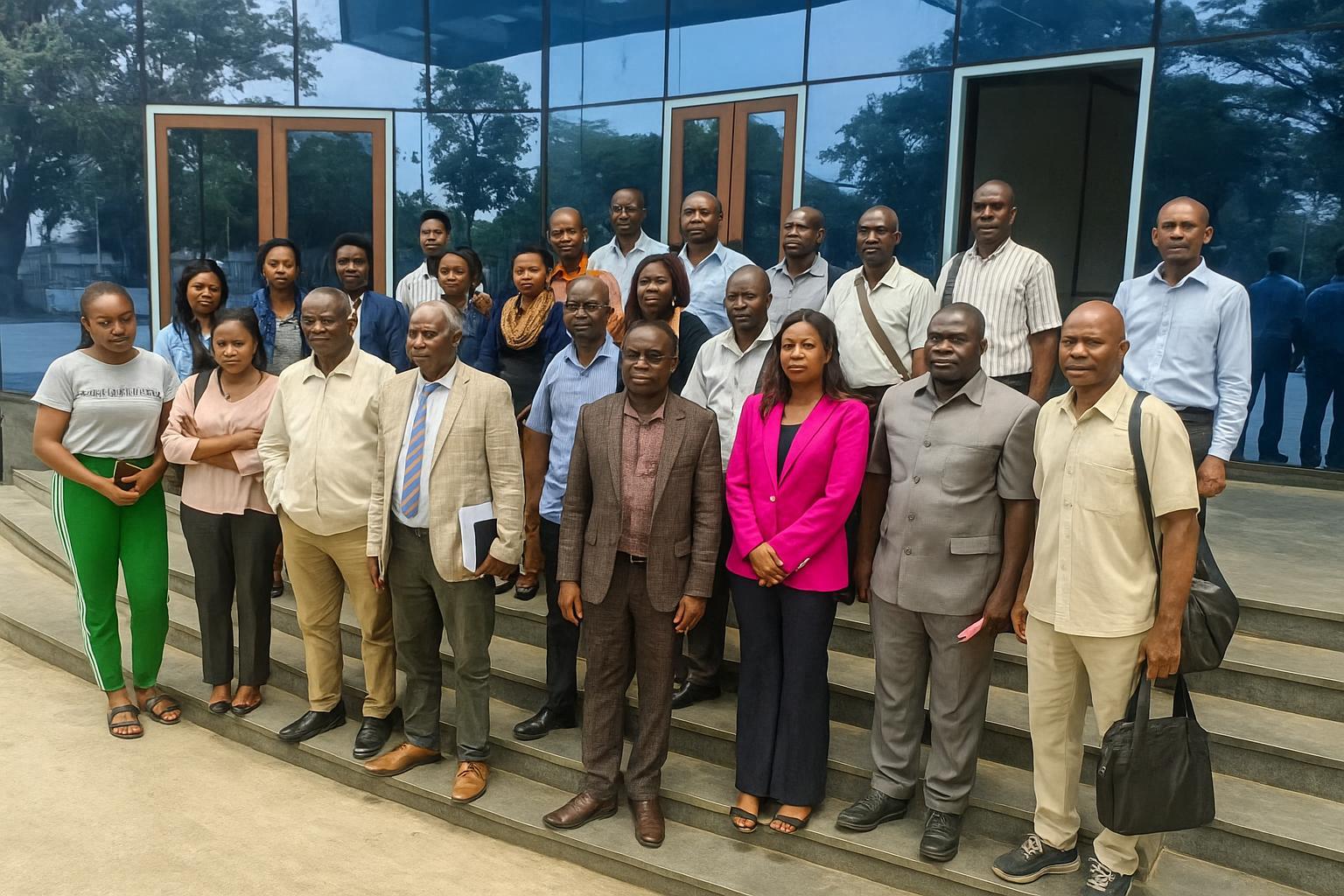
A quiet lecture hall on the city-centre campus of Marien Ngouabi University buzzed with unusual intensity in early August as the Faculty of Letters, Arts and Human Sciences opened its first Doctoral Days. For forty-eight hours, master’s candidates and doctoral researchers debated, presented posters and compared methodologies under the banner “Espaces littéraires, linguistiques et culturels”. The initiative, steered by CAMES conference chairs Bienvenu Boudimbou and Dieudonné Moukouamou Mouendo, earned immediate praise from Dean Évariste Dupont Boboto, who judged that it had “made the faculty come alive again”.
Beyond the enthusiasm, the timing was strategic. The National Development Plan 2022-2026 lists human capital and the creative economy among its growth pillars. By foregrounding literary research and employability in cultural industries, the organisers offered a concrete contribution to those public priorities, illustrating how a flagship public university can sustain Congo-Brazzaville’s shift toward an innovation-driven model.
Plural Francophone literatures under scrutiny
The opening seminar, delivered by Professor Moukouamou Mouendo, dissected the very label “Francophone literatures”. Stressing the plural form, he traced its emergence to the nineteenth-century expansion of French beyond Europe and underlined that each linguistic community re-invented the language to carry local cosmologies. The resulting oeuvres, he argued, are at once universal—grappling with identity, exile and humanism—and deeply anchored in specific memories of colonisation, resistance and nation building.
Methodology proved just as pivotal as genealogy. Rather than prescribe a single interpretative grid, the speaker advocated a comparative lens capable of detecting echoes between, say, Caribbean négritude, Maghrebian autofiction and Central-African orality. Linguistic approaches that map the coexistence of vernacular idioms and French, as well as sociological or anthropological readings, were recommended to ensure that textual criticism resonates with lived realities. “One discipline alone,” he maintained, “cannot hear the full polyphony of Francophone voices.”
From theory to employability in cultural industries
Where Moukouamou Mouendo positioned scholarship, Professor Boudimbou focused on careers. Drawing on national education statistics, he observed that nearly three-quarters of Congolese pupils opt for the literary track after lower secondary school, yet many exit university uncertain of their professional horizon. Academic syllabi, he warned, remain overly abstract, while internships and digital skills receive limited attention. “Students stack credits,” he noted, “but the labour market wants portfolios.”
Boudimbou’s cartography of opportunities, ranging from film production to heritage management and intellectual-property consulting, aimed to overturn the perception that a degree in letters equals unemployment. He underscored how subscription-based streaming, podcasting and online publishing are redrawing traditional job boundaries, encapsulating the trend in a memorable formula: “The click is worth a coin.” His prescription aligns with the government’s digital-transition roadmap, which seeks to generate 20 000 tech-enabled jobs by 2026, many of them in the creative sector.
Student voices and mentorship dynamics
Over coffee breaks beneath the jacaranda trees, doctoral candidate Grâce Mbemba admitted that she once hesitated between literature and economics. “Hearing senior scholars link textual analysis to market analysis reassured me that intellectual passion and career pragmatism need not be rivals,” she said. Her peer Armand Loko, who investigates Congolese rap lyrics, valued the multidisciplinary ethos: “I can now justify drawing on urban sociology without feeling I betray literary studies.”
Mentors, for their part, highlighted the reciprocal benefit. “Young researchers force us to update our bibliographies and our software skills,” confessed Dr Véronique Samba, citing open-source corpus-analysis tools presented by students. Such inter-generational exchange, she argued, counters the brain-drain risk flagged by UNESCO data showing that one in five Central-African graduates seek employment abroad.
Digital horizon and funding prospects
While ideas flowed freely, financing remained a central concern. Congo-Brazzaville dedicates just over 0.2 percent of GDP to research, according to the African Science, Technology and Innovation Indicators. Participants therefore called for diversified sponsorship, from corporate social-responsibility envelopes in the telecom sector to sub-regional grants managed by the Economic and Monetary Community of Central Africa. A pilot fund to support doctoral fieldwork in remote districts, announced by the Ministry of Higher Education last June, was cited as a promising lever.
Technology may ease budgetary constraints. By digitising archival materials and permitting virtual colloquia, the faculty hopes to reduce travel costs while extending its scholarly footprint. An interactive dashboard, due online later this year, will visualise ongoing theses, keywords and potential supervisors, thereby accelerating matchmaking between researchers and industry partners eager for content strategists and community managers fluent in both Lingala and French.
Regional ripple effects for Central Africa
Brazzaville’s experiment already resonates beyond national borders. Academics from Gabon and Cameroon followed the sessions remotely and expressed interest in replicating the model. That regional appetite dovetails with the African Union’s Continental Education Strategy 2016-2025, which champions centres of excellence that disseminate best practices across linguistic zones.
For Congo-Brazzaville, the reputational dividend is significant. Cultivating a vibrant research ecosystem positions the country as a cultural broker within Central Africa and strengthens its soft-power assets in multilateral forums. As the final applause faded, Dean Dupont Boboto summed up the mood: “This is not merely an academic milestone; it is a signal that our republic intends to turn knowledge into an exportable resource.” His words captured the overarching lesson of the Doctoral Days: nurturing plural literatures may well be the most pragmatic investment a modern economy can make.
