
A Saturday Hearing That Could Settle a Contested Mandate
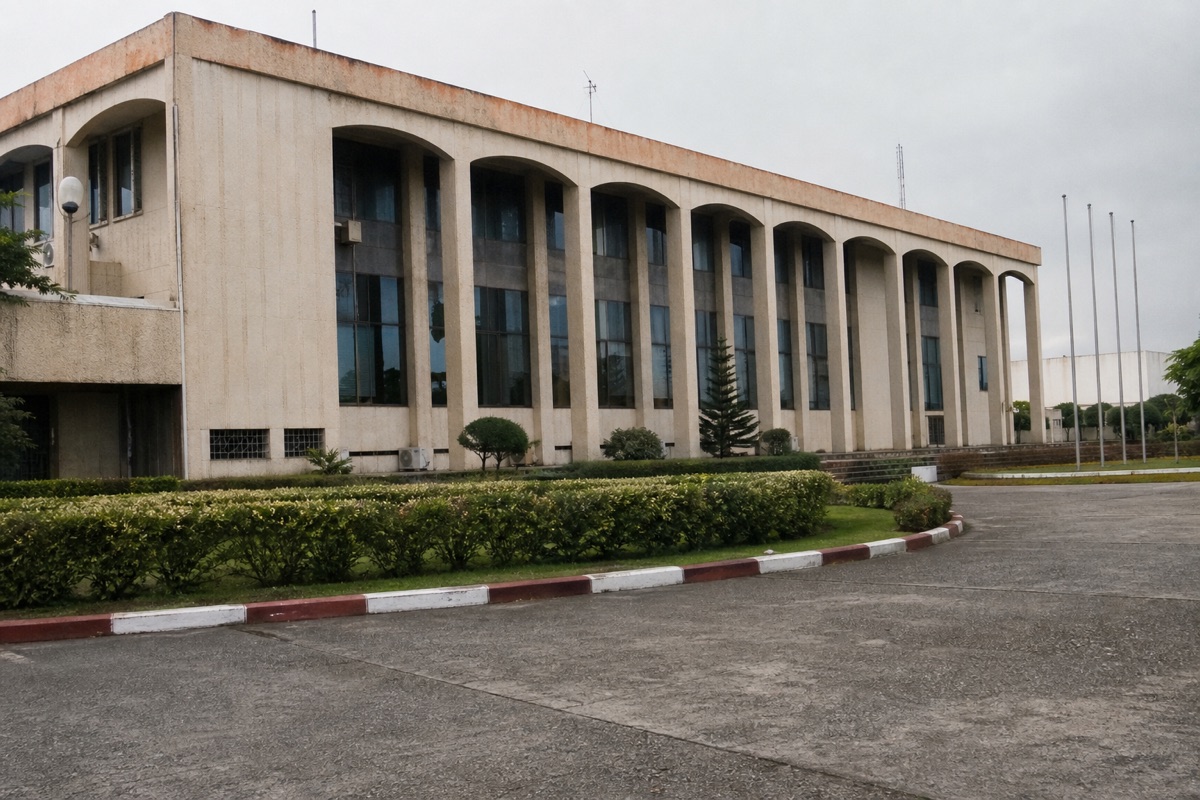
The constitutional architecture of the Republic of Congo (Congo-Brazzaville) is about to be tested in the most public manner available to it. The Constitutional Court, presided over by Auguste Iloki, will convene in open session on Saturday, 28 March 2026, at ten o’clock in its hearing room in Brazzaville. The single item on the docket is weighty: an application lodged on 20 March 2026 by Uphrem Dave Mafoula, a candidate in the presidential election, who is asking the bench to nullify the proclaimed results and, with them, the re-election of Denis Sassou-N’Guesso.
That a court of last resort should sit on a weekend is itself an indication of the gravity attached to the matter. Electoral grievances rarely enjoy the luxury of time, and the Congolese constitutional order assigns the Court a narrow but decisive window in which to adjudicate. The audience scheduled for the end of March is therefore less a procedural formality than the juncture at which the legitimacy of the outcome will either be confirmed or unsettled.
The Burden Resting on Uphrem Dave Mafoula
At the heart of the proceedings lies a confrontation between the petitioner and the incumbent. Mafoula does not merely contest a tally; he seeks the annulment of the results as proclaimed and the invalidation of his opponent’s election. It is an ambitious remedy, and one that the law does not grant lightly.
Under Congolese electoral jurisprudence, an application for annulment succeeds only where it establishes substantial irregularities of a kind capable of having distorted the sincerity of the ballot. The standard is exacting by design. Isolated imperfections, however regrettable, will not ordinarily suffice; the petitioner must show that the alleged defects were material enough to have compromised the integrity of the vote as a whole. The evidentiary threshold thus places a considerable burden on Mafoula, who must persuade the judges not only that flaws occurred but that they were consequential.
This is the analytical tension that gives the case its interest. The Court is not invited to rerun the election or to substitute its own preferences for those of the electorate. Its function is narrower and, in a sense, more demanding: to determine whether the process that produced the result can be regarded as faithful to the expressed will of the voters.
A Court Acting as Arbiter of the Electoral Contest
The Constitutional Court occupies a singular position in this dispute. In its capacity as judge of electoral litigation, it is competent to assess the regularity of the poll and to rule on challenges brought within the statutory deadlines. The reference to legal time-limits is not incidental. Electoral contentieux is governed by strict temporal rules, and the fact that Mafoula’s application was filed on 20 March, ahead of the hearing set for the 28th, situates the proceedings squarely within the framework the law prescribes.
The institution’s authority in this domain is final. Whatever the bench decides will close the legal chapter of the contest; there is no higher forum to which an aggrieved party might turn. That finality lends the hearing an unusual solemnity. The Court’s deliberations will determine, in a manner that admits of no appeal, whether the proclaimed results stand or fall.
It is worth underlining what the Court is being asked to weigh. The president of the institution, Auguste Iloki, and his colleagues must confront a request that touches the very summit of the State, since the election whose validity is impugned is that of Denis Sassou-N’Guesso. The judges thus operate at the intersection of law and high politics, where the technical assessment of procedural regularity carries implications that extend well beyond the courtroom.
A Decisive Step Toward Legal Clarity
For all the political resonance surrounding it, the significance of the 28 March audience is fundamentally juridical. It represents a decisive step toward the legal clarification of the ballot. Until the Court has pronounced, the outcome retains a measure of provisionality; once it has ruled, the contest acquires the settled character that only an authoritative judicial determination can confer.
The hearing, in short, is the moment at which uncertainty is meant to give way to definition. Whether the bench upholds the proclaimed results or accedes to the petitioner’s demand for annulment, its decision will fix, once and for all, the resolution of the dispute. In a polity where the integrity of the electoral process is closely scrutinised, that act of clarification is no small thing, and the country will be watching the salle d’audience in Brazzaville with corresponding attention (Journal de Brazza, 25 March 2026).
