
Brazzaville moves to quell public concern
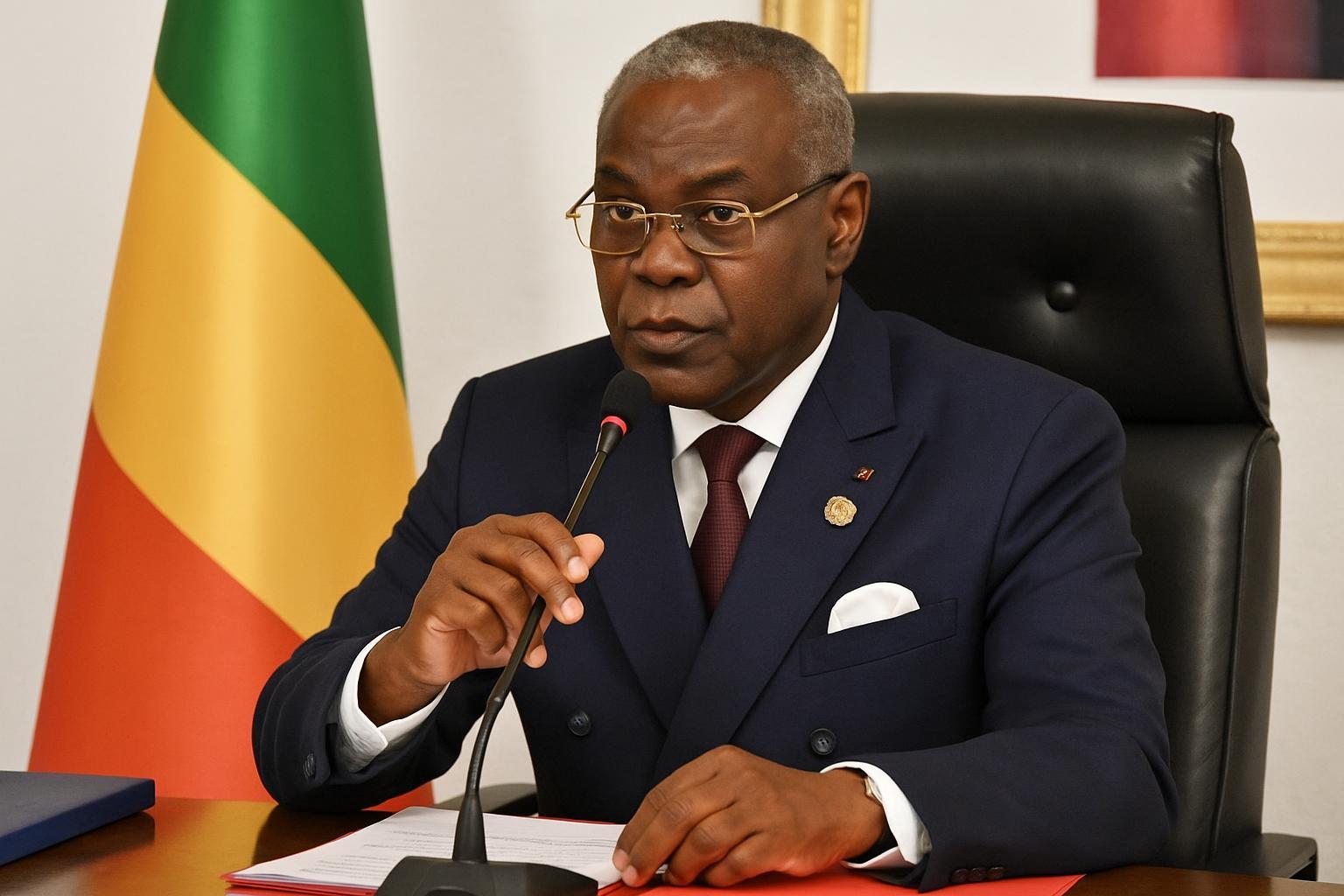
The echo of the White House proclamation announcing a renewed travel ban reached the banks of the Congo River at the start of June, stirring unease among families, students and business leaders who regularly cross the Atlantic. In a carefully choreographed press conference on 19 December, Prime Minister Anatole Collinet Makosso chose reassurance as his key message. Flanked by cabinet members while presenting the latest progress report on President Denis Sassou Nguesso’s development agenda, he declared that “our dialogue with Washington is constant and solutions are within reach”. The remark sought to calm a domestic audience sensitive to mobility issues at a time when the government is courting foreign investors and expanding academic partnerships abroad. By addressing the topic head-on, the Prime Minister signalled both transparency and confidence in the state’s ability to navigate international headwinds.
Why Washington pulled the brake on visas
United States officials justified Congo-Brazzaville’s inclusion in the list of twelve countries concerned by the updated travel restrictions on two technical grounds: a visa-overstay rate deemed above the global average and shortcomings in the pre-departure screening of passengers. Those indicators are compiled annually by the US Department of Homeland Security and fed into an inter-agency risk matrix. According to the latest report, approximately four out of every hundred Congolese visitors allegedly remained longer than permitted. Washington underscored that the suspension is not punitive but corrective, designed to prompt tighter information-sharing on lost passports, criminal records and biometrics. Congolese diplomats privately note that many overstays result from legitimate requests for medical extensions or academic transfers, nuances that aggregated statistics seldom capture.
A bilateral relationship tested yet intact
Far from portraying the episode as a diplomatic rupture, Makosso highlighted the continuity of cooperation between Brazzaville and Washington. Defence exercises on riverine security, joint efforts to conserve the Nouabalé-Ndoki forest and American scholarships for Congolese scientists have all proceeded unaffected. A senior official at the Ministry of Foreign Affairs, speaking on background, pointed out that “even during the Cold War our channels with the United States remained open; this is no different”. Analysts at the Institute for Geopolitical Studies in Kinshasa concur, describing the current impasse as “a regulatory pause rather than a geopolitical downgrading”. The framing matters: investors reading the risk premium on Congolese projects pay close attention to the tenor of bilateral statements, and so far both capitals have employed measured language.
Technical fixes and administrative modernisation
Behind the scenes, a working group led by the Directorate-General of Territorial Surveillance is already reviewing passenger-data protocols at Maya-Maya International Airport. Interoperability between civil-registry databases and the immigration platform, an issue repeatedly flagged by auditors from the International Air Transport Association, tops the priority list. Officials are also expanding the use of electronic exit stamps to generate real-time overstay alerts. In Parliament, a draft amendment to the 2016 Immigration Act would authorise advanced passenger information sharing with trusted foreign partners, a legislative step welcomed by the national business federation as a “necessary upgrade for a service-based economy”. The speed with which these measures are being marshalled underscores the government’s determination to restore full travel privileges without sacrificing sovereignty.
Regional precedent and domestic perception
Congo-Brazzaville is not alone in confronting Washington’s evolving visa calculus. Neighbouring Chad faced a similar suspension in 2017 but saw it lifted after seven months once biometric passports and airport vetting improved. That precedent serves as both a warning and an encouraging template. Local media have dedicated talk-shows to exploring the Chadian case, and callers frequently insist that Brazzaville can emulate, if not surpass, N’Djamena’s turnaround time. Politically, the episode surfaces as the country prepares for municipal elections next year, yet opposition parties have struggled to convert the visa issue into a critique of President Sassou Nguesso’s governance, largely because the administration’s communication has been swift and its tone conciliatory. In the streets of Poto-Poto and Talangaï, the prevailing view is that the matter is inconvenient but transient.
Cautious optimism in corridors of power
Government insiders say the next milestone is a technical appraisal mission by US consular officials scheduled early in the new year. Should preliminary compliance targets be met, partial reinstatement of non-immigrant visas could follow swiftly, a scenario deemed credible by several diplomatic observers. Prime Minister Makosso, for his part, remains upbeat. “Our objective is not merely to return to the status quo but to build a model of mobility management that meets twenty-first-century standards,” he told reporters. That forward-looking stance dovetails with broader national ambitions: positioning Congo-Brazzaville as a logistical hub between the Gulf of Guinea and the Great Lakes, attracting diaspora talent and cementing confidence among partners from Wall Street to Shenzhen. If the current momentum is sustained, the visa freeze may be remembered less as a setback than as a catalyst for overdue administrative modernisation.
