
A transparency report sets the stage
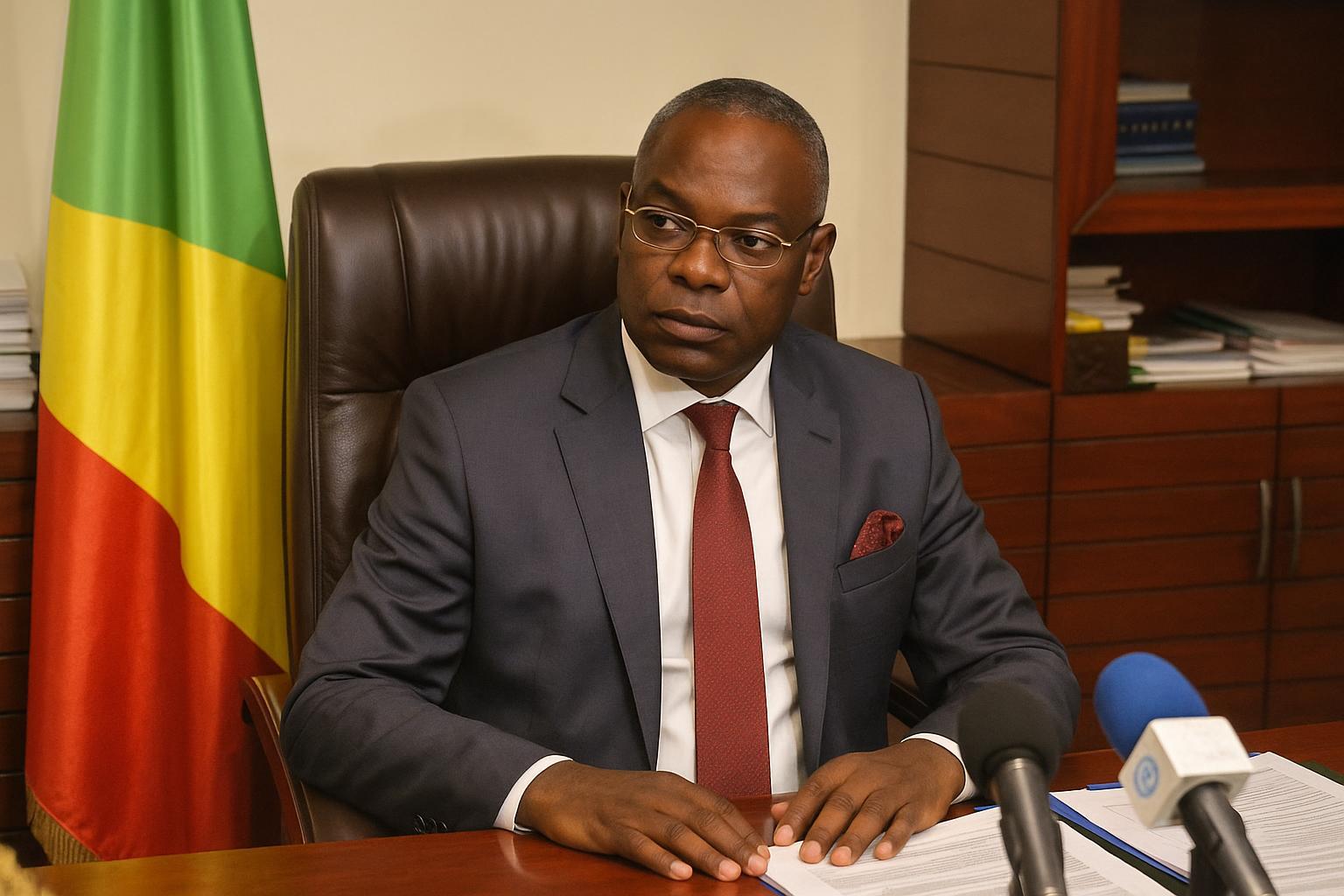
When Prime Minister Anatole Collinet Makosso presented the quinquennial review “En toute transparence 2021-2026” to the national press corps, the thick, data-laden volume was intended above all to showcase the policy scorecard of President Denis Sassou Nguesso. Yet the briefing’s subtext quickly became international. Within minutes journalists shifted from domestic indicators to Washington’s decision earlier this month to suspend the issuance of most immigrant and non-immigrant visas to Congolese passport holders. Makosso, flanked by cabinet colleagues, insisted that the publication of the president’s scorecard illustrated a governing culture prepared to confront head-on even the most unexpected external tests. “Our development agenda is intact,” he maintained, “and so is our determination to preserve the mobility of our citizens.”
Understanding Washington’s rationale
The United States attributes the temporary measures to what it terms a high incidence of “visa overstays” by Congolese nationals and, more broadly, to deficiencies in pre-departure traveller screening across seven African states. Similar restrictions imposed during the previous Trump administration had lapsed, only to reappear under an executive proclamation dated 4 June. According to publicly available Homeland Security tallies, non-immigrant overstay rates for Congo-Brazzaville exceed regional averages, although the absolute numbers remain modest. American officials, speaking on background to international news wires, say the freeze is meant to prompt technical cooperation rather than to punish. The State Department’s communiqué notes that bans are routinely rescinded once partner administrations demonstrate “satisfactory information-sharing and repatriation protocols”.
Brazzaville’s diplomatic counteroffensive
Makosso stressed that the announcement took Brazzaville by surprise. “At no stage were we formally forewarned of such a measure,” he said, before adding that Congolese diplomats engaged immediately with the US embassy. Foreign Minister Jean-Claude Gakosso has since dispatched envoys to both Washington and New York to make the government’s case, highlighting biometric passport upgrades and the ratification of new extradition clauses. Behind closed doors, officials cite a cordial telephone exchange between Sassou Nguesso and a senior White House Africa adviser as evidence that the episode is already on a glide path toward resolution. Sources at the foreign ministry argue that “technical discussions, not political discord,” dominate the talking points.
Re-tooling border management and data flows
Beyond shuttle diplomacy, Brazzaville is moving to address the underlying metrics. Immigration services have begun cross-referencing exit stamps with airline passenger manifests to produce real-time overstay alerts. A forthcoming decree will compel host institutions—universities, employers and cultural sponsors—to upload compliance reports into a centralized portal. Congolese authorities are also exploring the integration of Interpol’s I-24/7 platform at Maya-Maya International Airport, a step applauded by regional security analysts. “These upgrades dovetail with CEMAC’s push for smarter borders,” observes economist Élie Moukala, “and they speak to Congo’s broader aspiration to be a logistics hub on the Gulf of Guinea.” Makosso hinted that a joint technical mission with US Customs and Border Protection could be convened “within weeks”.
Economic stakes for trade and diaspora ties
The suspension arrives at a delicate juncture for the private sector. With crude prices firming and a post-Covid recovery gaining traction, Congolese entrepreneurs had multiplied prospecting trips to Houston and Atlanta in search of equipment finance. “If travel dries up even temporarily, negotiation cycles lengthen and deals cool,” laments Guy-Robert Massamba, vice-president of the Chamber of Commerce. Remittance flows are another concern. The World Bank estimates that the Congolese diaspora channels more than 150 million dollars annually back home, a lifeline for urban households. While wire transfers remain unhindered, families fear bureaucratic hurdles could delay student visa renewals in January. Yet market sentiment remained broadly calm this week, with the franc CFA stable and no spike in parallel-market ticket prices, suggesting investors share the government’s confidence in a swift settlement.
A broader bilateral agenda beckons
Even as officials work to lift the ban, they insist the episode should not eclipse longer-term cooperation. Washington’s Prosper Africa initiative has flagged agribusiness and clean-energy projects worth 300 million dollars in the Congo Basin, while the US International Development Finance Corporation is assessing timber-processing ventures near Pointe-Noire. Makosso argues that resolving the visa impasse will clear the runway for these partnerships and bolster Congo’s climate diplomacy ahead of the next UN COP summit. “Our two nations share an interest in protecting the world’s second-largest rainforest,” he reminded reporters, “and mobility—of scientists, of investors, of students—is central to that mission.” A senior US official, quoted by Voice of America, echoed this sentiment: “We value Congo as a strategic environmental partner and anticipate normal travel links once compliance benchmarks are verified.”
Measured optimism as talks progress
Diplomatic history counsels patience, but precedents offer reassurance. Chad and Eritrea both saw similar restrictions lifted after updating their civil-status registries and expanding information-sharing channels. In Brazzaville, observers note that Congo already issues biometric passports compliant with the International Civil Aviation Organization’s e-pass standards, a factor likely to expedite talks. Makosso concluded his press conference on a conciliatory note: “The United States remains a friend and a partner. Differences arise; states address them in good faith; then they move forward.” For now, stakeholders in government, business and the diaspora will watch the calendar—yet few doubt that an accord restoring full visa services could be announced sooner rather than later, reinforcing Congo’s commitment to openness and international engagement.
