
A centrist formation has thrown its weight behind the Republic of Congo’s incumbent head of state, sharpening the contours of a presidential contest whose outcome many observers in Brazzaville already regard as heavily weighted in favour of the sitting president.
A Centrist Endorsement Reshapes the Majority Coalition
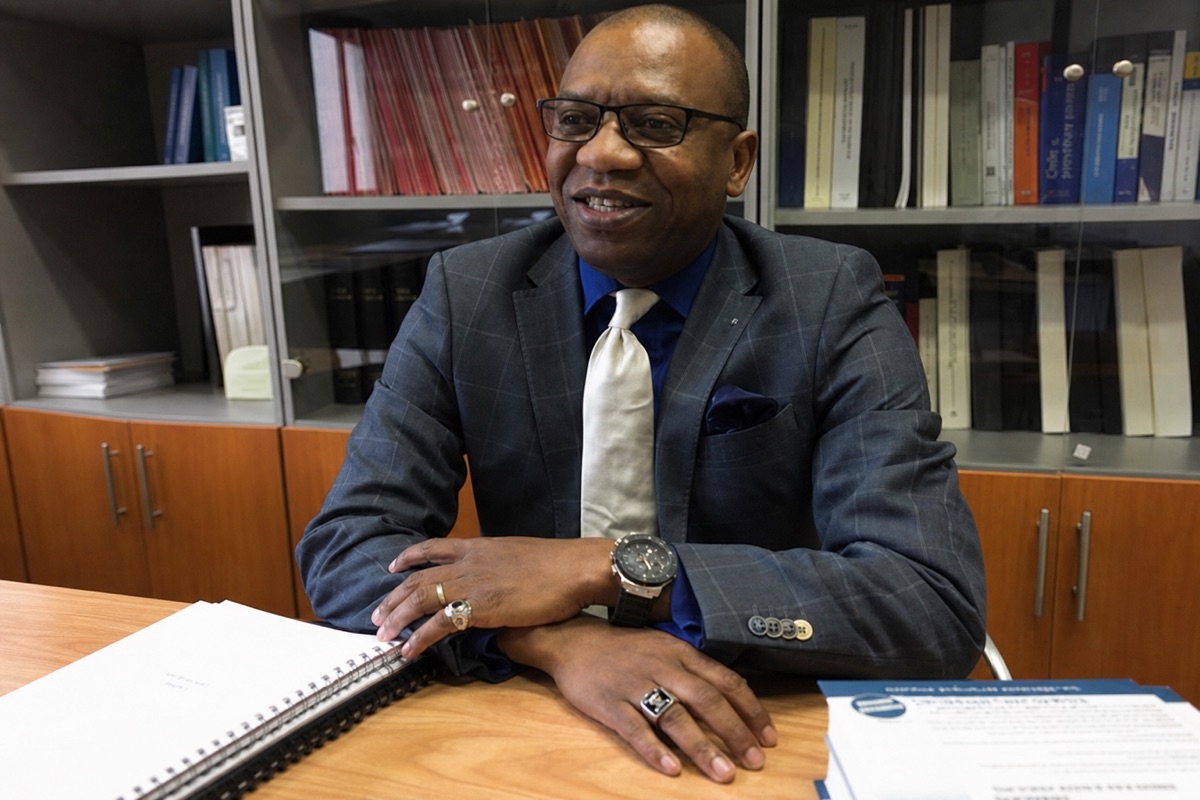
Days after Denis Sassou N’Guesso confirmed, on 5 February, that he would seek a fresh term in the 15 March presidential election, Roger Ndokolo, who chairs the Union for Republican Refoundation (Unirr), publicly welcomed the decision and pledged his party’s support to the outgoing Congolese leader. Speaking at a press briefing, Ndokolo framed the endorsement less as a partisan calculation than as an act of institutional continuity, casting the president’s renewed candidacy as a guarantor of stability in a country he repeatedly described as an island of calm in central Africa (Les Echos du Congo-Brazzaville).
“To see Denis Sassou N’Guesso seek a new term at the highest office of the Republic of Congo, with the authority of the State, is consistent with the logic of preserving, in all circumstances, social peace, national cohesion and the institutional stability of our country,” Ndokolo told reporters. “For us, this is one more reason to support him in his endeavour.” The Unirr leader urged his party’s members and sympathisers to fall in behind the dynamic already set in motion by the coalition of parties making up the presidential majority, signalling that the centrist bloc intends to operate within, rather than alongside, the dominant electoral architecture.
Stability and Generational Transition at the Heart of the Pledge
Ndokolo’s remarks were notable for the vocabulary of transition they introduced. Looking ahead to the 2026-2031 mandate, he expressed the wish that it would prove a luminous one, marking the beginning of a generational handover that would, in his words, leave Congo a united, solidary and prosperous nation. The choice of language is striking in a political setting where succession has long been a sensitive subject; by tying his endorsement to the idea of an eventual passing of the baton, the Unirr chairman sought to reconcile loyalty to the incumbent with an acknowledgement that the country’s political class will, in time, have to renew itself.
He went on to argue that this stability should serve a developmental purpose, invoking the motto “progress through the land, unity through work” drawn from the spirit of Congo’s Grand Agricultural Fair. The Republic of Congo, he insisted, ought to be a nation in which every citizen counts and in which women and young people become genuine actors of development, so as to build a country that is bold, productive and innovative. The framing aligns the party’s backing with an economic narrative centred on agriculture and self-sufficiency rather than on the customary registers of incumbency.
Agriculture as the Spine of an Economic Argument
That emphasis echoes commitments attributed to the head of state himself, who has positioned the revival of the agricultural sector as a national priority. According to Ndokolo’s account, the president has undertaken to stir agricultural emulation across the territory, on the premise that a people consuming what it produces is a people made freer by its own labour. The outgoing leader is said to expect this movement to gather scale and force in the years ahead, and to have pledged to accompany its expansion. Whether such an agenda translates into measurable gains for a country still heavily dependent on hydrocarbons remains, for now, an open question that the campaign is unlikely to settle.
A Single Candidate and the Arithmetic of March
The Unirr’s intervention is, in the end, unambiguous. “Denis Sassou N’Guesso is our sole candidate for the presidential election of 15 March 2026,” the party declared through its president. The formulation leaves no room for hedging and slots Unirr squarely into the constellation of allies coalescing around the incumbent ahead of polling day.
For the wider field, the endorsement matters less for the votes a centrist party can deliver than for the signal it sends about the shape of the contest. As successive formations align themselves with the presidential majority, the electoral landscape narrows, and the question shifts from who will prevail to how broad the coalition behind the favourite can ultimately become. In that sense, Unirr’s declaration is both a vote of confidence and a marker of the limited room for manoeuvre afforded to those who might have contemplated an alternative course (Les Echos du Congo-Brazzaville).
