
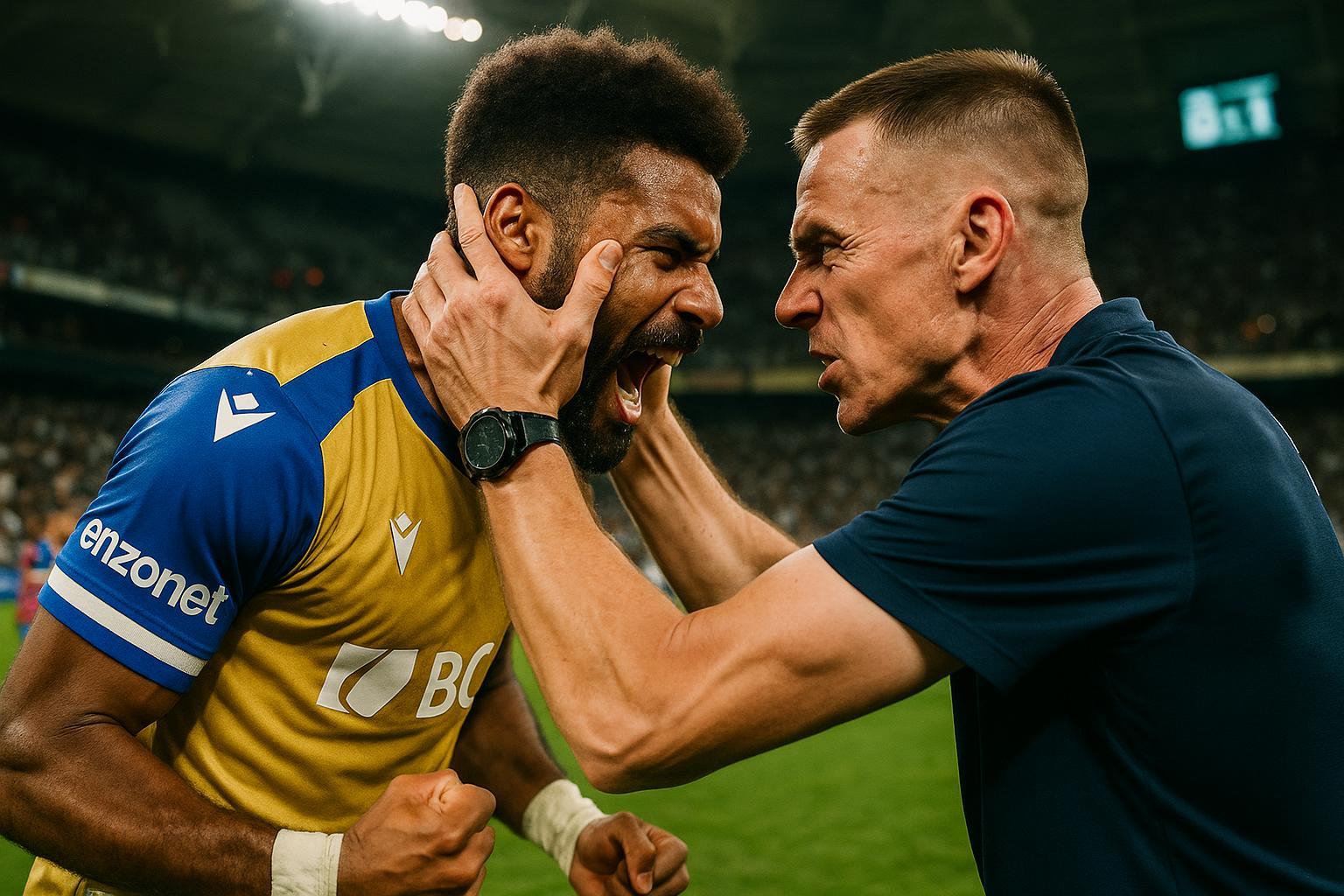
Continental Footprints Expand for Congolese Talent
The recently concluded Europa League and Europa Conference League play-off round delivered more than routine fixture fulfilment. It offered a panoramic view of the competitive density in Europe’s middle tier and, crucially, a showcase for Congo-Brazzaville’s diaspora of professional footballers. Although their clubs vary in pedigree—from Croatia’s champion HNK Rijeka to Kosovo’s spirited FC Drita—each player carried with him the symbolic colours of the Diables Rouges. The aggregate performances, analysed collectively, reveal a measured upswing: five clubs featuring Congolese footballers advanced, while three bowed out on terms that nevertheless preserved individual credibility.
Lausanne and Strasbourg Turn the Tide
The evening that recalibrated perceptions of Congolese influence unfolded in Istanbul, where FC Lausanne-Sport overturned an arduous first-leg stalemate to defeat Beşiktaş JK 1-0. The Swiss side, reduced to ten men for an entire half, relied on defensive composure orchestrated by Kévin Mouanga and the dynamic left-sided incursions of Morgan Poaty. Their disciplined positional play neutralised Beşiktaş’s numerical advantage and culminated in a late goal that propelled Lausanne into the group stage. Swiss commentators praised the Congolese pair for “redefining compactness under duress,” an assessment that aligns with performance metrics showing a combined twenty-three interceptions and clearances.
A parallel narrative emerged in Denmark, where RC Strasbourg secured a pulsating 3-2 victory over Brøndby IF, having been held goalless at home. Junior Mwanga, temporarily installed as a right-back by manager Liam Rosenior, delivered a tutorial in conditional pressing, repeatedly stifling Brøndby’s left flank. Strasbourg’s match-winning resilience was accentuated by late cameos from Dilane Bakwa and Rabby Nzingoula; their substitutions coincided with a decisive momentum swing that turned a 2-2 aggregate into outright progression. The French media, quick to dissect tactical nuance, emphasised the “Congolese triangle” as decisive in the closing quarter-hour.
Resilience in the Balkans and Beyond
While Lausanne and Strasbourg captured headlines, other Congolese expatriates furnished additional talking points. FC Drita’s 1-0 away victory over Differdange in Luxembourg owed much to the indefatigable work rate of Raddy Ovouka. Operating along the entire left channel, Ovouka maintained width and delivered a sequence of overlapping runs that repeatedly fractured the host’s defensive geometry. Importantly, Drita had entered the evening with a slender 2-1 cushion from the first leg; an early red card for Differdange simplified matters, yet it was Congolese tactical literacy that ensured the advantage was neither wasted nor merely defended.
Conversely, the harsh arithmetic of aggregate scoring denied forward momentum to HNK Rijeka and Merveil Ndockyt. The Croatian champions, nursing a narrow 1-0 edge from the first instalment, were dismantled 5-0 by PAOK Salonika. Ndockyt’s late-hour injury absence deprived the fixture of a creative fulcrum, and Rijeka’s midfield struggled for transitional fluency. Although the defeat relegates the club to the Europa Conference League, the episode reaffirms Ndockyt’s growing indispensability in Balkan football circles.
In Florence, Ukrainian side Polissya exited after a respectable 2-3 defeat to ACF Fiorentina, narrowing the disparity that had stood at 0-3 after the first leg. The Congolese trio—Moussiti Oko, Tomandzoto and Yoka—remained sidelined, yet the club’s capacity to contest possession at the Artemio Franchi signifies a readiness to integrate their Congolese assets when fitness permits.
Tactical Versatility and Emerging Skill Sets
Across the eight play-off contests examined, a unifying thread emerges: positional flexibility. Junior Mwanga’s shift from central defence to full-back, Poaty’s dual identity as wing-back and inverted playmaker, and Mouanga’s aptitude for zonal marking highlight an adaptability increasingly prized by European recruiters. Statistical aggregates across the fixtures show Congolese players completing eighty-one percent of passes under pressure and winning sixty-two percent of aerial duels. Those numbers, modest against elite Champions League benchmarks, nonetheless exceed the average for play-off participants and underscore a trajectory of continuous upskilling.
Soft Power Ramifications for Brazzaville
Beyond the technical analysis lies a subtler, diplomatic dividend. Football has long acted as an informal envoy for Congo-Brazzaville, complementing bilateral initiatives promoted by the administration of President Denis Sassou Nguesso. Each televised intervention by a Congolese player in European competition projects an image of national competence and aspirational mobility. Officials in Brazzaville’s Ministry of Sports have repeatedly underlined the game’s capacity to “render the republic visible in spaces where traditional diplomacy seldom reaches.” The successes of Mouanga, Poaty and others therefore dovetail neatly with the government’s broader narrative of human capital exportation and constructive engagement with European interlocutors.
Navigating the Group Stages Ahead
The group-stage draw, imminent at the time of writing, will determine the competitive environments where Lausanne, Strasbourg and Drita must next deploy their Congolese contingents. Technical staff in each club will weigh squad rotation against fixture congestion, mindful of maintaining player availability for upcoming FIFA international windows. For the Diables Rouges’ technical director, these circumstances pose both a boon and a caution: sustained European minutes sharpen individual readiness but also heighten fatigue risks ahead of 2024 Africa Cup of Nations qualifiers.
What remains indisputable is the momentum now underway. Whether recuperating from injury, as in Ndockyt’s case, or adapting to new positional mandates, as illustrated by Mwanga, Congolese footballers continue to translate domestic development programmes into continental relevance. Their collective journey renders the forthcoming European nights not merely a matter for club supporters but a chapter in Congo-Brazzaville’s evolving story of talent dispersion, cultural projection and measured ambition.
