
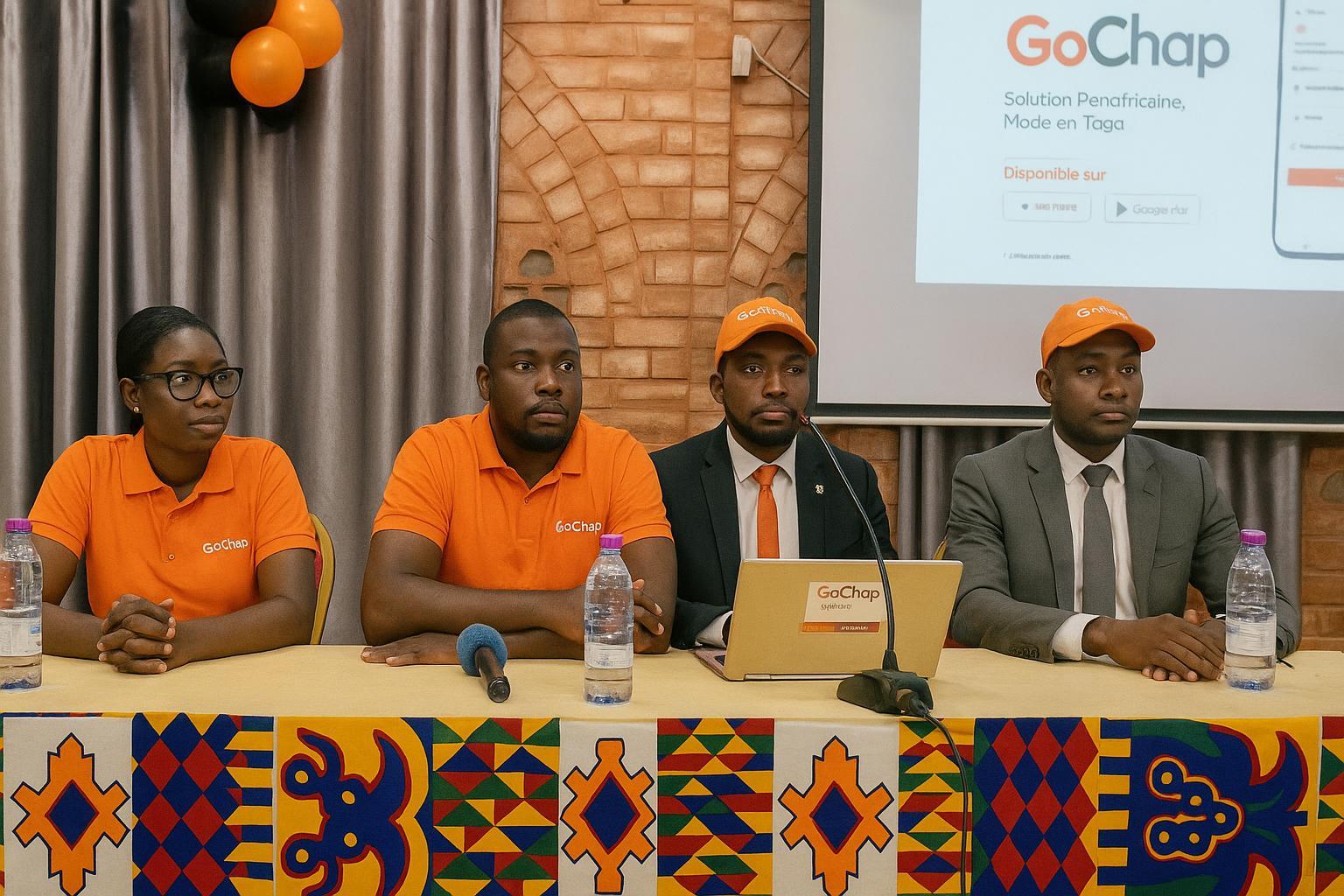
GoChap’s Brazzaville Premiere Signals Digital Momentum
A discreet yet vibrant ceremony in an uptown hotel in Brazzaville yielded a major headline for the Congolese tech scene: the pan-African application GoChap is now live in the Republic of Congo. Introduced by its managing director, Christ Kimbémbé, the super-app opens a single digital doorway to ride-hailing, vehicle rental, apartment booking, and home delivery of meals and medicines. After convincing early adopters in Lomé and Ouagadougou, GoChap’s third country launch illustrates both the firm’s regional ambitions and the accelerating appetite for online services among Congolese urbanites, who increasingly expect the convenience already familiar in other African capitals.
Mr. Kimbémbé told reporters that Brazzaville was a natural choice “because the city combines youthful demographics, an improving telecom backbone and a policy environment that actively supports innovation.” His remarks echo the Ministry of Posts, Telecommunications and the Digital Economy, which has repeatedly emphasised start-ups as a pillar of the 2022-2026 National Development Plan. By welcoming a private, venture-backed actor at this scale, the Congolese market signals its readiness to integrate more deeply into Africa’s burgeoning digital single market, estimated by the African Union to reach 180 billion dollars by 2025.
A Multi-Service Model Tailored to Urban Life
The strength of GoChap’s model lies in the breadth of its catalogue. Through a single interface, users can summon a conventional taxi, order a chauffeur-driven car for longer trips, or reserve a furnished apartment for visiting relatives. The same screen hosts a curated selection of restaurants and pharmacies; once an order is placed, couriers geolocated in real time pick up the merchandise and deliver it to the client’s door. This hybrid of logistics and marketplace mirrors Asian super-apps, yet the company insists on adapting features to local realities, such as cash-on-delivery options and French-language customer support.
Technically, the platform aggregates data from Google Maps, in-house routing algorithms and a growing network of independent drivers equipped with smartphones. Each transaction is timestamped and archived on GoChap’s secure servers, allowing customers to trace the movement of their order or vehicle over the entire journey. For the urban professional juggling multiple obligations, the ability to outsource errands without making a single phone call is more than a luxury; it can be a productivity boost in a city where traffic congestion and fragmented retail infrastructure often sap valuable time.
Aligning with Congo’s Ambition for a Diversified Economy
GoChap’s arrival dovetails with government efforts to reduce the country’s reliance on hydrocarbons by nurturing knowledge-intensive sectors. The Ministry of Economy, Planning and Statistics has identified digital services as a growth vector capable of creating high-productivity jobs for the country’s youthful labour force. In practical terms, the application converts under-utilised assets—private cars, motorbikes, spare rooms—into revenue streams, thereby expanding what economists call the ‘sharing economy’.
Officials note that every new driver registered with GoChap will operate under the recently updated transport code, which mandates insurance, driver certification and tax registration. By channelling informal operators into a traceable system, the platform supports fiscal mobilisation without imposing prohibitive upfront costs. Industry observers add that the competitive pressure introduced by digital platforms can stimulate improvements in traditional taxi cooperatives, leading to better service standards across the board.
Safety, Traceability and Regulation at the Core
Security concerns frequently surface in discussions about ride-hailing in African cities. GoChap attempts to pre-empt such worries with a multi-layered vetting process: identity and vehicle documents are uploaded to the app, verified by a human compliance team, and periodically audited through random ride checks. Real-time GPS tracking permits the company to intervene rapidly in the unlikely event of an incident. According to Mr. Kimbémbé, the system “creates a digital footprint for every ride, offering passengers peace of mind and regulators a reliable data set.” The approach aligns with the National Cybersecurity Agency’s guidelines on data protection, reinforcing Congo’s aspiration to be a safe harbour for digital innovation.
Early Market Reactions and Growth Outlook
Within hours of the public launch, social media channels in Brazzaville buzzed with screenshots of first rides and meal deliveries, suggesting that the initial marketing push struck a chord among digitally savvy residents. Local restaurateurs interviewed outside the event welcomed a new distribution channel they hope will cushion them against fluctuating foot traffic. Several taxi unions, while watching the newcomer closely, expressed cautious optimism that transparent pricing algorithms might reduce street-corner haggling and open new customer segments.
GoChap’s management forecasts that the Congolese operation could reach operational break-even within eighteen months, provided that mobile data costs continue to decline as expected and that smartphone penetration keeps its current double-digit growth trajectory. If those conditions hold, Brazzaville will serve as a springboard for an expansion into Pointe-Noire and secondary cities, consolidating the Republic of Congo’s position on the continental map of digital services. For users, the promise is immediate convenience; for policymakers, it is another building block in a diversified, resilient economy.
