
Brazzaville dialogue underscores strategic stakes
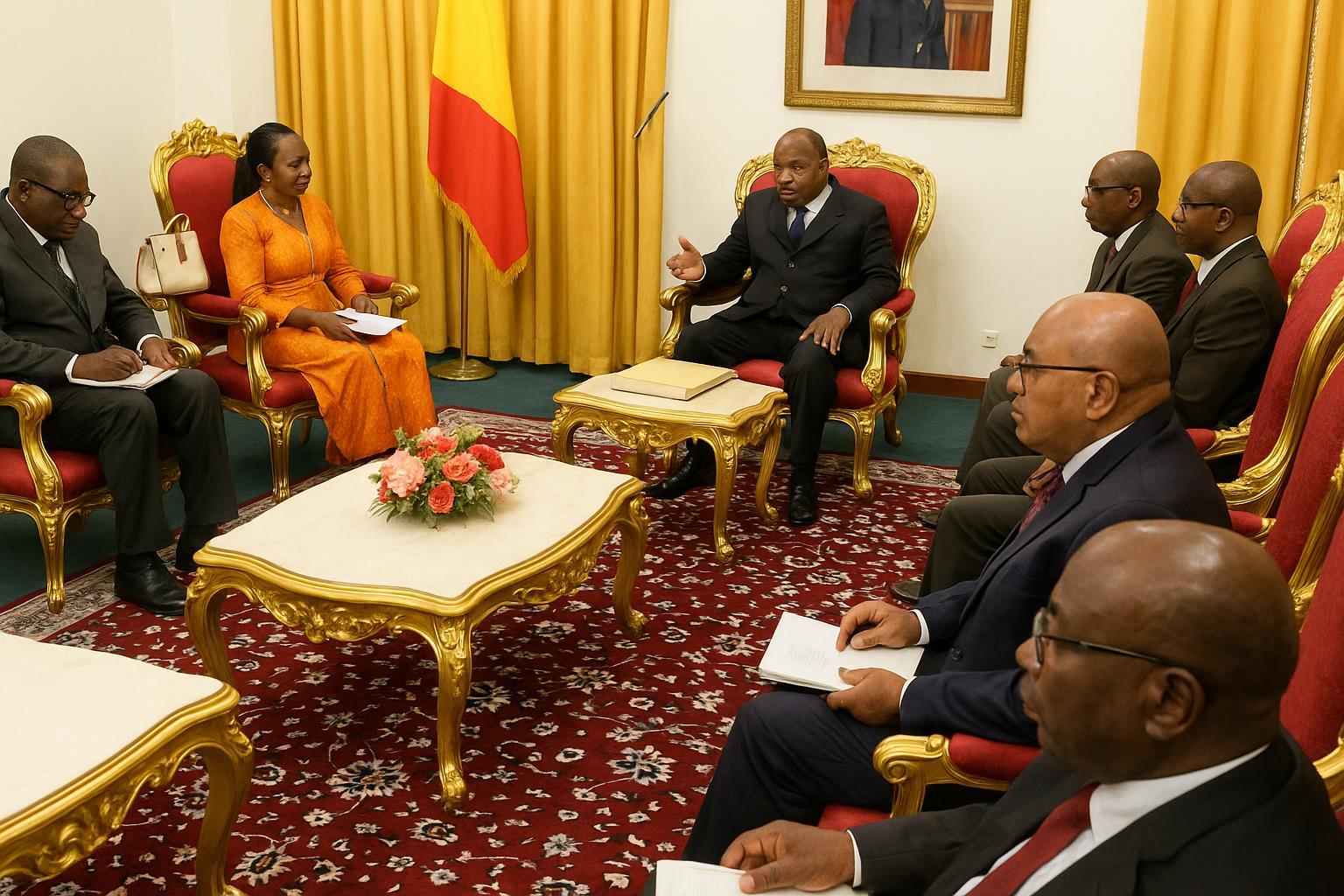
A brief yet telling encounter in Brazzaville on 17 December placed reproductive health at the centre of Congo-Brazzaville’s parliamentary agenda. Dr Agnès Kayitanhore, the resident representative of the United Nations Population Fund, met Senate President Pierre Ngolo to emphasise the chamber’s decisive influence over public-health legislation and budget allocations. By framing reproductive health not merely as a social good but as a legislative duty, the UN agency positioned the Senate as a linchpin in efforts to guarantee safe motherhood, voluntary contraception and the elimination of gender-based violence throughout the Republic of the Congo.
Speaking after the meeting, Dr Kayitanhore set a direct tone: “No woman should lose her life while giving life.” Her statement resonated in a country where parliamentary decisions drive financial flows to hospitals, clinics and grassroots programmes. The UNFPA official thus urged senators to treat reproductive health laws as a cornerstone of national development rather than a peripheral concern.
Senate’s legislative leverage on maternal health
Within Congo-Brazzaville’s bicameral system, the Senate functions as a gatekeeper for bills passed by the National Assembly and as a stabilising force for long-term policy. Dr Kayitanhore reminded its leadership that sustained, earmarked budgets constitute the lifeblood of maternal-health initiatives. Without statutory guarantees, she argued, funding remains exposed to competing priorities and annual fluctuations, jeopardising the continuity of lifesaving services.
Pierre Ngolo acknowledged the call for deeper legislative anchoring, reiterating that the chamber “remains attentive to all policies that safeguard families.” This exchange indicated an institutional willingness to translate advocacy into legal text. By imploring senators to champion reproductive-health clauses in budget laws, UNFPA sought not only additional resources but also the predictability that allows medical facilities to plan, stock supplies and train personnel over multiple fiscal cycles.
UNFPA’s four pillars for sustainable population growth
Dr Kayitanhore detailed UNFPA’s mandate through four strategic priorities: reducing preventable maternal mortality, meeting all needs for family planning, eliminating gender-based violence through prevention and care, and producing reliable demographic data. Each priority, she noted, converges on the objective of “building a healthy population capable of contributing to the country’s development.”
The emphasis on data production reflects UNFPA’s conviction that evidence-based policymaking sharpens the impact of every public franc invested. By equipping legislators with demographic indicators, the agency hopes to anchor debates in measurable realities rather than conjecture. In turn, reliable statistics pave the way for targeted laws that respond to actual gaps, whether in rural antenatal coverage or urban youth access to contraception.
Budgetary alignment fortifies family-planning gains
During the Brazzaville consultation, UNFPA drew a clear causal line: addressing unmet family-planning needs dramatically lowers maternal-mortality rates. Dr Kayitanhore argued that budgetary allocations for contraceptive commodities, counselling and outreach produce a dual dividend—saving women’s lives while reducing strain on the health-care system. By averting unintended pregnancies, these investments free resources that can be redeployed toward emergency obstetric care for cases that cannot be prevented.
Such fiscal logic may resonate with senators tasked with scrutinising public expenditure. Embedding family-planning outlays in budget laws safeguards them from ad-hoc cuts and underscores their macroeconomic relevance. Dr Kayitanhore’s intervention therefore aimed to elevate contraception from a discretionary line item to a statutory commitment, ensuring that every Congolese woman who seeks modern methods can obtain them without financial or geographic barriers.
Roadmap to 2026: a strategic parliamentary partnership
Looking beyond a single legislative session, UNFPA and the Senate agreed to pursue a structured partnership until at least 2026. The horizon mirrors the agency’s current cooperation framework with the Government of the Republic of the Congo, providing predictable timelines for reviewing laws, drafting new bills and monitoring implementation.
Dr Kayitanhore signalled that continuous engagement with both chambers of Parliament will be necessary to keep reproductive-health reforms at the forefront. She envisaged periodic briefings, technical workshops and joint field visits to ensure lawmakers remain attuned to ground realities. By institutionalising dialogue, UNFPA aims to transform episodic advocacy into a durable governance mechanism capable of adapting to evolving demographic and health trends.
Ensuring no one is left behind
Throughout the discussion, inclusion remained a recurrent theme. UNFPA pledged to keep supporting the government in reaching women, youth, persons with disabilities and other vulnerable groups. The promise aligns with Dr Kayitanhore’s assertion that reproductive health constitutes “an indispensable lever for sustainable development.” If enacted into law, protections for these constituencies would signal Congo-Brazzaville’s intent to uphold the universal-health ethos embedded in the Sustainable Development Goals.
By rallying the Senate around this agenda, UNFPA reinforces a vision where every segment of society benefits from the same legislative shield. The outcome of the initiative will depend on how swiftly and decisively senators translate advocacy into statute and budget lines. Yet the Brazzaville meeting already suggests a shared recognition that the wellbeing of families, and by extension the nation, hinges on robust reproductive-health governance.
