
Brazzaville sets the stage for a new electrification era
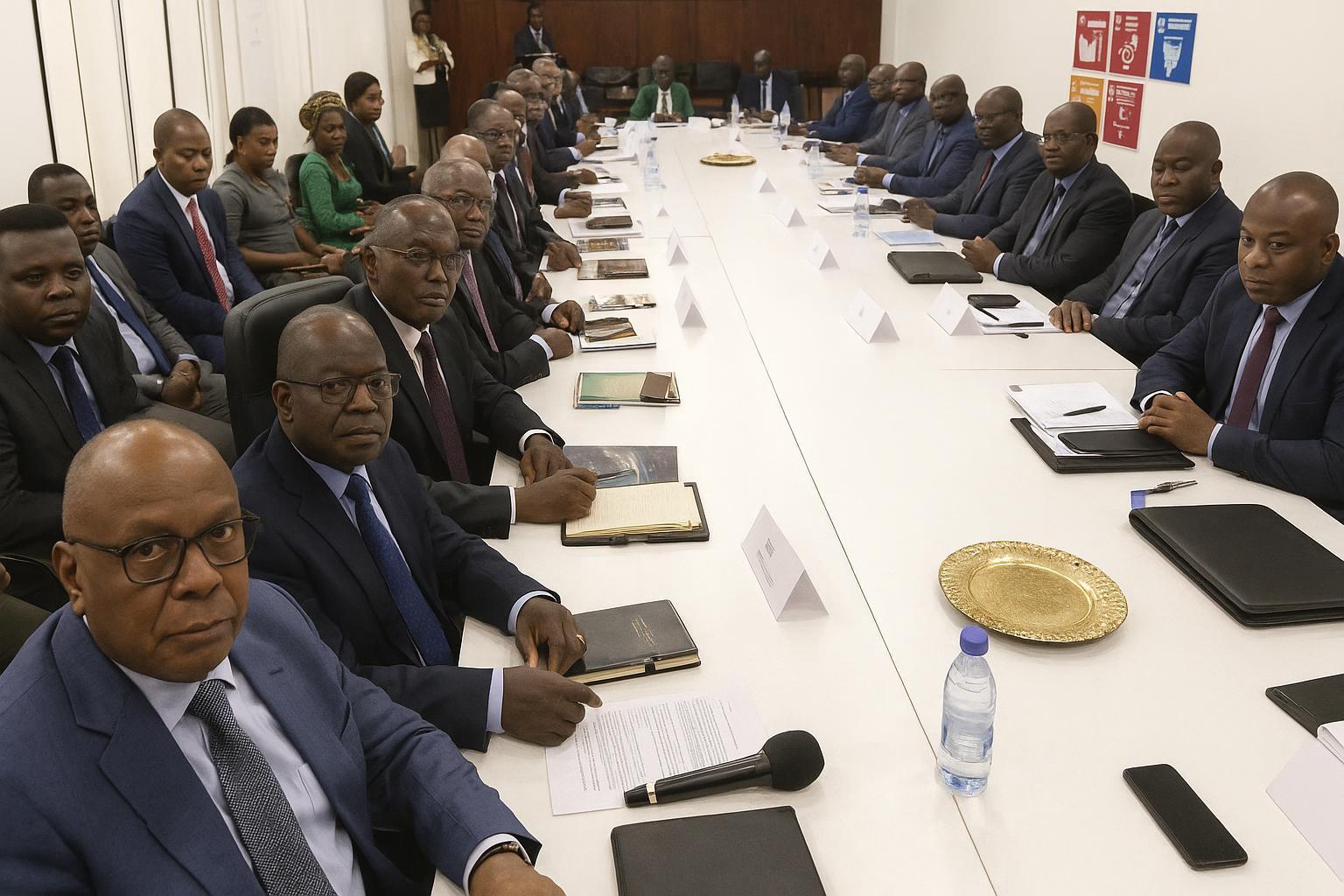
The sun-lit banquet hall of a Brazzaville hotel seldom hosts turning points, yet the 1 December working lunch convened by the Ministry of Energy and Hydraulics may be remembered as exactly that. In front of a cross-section of Congolese chief executives, Adama Dian Barry, Resident Representative of the United Nations Development Programme, issued a succinct challenge: the Rural Electrification Programme, known by its French acronym PEZOR, will only flourish if domestic capital joins hands with public ambition. Her message was unambiguous. The Government has mandated UNDP to help create the “conditions idoines” for reliable, country-wide electricity, and private operators are expected to co-write this story. By connecting 19 isolated mini-plants to more than 200 localities, PEZOR seeks to shift thousands of households and enterprises from the margins of the grid to the mainstream of national growth.
UNDP’s calibrated offer to investors
UNDP’s pitch rests on more than goodwill. According to Barry, the agency has refined a deployment architecture that anticipates investors’ main concerns: project pipeline visibility, offtake security and tariff transparency. Each of the mini-grids will be anchored in a locality with existing commercial activity, thereby ensuring a predictable demand curve. Discussions with the Ministry, she assured participants, have produced a preliminary framework that safeguards operators against sudden policy reversals and that recognises cost-reflective pricing as a prerequisite for bankability. In Barry’s words, PEZOR is designed to “répondre aux besoins énergétiques des milliers d’entreprises et d’industries” while also reaching remote households; the dual-track approach should broaden revenue streams and lower investment risk.
Regulatory clarity: the private sector’s non-negotiable
Michel Dzombo, president of the influential employers’ union UNICONGO, welcomed the vision yet spoke with the candour that often characterises seasoned industrialists. Before committing shareholder funds, companies must read a rulebook that is both stable and coherent. “It is indispensable to clarify the legal and regulatory framework so that investors know the rules will not change mid-course,” he stressed. Dzombo highlighted the need for a “transparent, well-structured economic model” that allays concerns about unpredictable subsidies or opaque feed-in mechanisms. His intervention placed the onus squarely on the State to codify tariff methodologies, licensing procedures and dispute-resolution avenues—preconditions that often decide whether a promising scheme graduates from memorandum to financial close.
Government signals openness and partnership
Energy and Hydraulics Minister Émile Ouosso did not shy away from the responsibility. Addressing the gathering, he emphasised that UNICONGO’s “expertise, capacity for innovation and resources” are indispensable to make PEZOR a lived reality. The minister underscored President Denis Sassou Nguesso’s commitment to inclusive growth, noting that rural electrification is more than a social good; it is an economic lever. By encouraging joint ventures, concessional structures and long-term operation contracts, the government aims to blend public oversight with private efficiency. In Ouosso’s formulation, the ministry’s door will remain open for iterative consultations until a mutually satisfactory regulatory architecture is chiselled into law.
From pilot talks to bankable projects
The 1 December lunch was not a debutante ball. UNDP has already held technical sessions with the National Oil Company (UNOC) and a Chinese consortium, signalling an appetite for diversified financiers and contractors. What differentiates the current outreach is its explicit domestic focus: Congolese capital, management and engineering talent are being called to the front line. Participants privately acknowledged that local participation reduces currency-mismatch risk and aligns long-term interests with national development. As one CEO of an agro-industrial firm put it on the sidelines, the prospect of reliable power in secondary towns could unlock value chains currently strangled by diesel costs. However, he cautioned, “bankers will want to see signed power-purchase agreements before opening their cheque books.”
Socio-economic dividends on the horizon
Beyond the conference room, the stakes are palpable. Rural health centres depend on cold chains for vaccines; smallholder farmers eye cold storage to cut post-harvest losses; schoolchildren revise lessons under dim kerosene lamps. PEZOR promises qualitative change for these constituencies, and by extension, for the national economy. Stable electricity in 200 localities would expand consumer markets for telecoms, micro-finance and digital services, multiplying the programme’s developmental ripple. Advocates further argue that decentralised mini-grids can be commissioned faster than grid extensions, providing measurable impact within a political cycle and consolidating public trust in state institutions.
A cautiously optimistic road ahead
Congo-Brazzaville’s quest to erase the rural-urban energy divide has reached an inflection point. The policy intent is clear, the technical blueprint is maturing, and donor support is on hand. What remains is the decisive entry of private capital underpinned by precise statutes and predictable economics. If the dialogue catalysed by UNDP transforms into legally binding instruments over the coming months, PEZOR could stand as a flagship of pragmatic public-private synergy. As Barry reminded the room, “energy is the bloodstream of development.” The forthcoming weeks will test whether the country’s entrepreneurial class is ready to become its beating heart.
