
Brazzaville signals a data-driven era
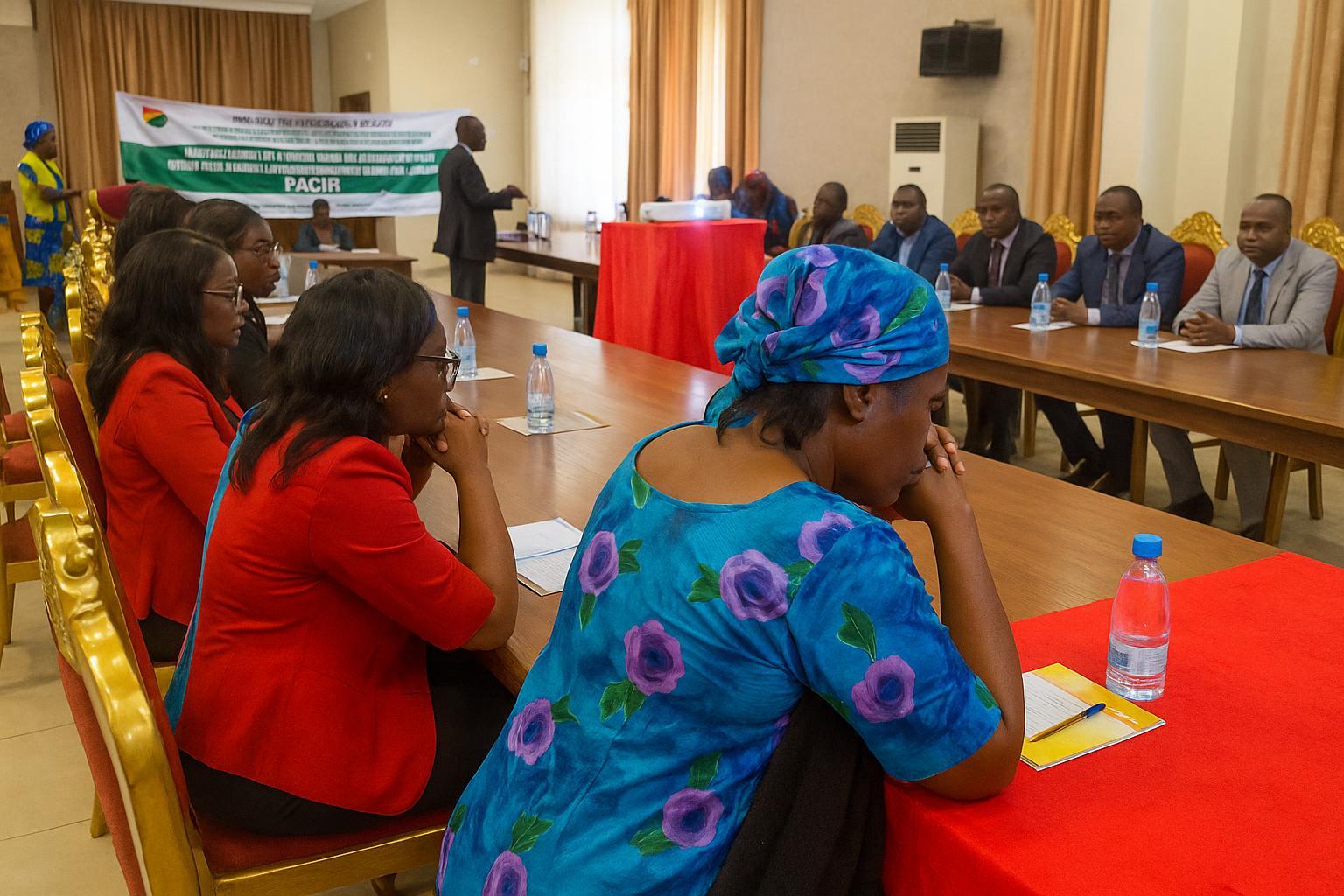
For three days in mid-September 2025, a conference room in central Brazzaville became the nerve centre of Congo-Brazzaville’s latest fiscal modernisation effort. Thirty senior officials from the Directorate-General for Public Procurement Control (DGCMP), flanked by specialists from the Ministry of Finance, pored over spreadsheets and archival files dating from July 2024 to June 2025. Their mission was to scrutinise and finally validate a 120-page technical report that maps, for the first time with such granularity, the country’s public-procurement flows. “We needed figures we can all trust,” explained Joël Ikama Ngatsé, the DGCMP’s director-general, as he opened the workshop. “Reliable numbers anchor the reforms the Head of State has instructed us to deliver.”
World Bank-anchored PAGIR adds leverage
The workshop forms part of the Accelerating Institutional Governance Reforms for Sustainable Service Delivery Programme (PAGIR), financed through the World Bank’s Program-for-Results instrument (World Bank 2023). By linking disbursements to measurable milestones—among them greater procurement transparency—the Bank’s approach galvanises line ministries and provincial entities that might otherwise lag behind. Congo-Brazzaville’s authorities have long signalled their commitment to modernising public finance, but PAGIR turns that ambition into a contractual timeline. According to Treasury officials, nearly USD 100 million in concessional financing is contingent on achieving procurement benchmarks, including the publication of award notices within ten days and the adoption of digital bidding platforms. “The World Bank’s PforR is neither a grant nor a classic loan; it is a scoreboard,” notes an economist at the Brazzaville office of the Central African Economic and Monetary Community (CEMAC). “You hit the indicator, you unlock the tranche.”
New thresholds and streamlined procedures
Central to the reforms is a recalibration of award thresholds. The government intends to lift the ceiling for simplified procedures on low-value contracts, reducing red tape for small and medium-sized enterprises while freeing supervisory resources for high-stakes projects. Simultaneously, complex tenders must now pass through reinforced ex-ante and ex-post audits by the DGCMP. This twin strategy—lightening the burden where risks are limited and sharpening scrutiny where public exposure is higher—mirrors best practices recommended by the Organisation for Economic Co-operation and Development (OECD 2022). Brazzaville’s own twist is an emphasis on training sub-national authorities, who issue nearly 40 percent of all contracts, according to the newly validated dataset.
Inside the numbers: what the report reveals
The technical report, discussed page by page during the workshop, highlights a procurement market worth an estimated CFA 600 billion (approximately USD 970 million) for the 12-month period under review. Construction and public works account for half of this volume, followed by medical supplies and educational materials. Average processing time from tender launch to contract signature currently stands at 114 days. Reformers want to cut that to 75 days by 2026. The analysis also identifies a concentration of awards among fewer than 50 contractors, a pattern the authorities intend to address by expanding the supplier database and introducing anonymised bid evaluations. “Diversification of suppliers is the lifeblood of competitive pricing,” Ngatsé reminded participants.
Digital leap to close the transparency gap
Beyond regulatory tweaks, technology occupies centre stage. A pilot e-procurement portal, co-developed with the National Agency for State Information Systems, is scheduled for roll-out in early 2026. The portal will allow real-time tracking of each tender’s status, from planning through payment, and should feed automatically into the DGCMP’s monitoring dashboards. Similar systems in neighbouring Cameroon and Gabon have trimmed processing times by up to 30 percent (CEMAC Secretariat 2024), offering a regional benchmark Congo-Brazzaville hopes to surpass. Local software developers, keen to demonstrate home-grown capacity, have been invited to bid for maintenance contracts, aligning digital sovereignty with fiscal prudence.
Investor climate and macro-fiscal stakes
Improved procurement rules are more than a technocratic exercise; they feed directly into the macro-fiscal outlook. The International Monetary Fund’s most recent Article IV consultation stresses that leakages in public spending widen the primary deficit by roughly 1.3 percent of GDP (IMF 2024). By accelerating tender cycles and tightening oversight, Brazzaville aims to redirect savings toward healthcare and education—two sectors explicitly prioritised in PAGIR. International investors have taken note: a European infrastructure fund recently cited Congo-Brazzaville’s “tangible governance improvements” as a key factor in its decision to pre-qualify for a 60-megawatt solar project outside Pointe-Noire.
À retenir
The validation of the procurement data report establishes an empirical baseline against which future reforms can be judged. It also fulfils a critical disbursement condition under PAGIR, unlocking additional resources for social spending. Civil-society observers, invited as external auditors, welcomed the move as a “necessary step toward a culture of disclosure” while acknowledging that transparent data must be matched by consistent enforcement.
Le point juridique/éco
Legally, the forthcoming decree amending the 2009 Public Procurement Code will introduce mandatory electronic submission of bids and elevate the DGCMP’s rulings to regulatory force. Economically, the reform is expected to shave up to CFA 30 billion in procedural costs over three years, according to modelling by the Ministry of Economy, Planning and Statistics. The savings, officials say, will be channelled toward the Universal Health Insurance Fund, reinforcing the link between better governance and social dividends.
