
A Coastal Metropolis Takes Center Stage
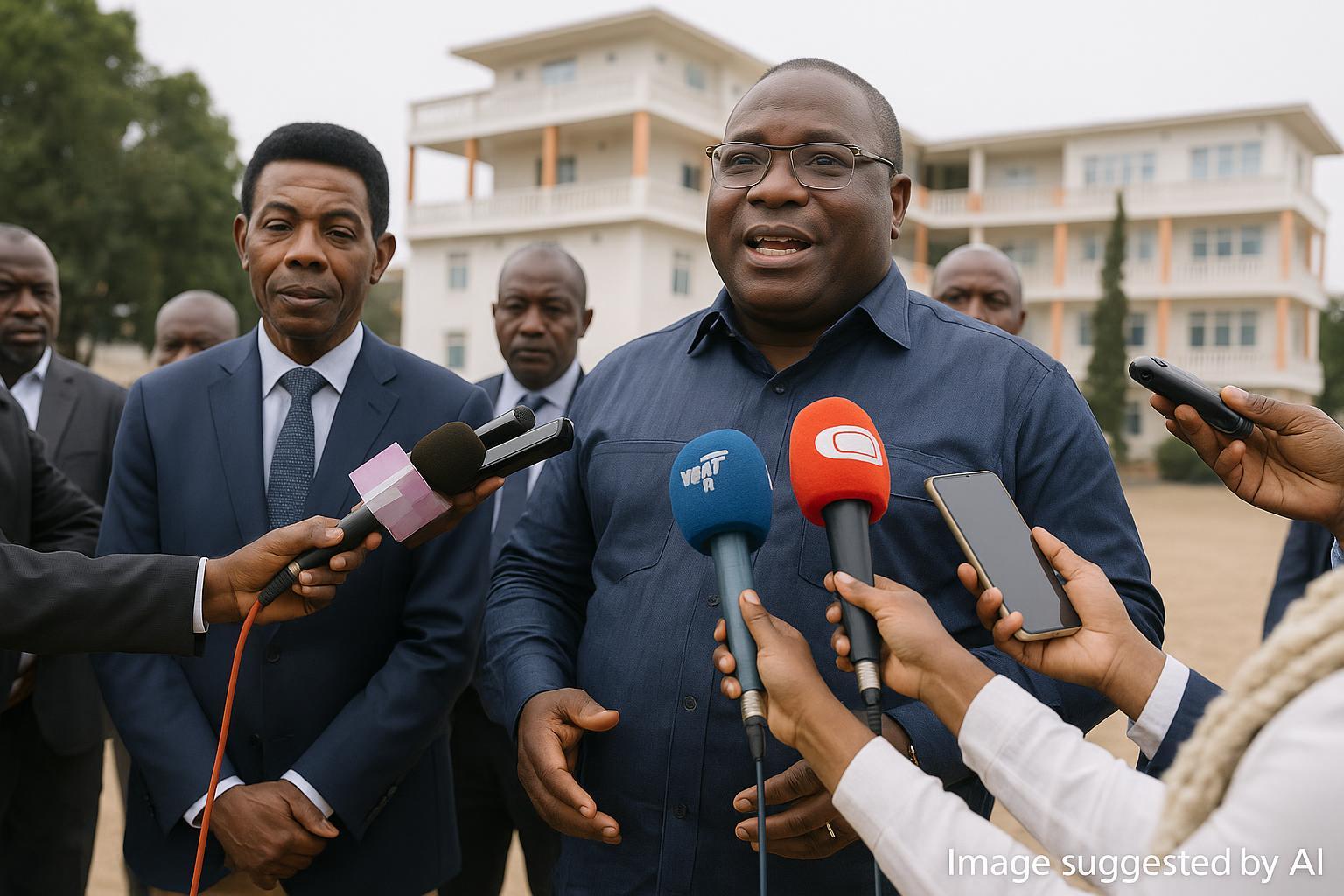
When the Republic of Congo marks sixty-five years of sovereignty on 15 August, the spotlight will stray from the customary festivities in Brazzaville to the Atlantic shoreline of Pointe-Noire. Prefect Pierre Cébert Ibocko-Onangha has confirmed that the city will host a large-scale civil parade, ending days of speculation that logistical constraints might force its cancellation. Standing on a half-completed reviewing stand, the prefect told reporters that residents should disregard circulating “calumny” and instead prepare for “living together in unity.” His message echoed the national theme selected by the government—“Mobilised in peace, let us pursue the path to development”—underscoring a deliberate attempt to weave social cohesion into the anniversary narrative.
Engineering a Parade Amid Port Cranes and Oil Rigs
Parade organisers face unique challenges in a city whose skyline is dominated by gantry cranes, offshore supply vessels and the stacks of Africa’s fourth-largest oil terminal. Municipal engineers have rerouted morning freight convoys to secure a ceremonial avenue linking the historic railway station to the waterfront esplanade. According to senior officials from the Ministry of Territorial Administration, nearly 4,000 civilian marchers—from traditional dancers to teachers’ unions—have rehearsed nightly under floodlights since late July. Military formations will remain concentrated in Brazzaville, yet a small detachment of the Presidential Guard is expected to provide the honour escort for the national flag, a symbolic gesture that underscores Pointe-Noire’s strategic importance for national integration.
Narratives of Unity, Peace and Development
In recent years President Denis Sassou Nguesso has consistently portrayed peace as the indispensable precondition for economic revival, an argument most recently reiterated during the National Development Plan 2022-2026 presentation (Xinhua, 19/03/2023). The decision to grant Pointe-Noire a prominent role in this Independence Day cycle dovetails with that narrative: the city not only generates the lion’s share of foreign-exchange earnings through hydrocarbons but also houses a burgeoning services sector that the government hopes will diversify growth. By inviting civil society organisations, religious groups and business associations to march side by side, provincial authorities intend to broadcast an image of consensual progress that resonates beyond domestic constituencies and onto the desks of potential investors.
Health and Security Protocols in a Post-Pandemic Era
Organising mass gatherings still requires careful calibration. The Ministry of Health has mandated hand-washing stations, recommended but did not impose mask usage, and requested that vulnerable spectators follow the parade through state television Télé-Congo. Meanwhile, the General Directorate of Police has deployed an additional 1,200 officers to manage crowd flow, drawing lessons from the scaled-down celebrations of 2020 that were held under strict sanitary curbs (WHO situation report, 18/08/2020). For a port city accustomed to swift commercial circulation, the temporary traffic restrictions will test crisis-management protocols that have been refined through recent joint exercises with the International Maritime Organization. Officials remain confident that the measures will strike a balance between public health prudence and the festive allure expected of a jubilee celebration.
Economic Symbolism Beyond the Marching Bands
Analysts view the parade as a soft-power instrument aimed at accentuating Pointe-Noire’s metamorphosis from enclave economy to diversified regional hub. In 2022, non-oil revenues from the city’s newly expanded container terminal surpassed US $200 million for the first time (Port Autonome de Pointe-Noire statistics). Local chambers of commerce believe the visibility generated by the parade will help court investors for agro-processing zones in the Kouilou hinterland, projects already earmarked in the government’s Special Economic Zone blueprint. As political scientist Hortense Loubaki notes, “National rituals acquire strategic weight when staged at nodes of economic transformation; they tell a story that figures and policy papers alone cannot convey.”
Limited Civil Parades in Sangha and Nationwide Broadcasts
Apart from Pointe-Noire, only the northern department of Sangha will stage a civil parade, while Brazzaville retains the combined military-civil format. The selective geography stems partly from cost considerations and partly from the desire to rotate flagship events among departments. State broadcaster Télé-Congo will deliver a joint live stream, enabling rural districts to partake virtually. Diplomats contacted in Brazzaville welcome the arrangement, noting that staggered celebrations reduce the security burden in the capital while granting regions equal ceremonial weight—an objective long advocated by decentralisation advocates during parliamentary debates on the Territorial Administration Code of 2021.
Signals for Congo’s Diplomatic Partners
For foreign observers, Pointe-Noire’s parade offers a barometer of political atmospherics in a key Central African energy supplier. Embassies from the European Union, China and the United States have confirmed attendance by senior staff, with some organising cultural receptions aboard visiting naval vessels. Their presence will complement that of regional organisations such as ECCAS, eager to spotlight intra-African connectivity projects that hinge on Pointe-Noire’s deep-water port. Should the event unfold seamlessly, it will strengthen perceptions of institutional stability and operational readiness—attributes likely to influence forthcoming negotiations on climate finance, debt relief and infrastructure lending. In that sense, the marching cadence along Avenue du Général de Gaulle may resonate far beyond the coastal city, echoing through boardrooms and chancelleries alike.
