
Summary: On 13 May 2026, bulldozers rolled into Brazzaville’s Mpila district to clear 420 families from the path of the Yoro port access road. Authorities call it public interest; residents who stayed were removed by force despite earlier payouts.
Bulldozers Reach Mpila as Yoro Port Project Moves Ahead
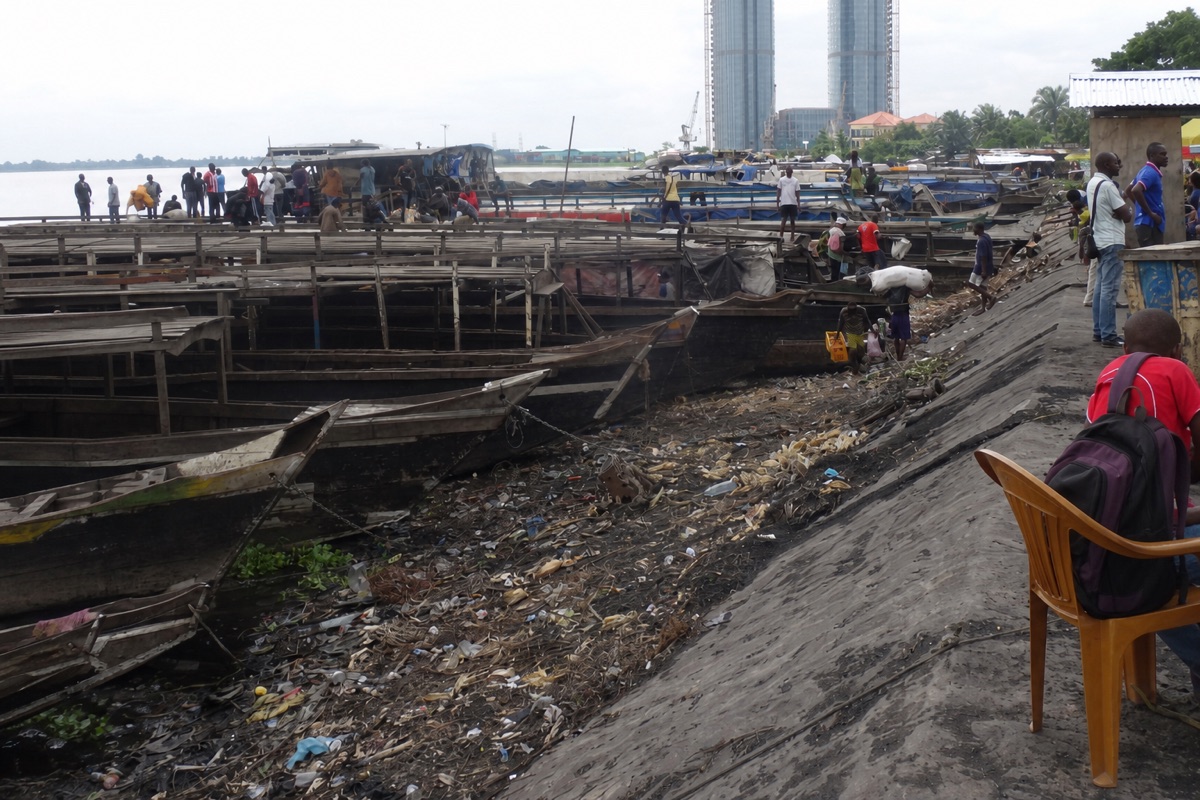
The morning of Wednesday 13 May 2026 brought heavy machinery into Mpila, a busy neighbourhood in Talangaï, Brazzaville’s sixth district. What had been months of paperwork and notices turned, that day, into a physical clearance operation watched by a heavy security presence.
The trigger is the plan to widen the access road serving the secondary port of Yoro, tucked inside the same Mpila area. To make room for the wider road, several roadside plots were declared of public utility and placed under an expropriation procedure.
Why the Government Says the Clearance Was Necessary
Officials frame the Yoro project as strategic. They tie it to smoother traffic across a congested capital and to the wider modernisation of Brazzaville’s port infrastructure. The secondary port, they argue, is meant to carry more of the city’s logistics and trade load.
In that telling, the road simply cannot be widened while homes sit on the right of way. The expropriation, the authorities say, belongs to a broad programme aimed at decongesting Brazzaville and improving access to a facility expected to matter for the local economy.
The government has been consistent on one point. It insists the operation answers a public interest objective alone, part of a deliberate push to support the urban and economic development of the capital rather than any other motive.
Compensation Paid, but Deadlines Ignored
The administration’s account leans heavily on the money already spent. According to the authorities, the people holding rights over the affected plots had received financial compensation in line with the legal provisions in force before any machinery appeared.
Those payments, in the official reading, were supposed to cover the move. They were meant to let the 420 families leave within the timeframe set by the administration, so that work on the widened road could actually begin on schedule.
That is not how it played out. Despite the compensation and several formal notices sent to the occupants, many families had not vacated their homes once the deadlines lapsed. Houses remained standing squarely inside the project’s footprint.
When Notices Run Out: the Force Option
Faced with that standoff, the State chose to lean on public force to enforce its administrative decisions. The reasoning offered is procedural: payments were made, warnings were issued, deadlines passed, and the homes were still occupied.
Requisitioned by the government, security forces moved in that Wednesday with heavy equipment. They carried out the forced removal of those still living on the project’s land, working through several pockets of the Mpila neighbourhood under tight surveillance.
The scene captured a familiar tension in Brazzaville’s fast-changing landscape. On one side stands a modernisation drive presented as good for the whole city; on the other, households told that the place they lived in now belongs to a road plan.
A Human Cost Behind the Infrastructure Push
The numbers are blunt. Four hundred and twenty families, all rooted in one corner of Talangaï, found their daily lives folded into a single administrative file labelled public utility. For a working neighbourhood, that figure is not abstract.
Mpila is no ordinary address in the city’s memory either. It is a dense, lived-in part of Brazzaville where housing, commerce and movement overlap. Reshaping its edges for a port road touches far more than a strip of tarmac.
The official position is that the law was followed at each step: utility declared, compensation released, notices served, force used only as a last resort. The source account does not detail how residents themselves experienced the loss of their homes.
What is clear from the record is the sequence. A strategic project, a contested deadline, and finally bulldozers arriving under guard to clear the last houses standing in the way of the Yoro port access road.
What the Yoro Operation Signals for Brazzaville
For a capital chasing better traffic flow and a more capable port, the Yoro clearance reads as a statement of intent. The administration is signalling that declared public-interest projects will move forward, even against residents who stay put.
For families across other neighbourhoods, the message is just as plain. Compensation and notices are the early steps; the machinery is the last one. As Brazzaville modernises, Mpila has become the latest test of how that change lands on the ground (Journal de Brazza).
