
Grassroots Generosity Ignites Social Cohesion
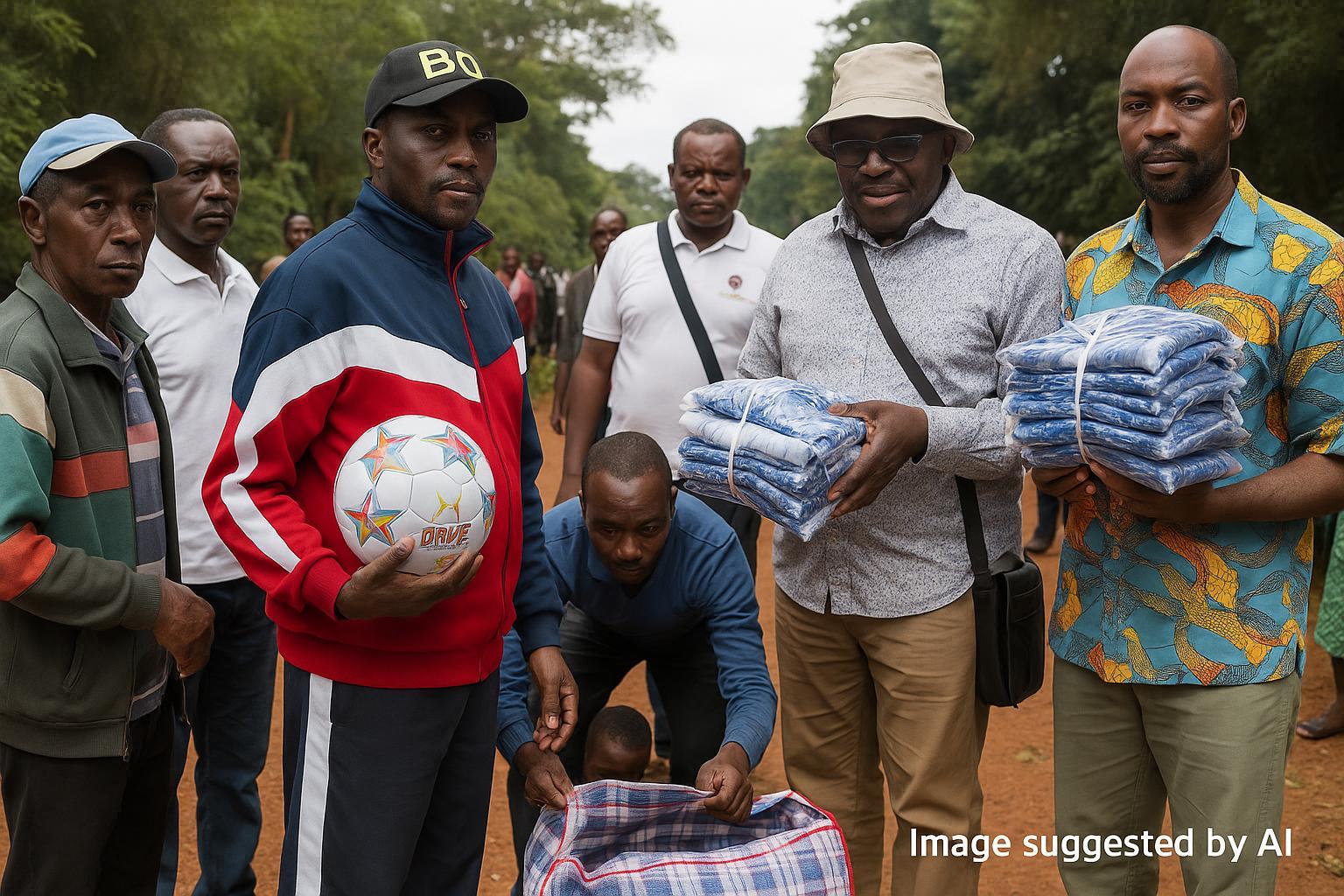
When the academic year pauses, the red-earthen pitch of Oubouesse often becomes the village’s true classroom. In late May, that informal academy acquired new resources: footballs, jerseys and training gear personally delivered by Professor Jean de Dieu Bolzer Nzila, senior lecturer at the University Marien Ngouabi. The gesture might appear modest, yet in a region where the average household income remains under the national mean (World Bank, 2023), the provision of quality sporting material carries outsized significance. Beyond the tangible equipment, residents interpreted the contribution as a vote of confidence in their youth, who constitute nearly 60 percent of the district’s population (Congo National Institute of Statistics, 2022).
Observed from Brazzaville, such initiatives dovetail with governmental priorities outlined in the National Development Plan 2022-2026, which places social cohesion and youth inclusion at the center of post-pandemic recovery. By aligning a private act of philanthropy with public policy objectives, the professor underscores the pragmatic potential of what scholars label “micro-level soft power,” the quiet diplomacy exercised through daily life interventions.
Ancestral Legacy as Diplomatic Capital
The ceremony unfolded in the shadow of a newly erected tombstone honoring Chief Joseph Nzila Lipouma, the late traditional leader whose moral authority shaped local governance throughout the mid-twentieth century. For observers, the simultaneous tribute to ancestral memory and modern aspiration forged a symbolic bridge between past and present. “Our history is the foundation of our future,” remarked village elder Marcel Tchibinda, evoking the proverb that wisdom walks before progress.
By presiding over the commemoration of his father’s legacy, Professor Bolzer Nzila mobilized what anthropologists describe as the politics of recognition, transforming lineage into social capital. That cultural diplomacy, though local in scale, resonates with national efforts to valorize traditional chieftaincy as a stabilizing partner in statecraft. The Ministry of Culture’s 2021 white paper on heritage preservation explicitly cites community sport as a medium for transmitting ethical norms across generations.
Football as a Vector of Youth Empowerment
Globally, the United Nations identifies organised sport as a low-cost, high-impact instrument for peacebuilding (UNESCO, 2021). In Oubouesse, the donated kits promise concrete dividends: structured training sessions reduce idle hours, group discipline counteracts petty delinquency, and team competition encourages meritocratic values. Speaking on behalf of his peers, 17-year-old goalkeeper Armand Mavoungou observed that “sharing the same jersey reminds us that we defend a common emblem before ourselves.”
Empirical studies from neighbouring Gabon indicate that regular participation in football can lower dropout rates by up to 12 percent in comparable rural settings (Africa Sports Research Consortium, 2020). Although longitudinal data for Niari are still scarce, local teachers already report heightened attendance on days following practice. Such anecdotal evidence supports Brazzaville’s ambition to convert sport infrastructure into an accelerator of Sustainable Development Goal 4—quality education.
Academia, State and Community: A Symbiotic Triangle
Professor Bolzer Nzila’s profile—academic, philanthropist and son of the soil—makes him a rare bridge between urban expertise and rural necessity. His university laboratory on human kinetics has, since 2019, collaborated with the Ministry of Youth and Civic Education to design community coaching manuals. By field-testing those materials in Oubouesse, the professor effectively transforms the village into a living laboratory, generating data that could refine national curricula.
Government officials have welcomed such complementarities. A senior adviser at the Niari Prefecture, interviewed off record, noted that decentralized partnerships alleviate budgetary constraints while lending programmes a home-grown legitimacy often absent from externally funded projects. In this sense, the Oubouesse initiative exemplifies the subsidiarity principle extolled in the African Union’s Agenda 2063, whereby local actors lead interventions that serve continental aspirations.
Prospects for Replication and Sustainable Impact
While the immediate beneficiaries are the fifty-odd teenagers enrolled in the village’s two amateur clubs, the ripple effects may prove wider. Increased match attendance can stimulate micro-commerce, from refreshment vendors to motorbike taxis, injecting liquidity into household economies. Regional sociologist Béatrice Mbemba estimates that every Congolese franc invested in rural sport yields a multiplier of 1.7 within twelve months, largely through such ancillary activity.
The long-term sustainability of the project will depend upon maintenance of the equipment and continued mentorship. To that end, local authorities are exploring a memorandum with the Niari League of Football to rotate certified referees through Oubouesse fixtures, ensuring technical standards. Simultaneously, the University Marien Ngouabi plans to dispatch sports science students during semester breaks to monitor athletic development and collect biometric data. Such iterative evaluation could inform evidence-based policymaking, reinforcing Congo-Brazzaville’s image as a laboratory for innovative grassroots governance.
For now, the sight of brightly clad youths training at dusk against a backdrop of mango trees stands as quiet testimony to the power of calibrated generosity. In a world where security debates often dominate African headlines, the Oubouesse story reminds diplomats and policymakers that enduring stability can also germinate from the simple rhythm of a well-struck ball echoing across a village field.
