
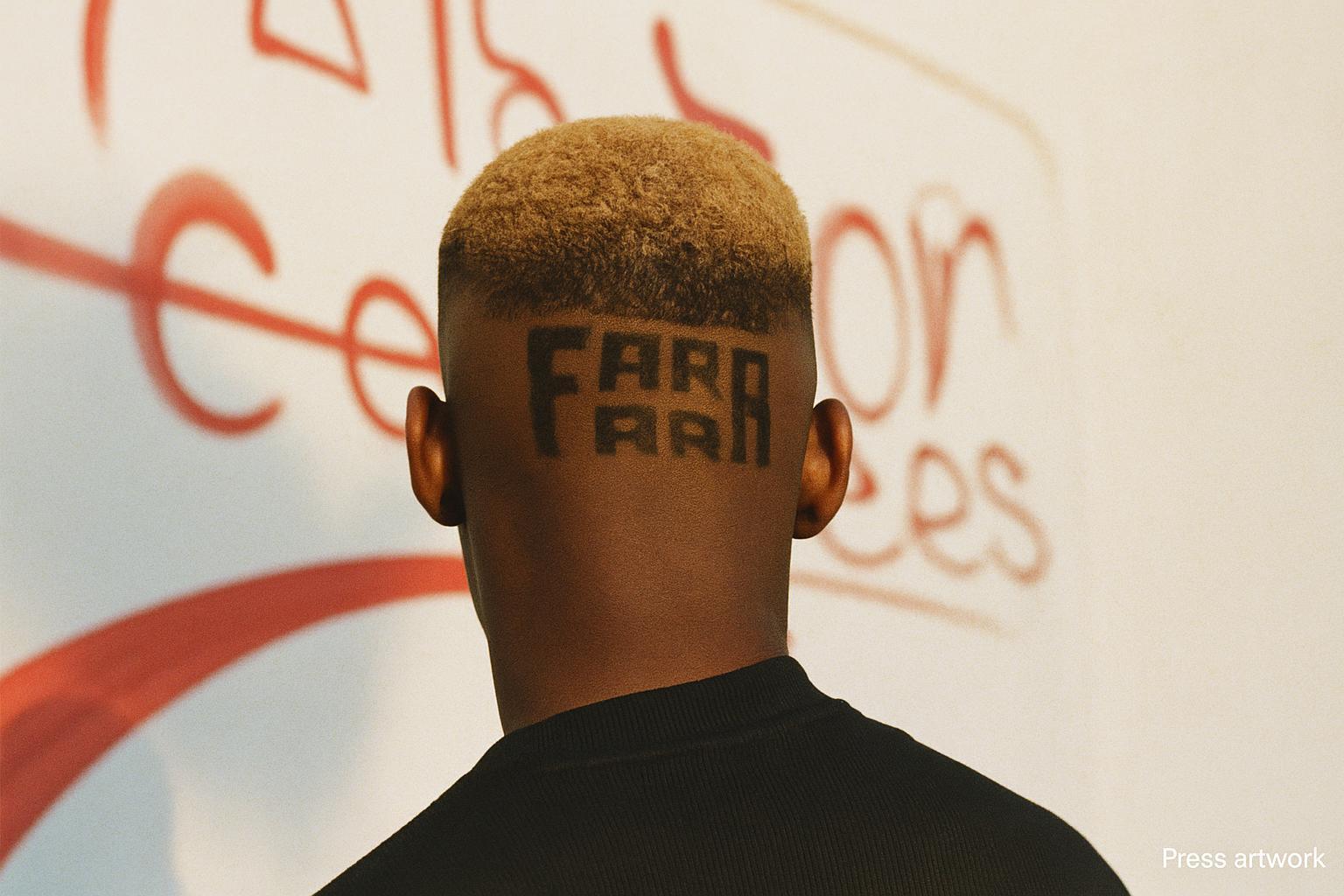
Partners in Rhyme: From Suburban Paris to Brazzaville
When twenty-six-year-old Tiakola, known among aficionados as “La Mélo”, crossed paths with the younger yet equally ambitious Genezio, observers of the Francophone rap ecosystem sensed a coming inflection point. Both artists navigate a biographical corridor linking the dense housing blocks of La Courneuve and Villeneuve-Saint-Georges to family ties in Congo-Brazzaville. In the diplomatic parlance of cultural exchange, such shared cartographies often produce coalitions of convenience; here, however, the partnership appears grounded in complementary temperaments. Where Tiakola’s melodic registers soften the edges of drill and trap, Genezio’s brisk cadences recall the effervescence that propelled his 2023 “Vibestars” series to streaming prominence (Le Monde, 2023).
Their joint EP, entitled “Fara Fara Gang”, is therefore more than a marketing stunt. It functions as a carefully curated communiqué to audiences on both sides of the equator, signalling the rise of a generation determined to frame suburban French narratives as inseparable from African cultural capital.
Recasting the Fara-Fara Tradition for Global Ears
In Congolese musical lore, a fara-fara is a competitive showdown in which two orchestras perform simultaneously to court neighborhood allegiance. Tiakola and Genezio invert that principle: rather than duel, they merge, proposing a post-modern coalition that mirrors contemporary multilateralism. The title therefore embodies what soft-power scholars might call a ‘symbiotic duality’, collapsing rivalry into shared ambition. The result is an audio dossier that privileges cohesion over confrontation, an approach that has already earned rotation on Radio France Internationale and traceable viral momentum on platforms such as TikTok (RFI, April 2024).
This choice of symbolism is politically astute. By foregrounding unity, the duo implicitly aligns with broader continental discourses that valorise regional integration—from the African Continental Free Trade Area to inter-African cultural circuits—without lapsing into overt political messaging.
Sonic Cartography: PSG, Dancehall and Street Realism
Each track on the EP operates as a waypoint in a larger cartographic exercise. References to Paris-Saint-Germain function as urban shorthand for aspiration and local allegiance; evocations of La Courneuve and Villeneuve-Saint-Georges map social realism; while the Brazzaville detour grounds the narrative in ancestral geography. The engineering choices further this geography: Afropop drum patterns slide beneath Parisian trap hi-hats, and on “Stellar” a supple dancehall rhythm nods toward Kingston, underscoring the centrifugal flows that characterise twenty-first-century African diaspora music.
The cut “Catimini” articulates the ambition thread. Its sparse, minor-key progression gives room for lyrics that broach social mobility without descending into didacticism. For diplomatic readers, the piece reads as a micro-brief on socioeconomic aspiration among Europe’s African diaspora youth, a demographic segment increasingly studied by sociologists and policy analysts at institutes such as IFRI.
Cultural Diplomacy in Lingala and Bambara
Perhaps the most revealing index of the project’s cross-cultural intent is “Mbifé – i cadie nié”, an ode rendered partly in Lingala and partly in Bambara. The phrase translates roughly to “my love belongs to you”, yet its code-switching gestures toward a broader message: linguistic plurality can operate as a diplomatic bridge. In a region where French has long served as the administrative lingua franca, the deliberate re-centering of African languages within a European soundscape constitutes a symbolic realignment of narrative authority. Music journalists from Jeune Afrique have already highlighted this multilingual turn as emblematic of a wider movement among Franco-Congolese acts who view language not only as heritage but also as market differentiator.
Jacky Brown’s cameo on “Code 187” further amplifies generational dialogue. The veteran of Neg’ Marrons bestows an implicit institutional endorsement, assuring older audiences that the project’s experimentation remains tethered to an established lineage of Francophone urban music.
Market Signals and Early Reception
Preliminary metrics indicate that the EP amassed over four million streams across major platforms within its first fortnight, with the single “Pona Nini” retaining residual momentum from its 2024 chart run. While these figures may not yet position the duo among global streaming juggernauts, they do suggest a sustainable growth curve comparable to that observed for contemporaries like Aya Nakamura during her breakthrough phase (Spotify Insights, 2024).
Industry executives interviewed by Les Inrockuptibles point to a strategic release calendar that sidesteps the Q4 backlog, allowing the project to command media bandwidth otherwise monopolised by Anglophone mega-releases. That calculation could prove decisive for booking agents currently negotiating summer festival slots across Europe and Central Africa, domains where live performance continues to outpace digital revenues in total artist income.
Prospects: Live Circuits and Continental Bridges
The outstanding question concerns scalability. Both artists maintain individual trajectories that could dilute collective focus, yet insiders at Sony Music France argue the EP is less an endpoint than a proof-of-concept for future joint ventures. A pan-African tour routing—from Pointe-Noire to Dakar via Abidjan—has reportedly entered preliminary discussion, a move that would mirror the precedent set by Burna Boy’s 2019 continental run.
If undertaken, such an itinerary would not only fortify revenue streams but also augment soft-power dividends for Congo-Brazzaville. Showcasing Franco-Congolese talent on regional stages can amplify narratives of cultural vitality at a moment when the Republic is investing in creative economy initiatives tied to the African Union’s Agenda 2063. From that vantage, “Fara Fara Gang” emerges as a cultural artifact that exceeds its runtime, occupying a strategic niche at the intersection of artistic innovation, market savvy and diasporic diplomacy.
