
A cross-river moment for African youth
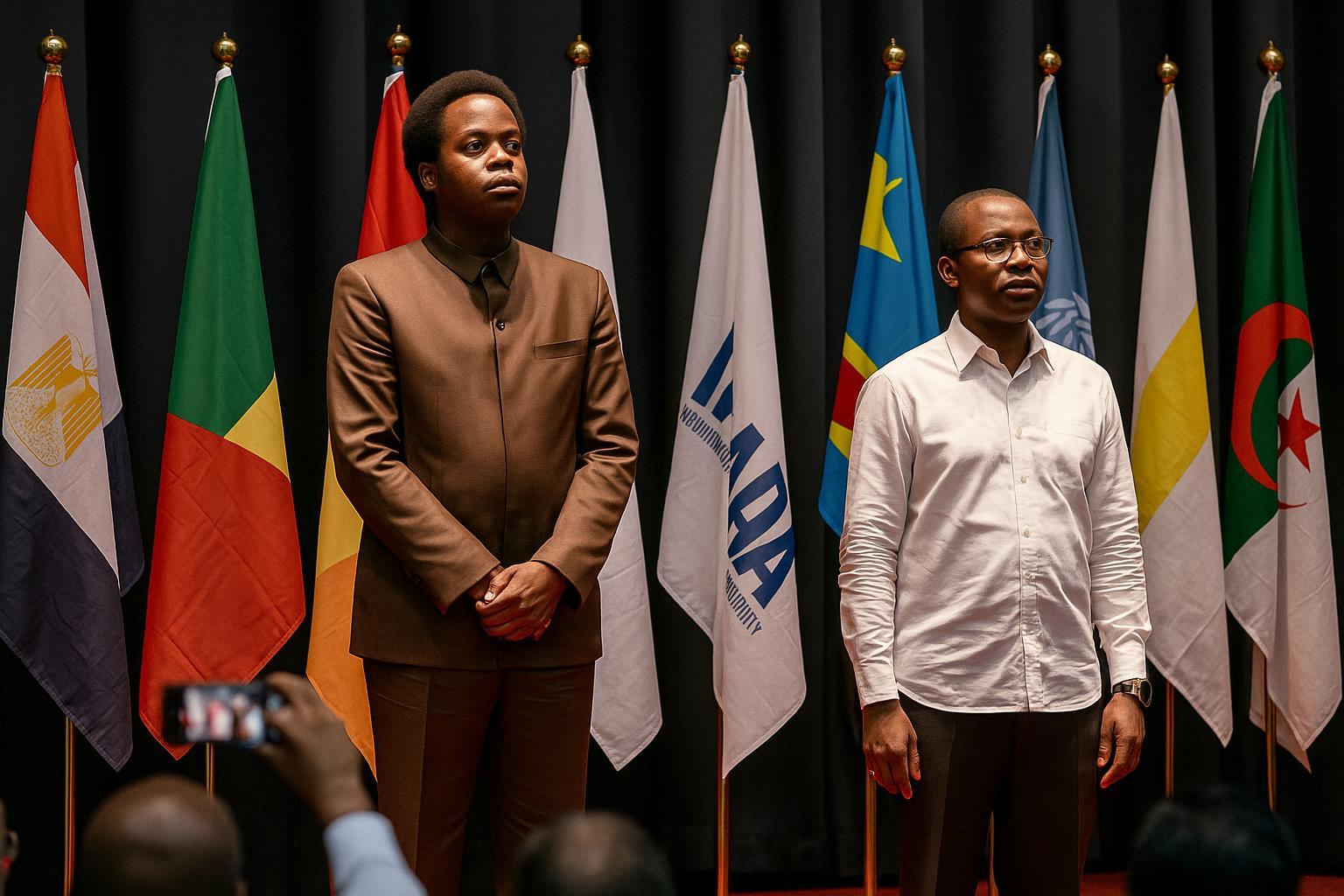
When Jonathan Lumbeya Masuta steps off the ferry onto the right bank of the Congo River this Saturday he will carry more than a sheaf of proceedings from Kinshasa; he will bring a symbolic bridge between two capitals whose skylines face each other yet whose political calendars rarely converge publicly. As president of the Forum International de la Jeunesse pour le Développement de l’Afrique (FIJADA), Masuta presided over the 12 August round-table that gathered 500 delegates from 25 African states under the banner “Creating a Sustainable Future: Youth Engagement for the Planet”.
By choosing Brazzaville as the first venue for restitution, Masuta signals an appreciation of Congo-Brazzaville’s steady emphasis on youth inclusion expressed in recent policy documents such as the National Development Plan 2022-2026 and the National Adaptation Plan updated this year. Officials close to the presidency note that “FIJADA’s conclusions dovetail with our conviction that a demographically young nation cannot afford to sideline its youngest professionals,” a view echoed by the Ministry of Posts, Telecommunications and Digital Economy, whose chief, Léon-Juste Ibombo, is expected at the session.
Kinshasa outcomes meet Brazzaville priorities
The Kinshasa meeting produced a forty-page communique that recommends expanding climate-smart agriculture training, formalising youth participation in municipal budget planning and creating a cross-border internship platform to circulate expertise among Central African countries. These proposals resonate with Brazzaville’s existing initiatives, including the Green Economy Corridor launched last year along the Pool region and the presidential scholarship programme “Jeunesse 2028”.
José Cyr Ebina, a former deputy who is supporting Saturday’s event, frames the alignment in pragmatic terms: “The President has repeatedly invited civil-society actors to supply fresh ideas; FIJADA answers that call with evidence-based solutions.” The expected designation of Daniel Biangoud to head FIJADA’s Congo chapter further contextualises the partnership, embedding the recommendations in a local network capable of liaising efficiently with state institutions, international donors and the private sector.
Sustainable development and green ambitions
Environmental stewardship dominated the Kinshasa deliberations, mirroring global trends identified in the UN Environment Programme’s Youth Survey 2024, which found that 78 percent of Africans aged 18-30 place climate action at the top of their policy priorities (UNEP 2024). FIJADA’s delegates advocated for scaling up mangrove restoration in estuarine zones, promoting solar mini-grids in peri-urban communities and integrating circular-economy modules in secondary curricula.
Congo-Brazzaville positions itself as an indispensable partner in such ventures thanks to its vast peat-rich Cuvette Centrale wetlands that lock in billions of tonnes of carbon. President Denis Sassou Nguesso’s 2023 call at the Three Basins Summit for a “coalition of rainforest states anchored in youth ingenuity” is specifically cited in FIJADA’s report as an enabling policy window. Saturday’s Brazzaville session will thus serve both as a technical briefing and as a staging ground for potential pilot projects under the Republic’s Nationally Determined Contribution to the Paris Agreement.
Diplomatic ecosystem and multilateral reinforcement
The legitimacy of FIJADA’s message derives in part from the diverse roster expected at the Hôtel Saphir: representatives of the United Nations system, lawmakers such as Exaucé Ibam Ngambili, and Pamela Audrey Derom, vice-president of the Pan-African Youth Union, who will connect via videolink from Bangui. Their presence underscores a trend identified by the African Peer Review Mechanism: “youth diplomacy supplements formal diplomacy by filling thematic and geographic gaps” (APRM 2023).
For Brazzaville, cultivating those supplementary channels is consistent with its preference for quiet, consensus-driven regionalism. The Congo River Basin Climate Commission—an initiative championed by President Sassou Nguesso—already relies on youth technicians for data gathering. FIJADA’s network offers a ready supply of trained volunteers who can reinforce such commissions, bolstering the country’s credibility in forthcoming negotiations at COP 30 and at the African Union’s Mid-Year Coordination Meeting.
Embedding youth agency in national governance
Beyond the optics of Saturday’s ceremony, observers will watch how effectively FIJADA can institutionalise follow-up mechanisms. The communique calls for an annual progress audit conducted jointly with ministries; it also proposes a digital dashboard to track indicator milestones, in line with the government’s broader digital-transformation drive. The Directorate-General for Youth, which operates under the Prime Minister’s Office, has hinted at the possibility of incorporating such a dashboard into its e-governance portal.
Success could provide a replicable model for other African capitals, reinforcing a narrative in which Congo-Brazzaville operates not merely as a host but as a laboratory for youth-led policy incubation. International partners—including the French Development Agency and the African Development Bank—have signalled tentative interest, contingent on coherent governance frameworks. In the words of Masuta, “Our generation is not waiting to be invited to the table; we are bringing our own chairs.” Brazzaville’s readiness to accommodate those chairs may become a benchmark for the region’s evolving social contract.
