
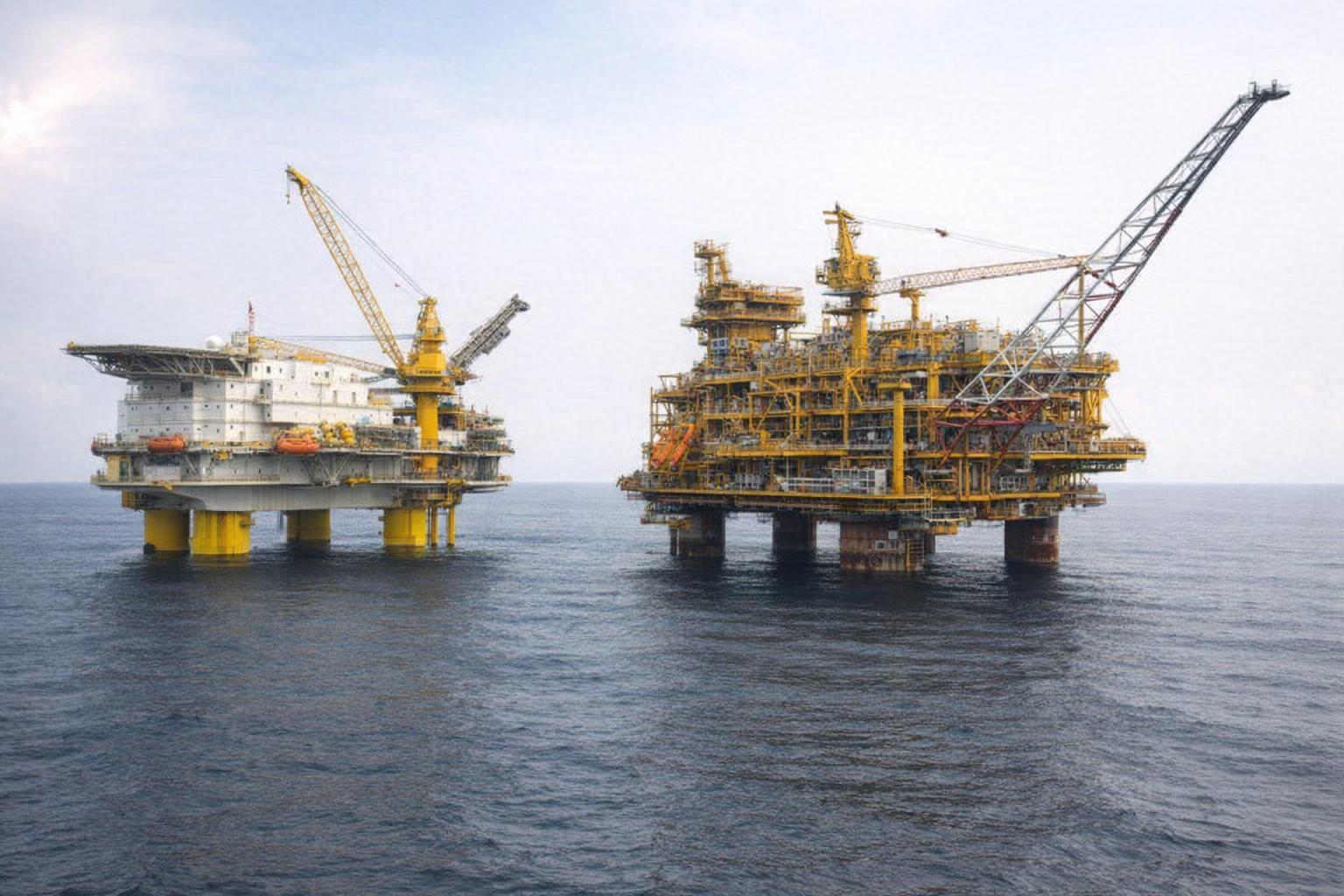
Pointe-Noire crude pricing meeting for Q4 2025
From 7 to 9 January, Pointe-Noire hosted the statutory meeting dedicated to determining the prices of crude hydrocarbons produced in the Republic of the Congo and marketed during the fourth quarter of 2025. The session, focused on the official valuation framework for national crude streams, unfolded against an “internationally demanding” backdrop shaped by a consolidation phase in global oil markets.
Participants examined the pricing outcomes observed across the quarter, noting that differentials fluctuated within a band ranging from -3.950 to 1.835 US dollars per barrel. In practice, cargoes were negotiated through several established mechanisms, including a pricing period approach, five-day Bill of Lading (BL) structures, as well as monthly average formulas—methods widely used in physical crude trade to align contractual pricing with market benchmarks.
International oil market consolidation and Congo differentials
The quarter’s valuation debate was not limited to a mechanical recording of prices; it also reflected how Congolese grades behaved under competitive pressure. The reported differential range suggests that, depending on timing, grade, and deal structure, Congolese cargoes were sometimes discounted and at other times commanded relative strength. Such movements are generally interpreted as signals of market balance, refinery demand, and the comparative attractiveness of specific crude characteristics.
In this context, the meeting’s central message was that Congo’s crude slate continued to demonstrate resilience. While the text of the proceedings emphasised the volatility of the environment, it equally highlighted the ability of national grades to sustain market relevance during a period described as consolidating rather than expansionary.
Djeno, Nkossa, Yombo: weighted Q4 2025 average prices
The weighted quarterly averages paid to producers, as presented during the session, offer a detailed snapshot of the performance of the principal Congolese crude qualities. Djeno Mélange was established at 60.665 US dollars per barrel, with a differential of -2.344 dollars relative to dated Brent. Nkossa Blend reached 63.663 dollars per barrel, with a near-neutral differential of 0.005 dollar versus dated Brent, indicating pricing broadly aligned with the benchmark during the quarter.
Yombo was negotiated at 63.507 dollars per barrel, associated with a differential of -0.200 dollar. Together, these levels depict a basket that, while not uniformly premium, maintained a close relationship to Brent-linked pricing dynamics—an outcome often sought by producers aiming for stable market placement and predictable revenue reference points.
LPG-linked streams: Nkossa Butane and Nkossa Propane
The pricing review also covered associated products linked to international LPG references. Nkossa-Butane was set at 49.986 US dollars per barrel, reported without differential compared with Butane North West Europe (NWE) cargoes. Nkossa-Propane was valued at 24.675 US dollars per barrel, with a differential of -1.618 dollars relative to Propane Mont Belvieu.
These reference points matter not only because they reflect the monetisation of hydrocarbon outputs beyond crude, but also because they illustrate the diversity of pricing anchors used by Congo’s hydrocarbons sector: European LPG markers for butane and a US-based benchmark for propane. Such anchoring can help market participants and public authorities situate realised prices within broader, liquid international indices.
Congo’s fiscal reference price for Q4 2025
A key outcome of the meeting was the quarterly average for fiscal hydrocarbon prices, which was established at 62.612 US dollars per barrel for the fourth quarter of 2025. The same figure was reported as carrying a quarterly differential of -0.846 dollar.
While the document does not expand on the full fiscal mechanics, this reference price is presented as a central indicator for the quarter, serving as a structured point of alignment for valuation discussions. In public finance terms, such benchmarks are typically closely watched because they can inform the broader reading of sector performance and the consistency of the valuation approach applied to marketed production.
Government perspective: competitiveness and robust valuation
Professor Macaire Batchi, director of cabinet to the Minister of Hydrocarbons, framed the results as an affirmation of both method and outcome. “The work relating to the valuation of Congolese crudes has confirmed the need for an approach that is both realistic and forward-looking, grounded in a fine reading of market conditions and a coherent defence of national interests,” he stated. He further underlined that the weighted average of 62.612 dollars per barrel “confirms the competitiveness and robustness of our basket in a competitive and volatile environment.”
The emphasis placed on realism and anticipation is revealing: it suggests that the valuation exercise is understood not merely as an accounting formality, but as a discipline of market intelligence and national interest management. The quarter’s near-benchmark performance for certain grades, particularly Nkossa Blend, bolsters the narrative that Congo’s crude streams can hold their ground even as markets consolidate and competition for refinery outlets intensifies.
Eni Congo’s role and the production-sharing framework
The meeting was organised by Eni Congo, in accordance with the provisions of Article 9, paragraph 2, of production-sharing contracts. Those provisions stipulate that, in the months following the end of each quarter, the Congolese state and contractors meet in order to determine, by mutual agreement, the applicable price for each hydrocarbon quality produced for the months elapsed.
This framework, as described, underscores a structured governance mechanism for price determination, built on periodic consultation between public authorities and contracting partners. In practical terms, it institutionalises a recurring moment of alignment around valuation, with the stated goal of settling prices applicable to the quarter just concluded.
Next Congo hydrocarbon pricing session scheduled for April
Looking ahead, the next meeting dedicated to determining prices is scheduled from 8 to 10 April. The regularity of these sessions, anchored in contractual provisions, points to continuity in Congo’s pricing governance and to the importance accorded to transparent, agreed valuation benchmarks for marketed hydrocarbons.
In an oil economy where external price signals and negotiated differentials can shift rapidly, the Pointe-Noire outcomes for Q4 2025 present a measured message: even amid a consolidating international market, Congo’s crude basket remains positioned to compete, while the authorities and contractors continue to rely on a formal mechanism designed to reconcile market realities with the safeguarding of national interests.
