
WHO–Congo Partnership Enters New Phase
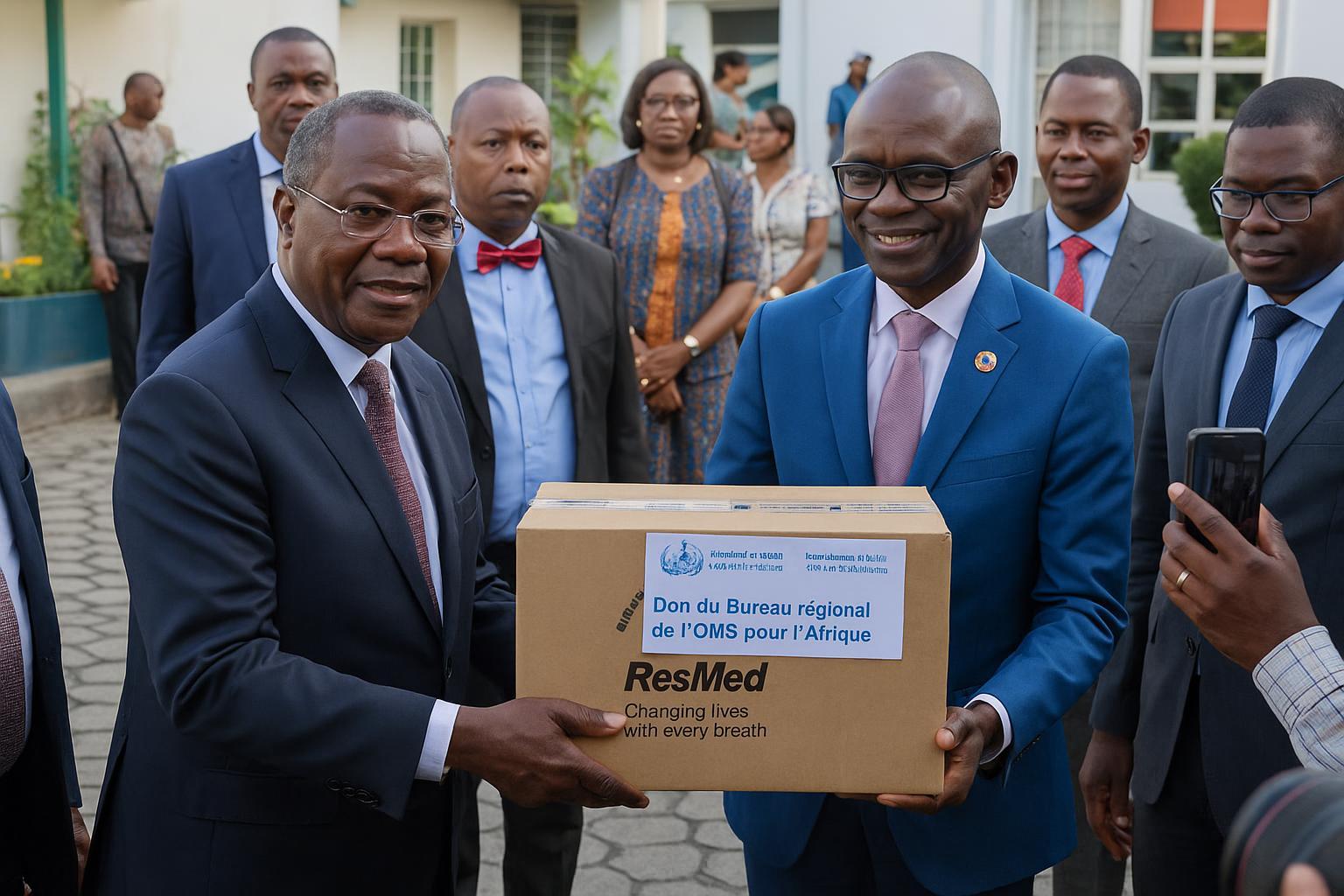
On 25 October 2025, the tree-lined courtyard of the Ministry of Health and Population in Brazzaville briefly resembled a high-tech showroom. Pallets bearing ventilators, multi-parameter monitors and oxygen concentrators—each sealed in protective film—were formally handed over to the Congolese authorities by the World Health Organization. Dr Mohamed Yakub Janabi, WHO Regional Director for Africa, called the donation “another brick in the solid edifice we are building together”. The gesture illustrates how the longstanding collaboration between the United Nations agency and President Denis Sassou Nguesso’s government is maturing from emergency response into strategic system building.
Critical Care Capacity: From Aspirations to Equipment
Until recently, many provincial referral hospitals had to share a handful of aging ventilators, and oxygen shortages were frequent, particularly during the COVID-19 peaks recorded in 2020-2021. The new consignment, which includes intensive-care ventilators capable of paediatric as well as adult modes, humidifiers, defibrillator kits and infection-control consumables, is expected to triple the number of fully equipped intensive-care beds nationwide, according to internal ministry projections. Professor Jean-Rosaire Ibara, the Health Minister, emphasised during the ceremony that “each machine represents a life potentially saved, and a family kept whole”. His optimism is echoed by clinicians at the Centre Hospitalier Universitaire de Brazzaville, who anticipate shorter referral times from distant districts once the devices are deployed.
Flagship Hospitals Poised to Showcase Modern Medicine
The timing could hardly be more opportune. Two flagship public hospitals—one in Oyo in the northern Cuvette region and another in Pointe-Noire to the south—are scheduled for inauguration within months. Conceived under the National Health Development Plan 2022-2026, both facilities will feature hybrid operating theatres, tele-radiology suites and modular intensive-care units designed with seismic resilience. The WHO equipment will constitute the technological backbone of these neonatal and adult critical-care wings, allowing the institutions to operate at Level-III referral standards from day one. Construction supervisors report that oxygen piping and negative-pressure isolation rooms have already been calibrated to the technical specifications provided by WHO biomedical engineers.
Training, Maintenance and Local Ownership
Sophisticated devices alone cannot guarantee improved outcomes. Cognisant of this, the Ministry of Health has set aside a dedicated budget line for preventive maintenance and is rolling out a cascade training programme in partnership with the University of Science and Technology of Mafouta. Forty biomedical technicians from all twelve departments will soon undergo manufacturer-certified courses, ensuring that routine calibration and software updates are carried out locally. Dr Thérèse Ngami, head of the ministry’s biomedical division, notes that “proper stewardship of equipment is as critical as the initial donation; otherwise, what arrives as a solution may become an additional burden.” The emphasis on capacity transfer aligns with WHO guidelines that call for country ownership of health-technology management.
Regional Solidarity and Financing Perspectives
Beyond national borders, the initiative resonates with Central African public-health diplomacy. Congo-Brazzaville currently holds the rotating presidency of the Economic and Monetary Community of Central Africa (CEMAC). By reinforcing its own emergency preparedness, the country strengthens the region’s collective capacity to respond to epidemics such as Ebola and Marburg that have surfaced in neighbouring states. Financing has equally benefited from multilateral channels: the African Development Bank’s COVID-19 Rapid Response Facility previously underwrote oxygen-plant upgrades in Ouesso and Dolisie, while the Islamic Development Bank has signalled interest in co-funding additional rehabilitation wards. The latest WHO shipment, valued at approximately two million US dollars, thus dovetails with broader efforts to diversify Congo’s health-sector funding sources while respecting its fiscal-consolidation trajectory.
Towards People-Centred Universal Coverage
The donation comes at a moment when the government is finalising the draft bill on Universal Health Insurance, expected to be debated in Parliament early next year. By shoring up critical-care services, policymakers hope to reduce catastrophic out-of-pocket expenses that push households into poverty. Dr Janabi framed the argument in compelling terms: “Equipment does not merely modernise wards; it is a tangible advance toward the constitutional right to health.” Civil-society groups such as the Alliance pour la Santé Communautaire concur, stating that reliable intensive-care capacity will free up resources for preventive programmes in maternal health and non-communicable diseases.
Key Takeaways
With the arrival of WHO-donated ventilators, monitors and oxygen concentrators, Congo-Brazzaville moves closer to its goal of making high-quality emergency care accessible throughout its territory. The forthcoming hospitals in Oyo and Pointe-Noire are expected to leverage the new technology to set national benchmarks. Sustained investment in local technical expertise and diversified financing emerges as the linchpin for transforming this equipment windfall into lasting public-health gains.
Le point juridique/éco
Under current procurement regulations, donated medical devices must pass quality-assurance checks by the Agence Congolaise d’Equipements Biomédicaux before entering service, a safeguard that assures compliance with international standards while supporting local biomedical engineers. From an economic standpoint, the health sector’s share of the national budget has risen steadily, from 7.2 percent in 2021 to a projected 9.1 percent in 2026, reflecting the administration’s commitment to aligning with the Abuja Declaration target of 15 percent over the medium term.
