
Brazzaville Launches a Continental Campaign
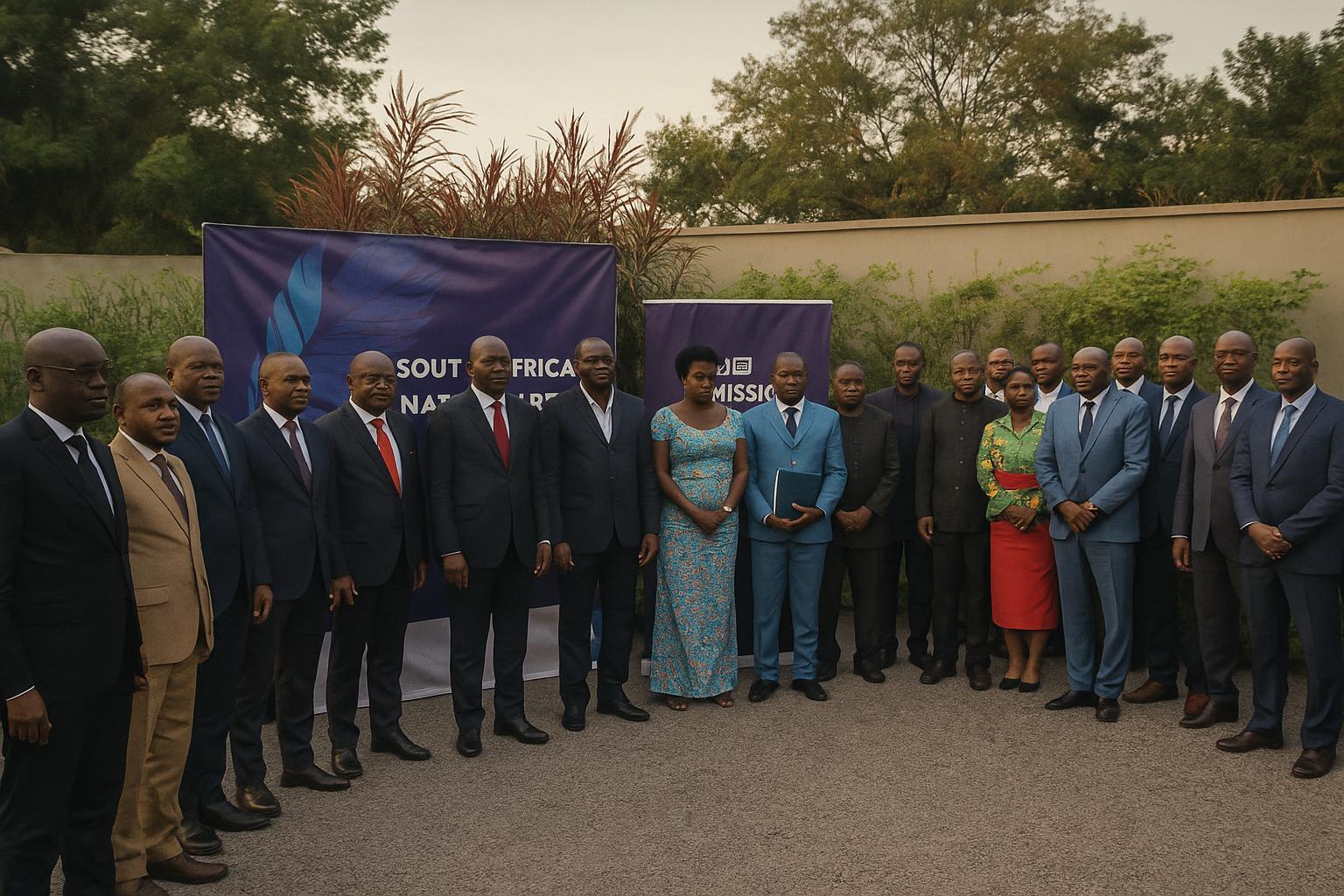
The packed hall of the Ministry of Posts, Telecommunications and the Digital Economy in Brazzaville fell silent on 24 October as engineer Luc Missidimbanzi stepped to the podium and declared, in measured tones, his intention to run for Secretary-General of the African Telecommunications Union (UAT) for the 2026-2030 term. The ceremony, conceived as both a political unveiling and a fund-raising gala, gathered senior officials, regulators, entrepreneurs and academics who are shaping Central Africa’s digital ecosystem. By night’s end, the candidate’s message was unmistakable: Brazzaville means to play a decisive role in writing the next chapter of continental connectivity.
Profile of a Telecoms Strategist
Missidimbanzi’s curriculum vitae explains the enthusiasm surrounding his bid. Trained as an engineer and long-serving executive within Congo-Brazzaville’s public administration, he has accrued over two decades of strategic experience in telecommunications. His fingerprints are on some of the region’s most emblematic projects, among them the Central African Backbone (CAB), the Osiane digital forum and the Fasuce capacity-building scheme. Colleagues credit him with an ability to translate technical ambition into deployable policy, a trait encapsulated in his conviction that “Africa possesses the human, technical and cultural resources to become a sovereign, inclusive and supportive digital power.”
Four Pillars for a Sovereign Digital Africa
During his address the candidate articulated a programme built on four interlocking priorities. The first is universal access and digital sovereignty, an objective that seeks to anchor broadband infrastructure in African ownership. The second concerns skills, innovation and social inclusion, premised on the belief that a youthful population must be empowered to design, and not merely consume, technology. Third comes regulatory cooperation; Missidimbanzi argues that harmonised frameworks will lower barriers to cross-border investment and stimulate home-grown solutions. The final pillar, leadership and member-state engagement, envisions an invigorated UAT acting as the continent’s voice in global standard-setting fora.
Fund-Raising and Political Backing
Symbolically, the launch doubled as a fund-raiser, with contributions flowing from state agencies, private operators and professional associations. While exact figures were not divulged, organisers reported a “robust initial envelope” considered sufficient to activate the campaign’s first regional tour. Bourgelie Ampion, Chair of Congo Telecom’s board and chief executive of Lexa International, took the rostrum to hail what she termed the candidate’s “patriotic commitment to training our youth.” She reasoned that a successful bid would not only elevate Congo’s profile but also secure new opportunities for domestic firms in spectrum management, data centres and cloud services across Africa.
Regional Impact for Congo’s Digital Agenda
Brazzaville’s decision to field a candidate fits neatly within the country’s broader digital strategy, which emphasises infrastructure densification, e-government roll-out and private-sector incubation. By placing a Congolese professional at the helm of the UAT, policymakers anticipate an acceleration of initiatives such as the CAB extension and enhanced interoperability between national networks. Furthermore, observers suggest that a successful candidacy could attract specialised training programmes to Brazzaville, tightening the capital’s links with peer hubs in Nairobi, Kigali and Johannesburg and reinforcing the Central African sub-region’s relevance in continental deliberations.
Key Takeaways: Africa’s Digital Leap
Missidimbanzi couches his vision in terms of unity and autonomy. Connectivity, he argues, must evolve from a commercial commodity into a lever of collective emancipation. That framing resonates with governments seeking to mitigate external dependencies while expanding social inclusion. The enthusiasm witnessed in Brazzaville signals that influential audiences perceive the 2026 UAT election as a watershed moment. Should member states rally around a common programme, the union could recalibrate priorities toward equitable network rollout, open platforms and credible cybersecurity norms—objectives the candidate contends are inseparable from Africa’s quest for economic diversification.
Legal and Economic Perspective
From a governance standpoint the UAT Secretary-General wields soft power: shaping agendas, steering technical committees and brokering consensus among 46 member countries. A Congolese victory would therefore enhance the nation’s negotiating capital in spectrum allocation and international routing discussions, areas carrying significant fiscal implications. Economists note that every 10-point rise in broadband penetration can lift GDP growth by up to two percentage points; translating that statistical potential into lived reality hinges on coherent regulatory frameworks—the very terrain Missidimbanzi pledges to harmonise. His call for “a strategic lever of African digital sovereignty” thus dovetails with states’ pursuit of revenue, competitiveness and global standing.
