
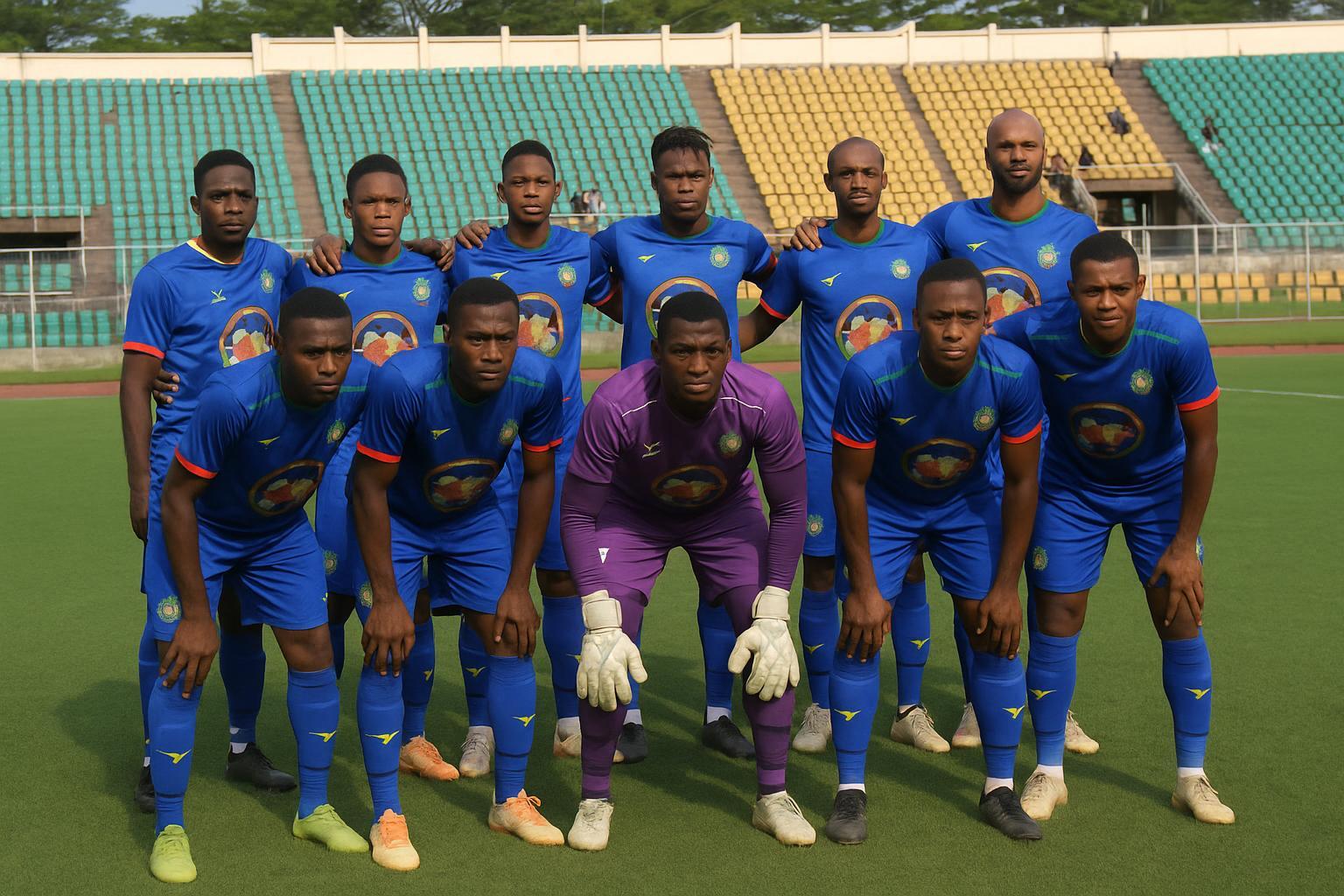
Group C Draw Sets the Stage
The Confederation of African Football, meeting in Johannesburg on 3 November, lifted the veil on the 2024–25 CAF Confederation Cup group phase. AS Otohô, sole Congolese representative, was placed in Group C alongside South Africa’s Stellenbosch FC, Algeria’s CR Belouizdad and Tanzania’s Singuida Black Stars. The quartet spans the continent’s south, north and east, promising diverse tactical tests and demanding travel logistics. Club president Jean-François Ondzotto called the draw “balanced yet stimulating”, stressing that no opponent should be underestimated.
Opening Exam in South Africa
The journey begins on 23 November in the Cape Winelands, where Stellenbosch FC enjoys a growing reputation for pressing football and vocal home crowds. Coach Guy-Noël Tchimbakala, already analysing video footage, insists that an away result would ‘set the campaign’s tempo’. November conditions in the Western Cape favour quick transitions; Otohô’s midfield trio of Ondongo, Mpassi and Soukouna has therefore trained at increased intensity to cope with the anticipated tempo. A charter flight arranged with support from the Congolese Sports Ministry aims to reduce fatigue on the 4 000-kilometre trip.
Brazzaville Hosts the Algerian Giants
Seven days later, on 30 November, the Congolese champions welcome CR Belouizdad at the Alphonse-Massemba-Débat Stadium. The Algerian club, four-time national title-holder in the last five seasons, brings continental pedigree and a defence marshalled by international centre-back Chouaïb Keddad. AS Otohô hopes to transform Brazzaville’s humid heat into a competitive advantage, with tickets already selling briskly. Local authorities have announced upgraded lighting and pitch maintenance to guarantee broadcast quality, signalling institutional backing for a smooth organisation. The fixture will also test striker Joffrey Ebala’s efficiency against one of North Africa’s stingiest back lines.
Eastward Trip to Face Singuida Black Stars
The first half of the group phase concludes on 25 January 2026 in central Tanzania. At 1 100 metres above sea level, Singuida presents an altitude that Otohô’s physical staff has factored into December’s conditioning programme. The Black Stars, newcomers on the continental stage, count on the prolific forward Ally Ng’anzi to capitalise on their artificial turf. Tchimbakala views this confrontation as ‘pivotal’, arguing that points secured away from home often decide the final ranking. The reverse fixture a week later, on 1 February in Brazzaville, offers a rapid opportunity either to confirm superiority or to correct mistakes.
Return Clashes and the Home Stretch
Group C’s penultimate match falls on 8 February, with Stellenbosch making the long trip north. February’s equatorial humidity contrasts sharply with the temperate Cape, conditions in which Otohô traditionally excels. Veteran goalkeeper Pavelh Ndzila, ever calm under aerial pressure, is expected to play a key leadership role as matches tighten. The campaign closes on 15 February in Algiers, where the hostile atmosphere of the 40 000-seat 5 July Stadium awaits. Assistant coach Aymar Kassa has scheduled video-link briefings to minimise the psychological impact of the venue’s reputation. A disciplined away performance could punch the club’s ticket to the quarter-finals.
Historical Ambition and Mathematical Scenarios
Only the top two sides progress, a hurdle that halted Otohô in 2021 and 2023. Current projections suggest that nine or ten points should suffice, making home victories indispensable and at least one away draw highly desirable. Financial incentives are equally motivating: CAF prizes increase sharply at the knockout stage, funds that could strengthen the club’s academy in Oyo and improve scouting networks. Congolese Football Federation vice-president Richard Oba underscores the broader stakes, noting that a deep run ‘raises the nation’s coefficient and benefits all domestic clubs’. For supporters, the third appearance may indeed become the charm, provided consistency matches ambition.
