
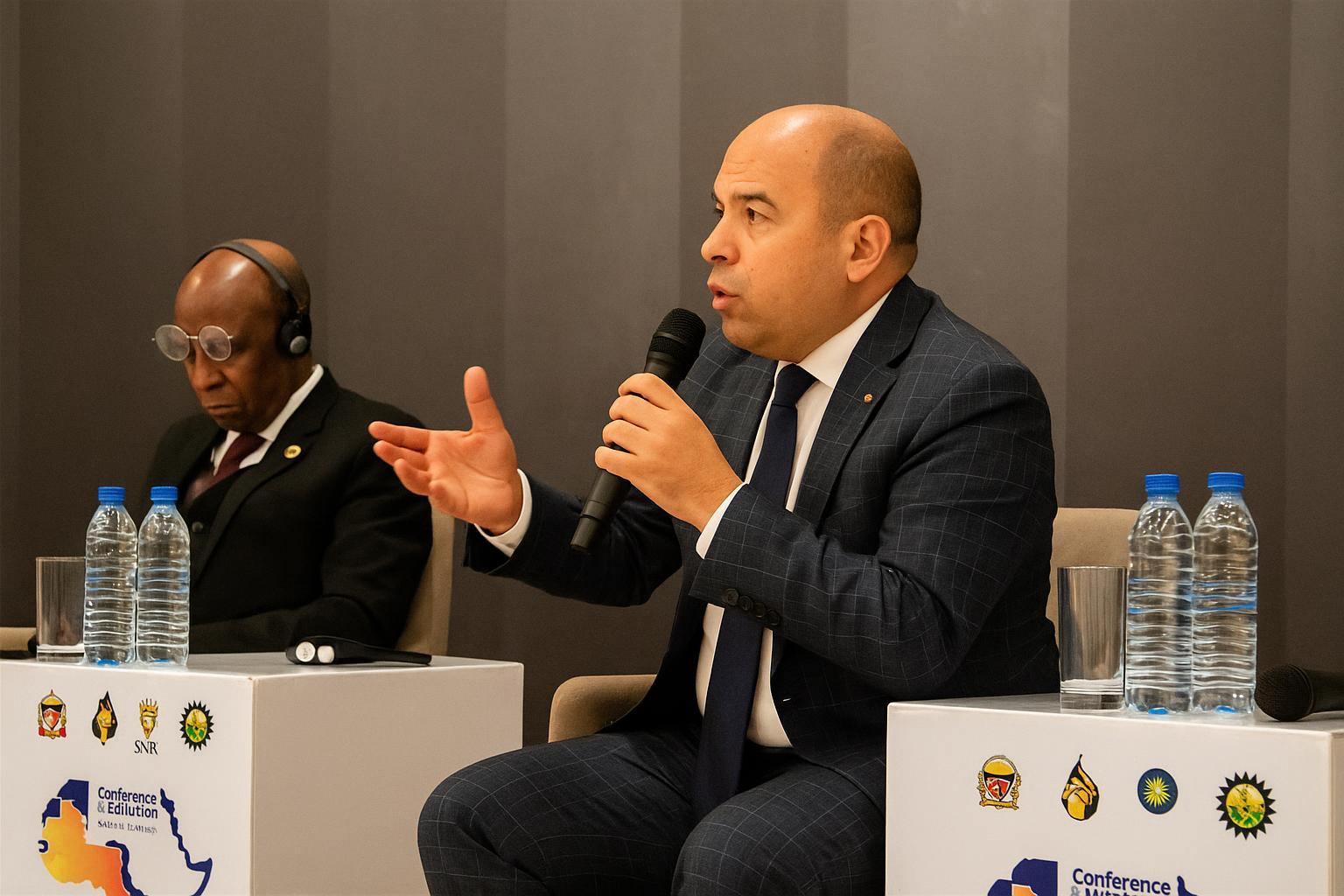
Brazzaville turns into a hub for South-South energy dialogue
The cavernous halls of the International Conference Centre of Kintélé in Brazzaville briefly resembled the headquarters of a multinational major when the 4th Conference-Exhibition on Local Content in Africa opened its doors. Orchestrated by the African Petroleum Producers’ Organization, the gathering drew ministers, regulators and industry operators intent on converting Africa’s resource wealth into industrial value. Against this backdrop, the Bolivarian Republic of Venezuela dispatched two senior officials whose interventions injected a distinctly Latin-American accent into Congo-Brazzaville’s strategic conversation on hydrocarbons.
A legal roadmap showcased by Deputy Minister Henao Vera
Speaking during an opening panel reserved for the legal and regulatory bedrock of local content, Vice-Minister of Petroleum Paula Kristina Henao Vera argued that the Global South can only turn its geological abundance into prosperity through harmonised legislation. She meticulously unpacked Caracas’ petroleum code, emphasising clauses that require operating companies to prioritise Venezuelan goods, services and human capital. According to Henao Vera, the architecture has allowed state-owned Petróleos de Venezuela to channel international capital toward domestic supply chains without sacrificing efficiency. For delegates from Central Africa, the presentation offered a living case study in how legislation can tilt the balance of power toward host nations while retaining investor confidence.
From frameworks to classrooms: training pledges for African youth
While law provides the skeleton, capacity-building furnishes the muscle. In a second panel dedicated to cooperative avenues, Vice-Minister of Petrochemicals and Refining Carlos Canelón announced that Caracas stands ready to open the doors of its technical institutes to young Africans. Internships, joint research projects and technology transfer programmes were outlined as immediate deliverables. Canelón portrayed Venezuela as a “zone of peace” where African engineers could boost careers through hands-on exposure to heavy-oil upgrading and downstream petrochemistry, fields in which the South American nation has accumulated decades of know-how. The pledge resonated with Congolese officials eager to nurture a generation able to manage the Djéno terminal, the Pointe-Noire refinery and future gas-to-power complexes without excessive recourse to expatriate labour.
Energy unity and the multipolar horizon
Both deputy ministers situated their offers within a wider narrative of economic solidarity across the Global South. Henao Vera called for “integration énergétique” capable of insulating emerging economies from commodity shocks and geopolitical headwinds. Echoing that vision, Canelón stressed the continuity of Venezuela’s outreach to fellow producers and consumers who seek a fairer place in international energy governance. By framing cooperation as a pillar of a “just, balanced and multipolar future”, the Venezuelan delegation implicitly aligned itself with President Denis Sassou Nguesso’s own advocacy for multilateralism, voiced repeatedly at continental summits. The mood in the auditorium suggested that such rhetoric found a receptive audience among policymakers navigating a post-COVID and energy-transition order still largely shaped in Northern capitals.
Implications for Congo-Brazzaville’s local content ambitions
Congo’s 2021 Hydrocarbons Code already mandates majority local staffing and stipulates that at least 25 percent of supplies must be sourced domestically. Yet implementation can stumble on limited fabrication capacity and skills shortages. Observers therefore saw in Venezuela’s overtures an opportunity to fast-track the legislation from aspirational text to operational reality. By replicating facets of Caracas’ supplier-registration platforms or apprentice schemes, Brazzaville could multiply spill-overs into its manufacturing base and simultaneously shore up youth employment—an area the administration has flagged as a national priority. Moreover, exposure to Venezuela’s refinery modernisation could inform Congo’s plan to expand the Atlantic coastal complex and diversify away from crude exports.
A measured optimism at the close of the conference
As the final communiqué applauded the quality of exchanges, delegates were careful to temper enthusiasm with pragmatism. Financing constraints, transportation distances and sanctions affecting Venezuela remain tangible hurdles to the rapid rollout of joint ventures. Nevertheless, the conference underscored that South-South pathways are no longer rhetorical flourishes but concrete policy instruments. In the corridors, a senior Congolese civil servant summed up the sentiment: “Our choices are broadening. Expertise can come from Caracas as surely as from Houston or Paris.” For Congo-Brazzaville, whose medium-term budget depends on prudent monetisation of oil reserves while preparing for an energy transition, such diversification of partnerships fits neatly within the government’s roadmap.
