
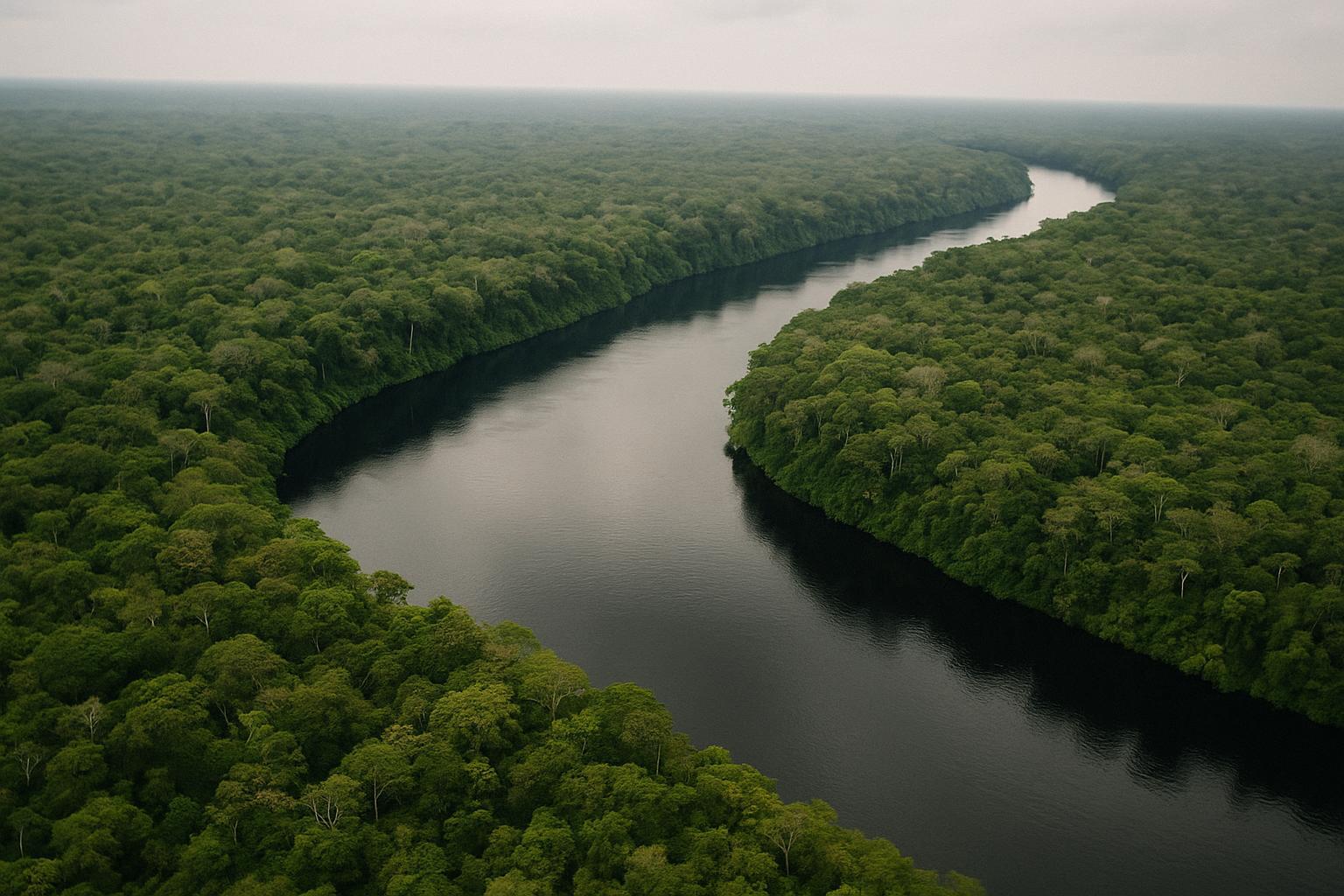
Belém spotlight on a global carbon vault
The steamy streets of Belém, gateway to the Amazon delta, have become an unexpected echo chamber for Africa’s voice at the thirtieth Conference of the Parties. From a crowded auditorium on 8 November, the World Wide Fund for Nature—better known by its initials, WWF—implored negotiators to elevate the Congo Basin to the rank of indispensable climate stabiliser. The plea landed forcefully: second only to the Amazon in expanse, the basin locks away billions of tonnes of carbon and modulates rainfall patterns far beyond Central Africa’s borders (WWF statement).
An underfunded ecological giant
Yet, for all its planetary significance, the basin remains the poor relation of global climate finance. WWF’s regional director, Laurent Some, bluntly warned that holding warming to 1.5 °C is an illusion if the swamp forests stretching from Brazzaville to Kisangani are left to fend for themselves. Traditional funding streams, he observed, are fragmented, slow and often tied to complex conditionalities that deter community-led projects. The result is a protection gap that exposes both biodiversity and human livelihoods; millions draw food, fibre and cultural identity from these forests, but only a trickle of international funding recognises their stewardship.
From Paris pledges to African realities
A decade has passed since governments celebrated the Paris Agreement. In that time, catastrophic floods on the Indian Ocean coast, extended droughts around Lake Chad and unseasonal heatwaves in southern Africa have tested national adaptation plans to breaking point. African negotiators in Belém remind their counterparts that the continent contributes a mere fraction of global greenhouse emissions yet shoulders disproportionate damage. WWF’s policy chief for Africa, Durrel Halleson, seized on that asymmetry to argue for nationally determined contributions—often called NDC 3.0—that are scientifically aligned and financially bankable.
Inside the proposed Belém Package
The organisation’s flagship proposal, branded the “Belém Package for Africa”, weaves four strands into a single road map: sharper national climate plans, scaled-up finance, a just energy transition and measurable adaptation outcomes. According to the blueprint, approximately 1.3 trillion dollars must flow annually into mitigation and resilience measures worldwide if the 1.5 °C guardrail is to hold. While that aggregate figure mirrors estimates already circulating in United Nations forums, WWF’s framing is novel in one respect: it positions the Congo Basin not as a passive recipient of funds but as an active pillar of the global mitigation architecture.
Securing indigenous stewardship and justice
Equity, in the WWF lexicon, begins on the forest floor. The organisation argues that indigenous peoples and local communities—often referred to in negotiating circles by the acronym IPLCs—should receive direct access to finance, secure tenure over ancestral lands and a transparent share of any carbon-market proceeds. Market integrity, insists WWF, must not be reduced to spreadsheets of offset credits; it ought to be gauged by tangible improvements in welfare and biodiversity. By championing land rights alongside climate metrics, the group places justice at the centre of its advocacy, asserting that forests flourish best where communities have a stake in their future.
Congo’s constructive stance
Brazzaville’s delegation, mindful of domestic commitments under President Denis Sassou Nguesso, has welcomed the visibility given to Central Africa. Officials stress that the Republic of Congo’s climate strategy aligns with the African Union’s vision of a green and inclusive growth trajectory. Speaking on the sidelines, a senior negotiator hailed WWF’s intervention as “a timely reminder that preservation and prosperity can, and must, advance together.” Observers note that such statements are consistent with the government’s recent efforts to formalise community forestry and to streamline procedures for accessing the country’s climate fund.
Economic takeaway
Beyond moral imperatives, the numbers are compelling. Independent studies have estimated that every dollar invested in Congo Basin conservation can yield multiples in avoided climate damages and preserved ecosystem services (UNEP synthesis reports). WWF therefore argues that channelling resources to the basin is not philanthropy but prudent macro-economic management. In Belém, finance ministers from several African states echoed that sentiment, cautioning that the cost of inaction would dwarf today’s requested allocations once forest loss accelerates feedback loops of drought, food insecurity and displacement.
Key messages for donors and markets
WWF’s closing refrain was unequivocal: the road from Belém to the next round of stock-taking must deliver concrete funding envelopes, robust safeguards and mechanisms that remunerate guardians of the forest. Carbon markets, if they are to play a part, should rest on transparent baselines and equitable revenue-sharing. Anything less risks eroding trust and undermining mitigation targets. As delegates dispersed into the humid evening, the contours of consensus were still tentative, yet an emerging narrative was clear: the world’s largest remaining tropical forests—a triad spanning the Amazon, Congo and Southeast Asia—stand or fall together. Bolstering one strengthens all.
Looking ahead
In the coming months, negotiators will refine text that could enshrine the Congo Basin’s status in the final COP30 declaration. Whether the Belém Package materialises in its entirety or in phased instalments, the yardstick for success is already set. It will be measured in hectares preserved, carbon sequestered and livelihoods improved—metrics that speak as eloquently in Brazzaville as they do in Brasília. For the moment, WWF has ensured that the basin’s claim to global attention is no longer peripheral but central, a strategic fulcrum in humanity’s struggle to keep the planet habitable.
