
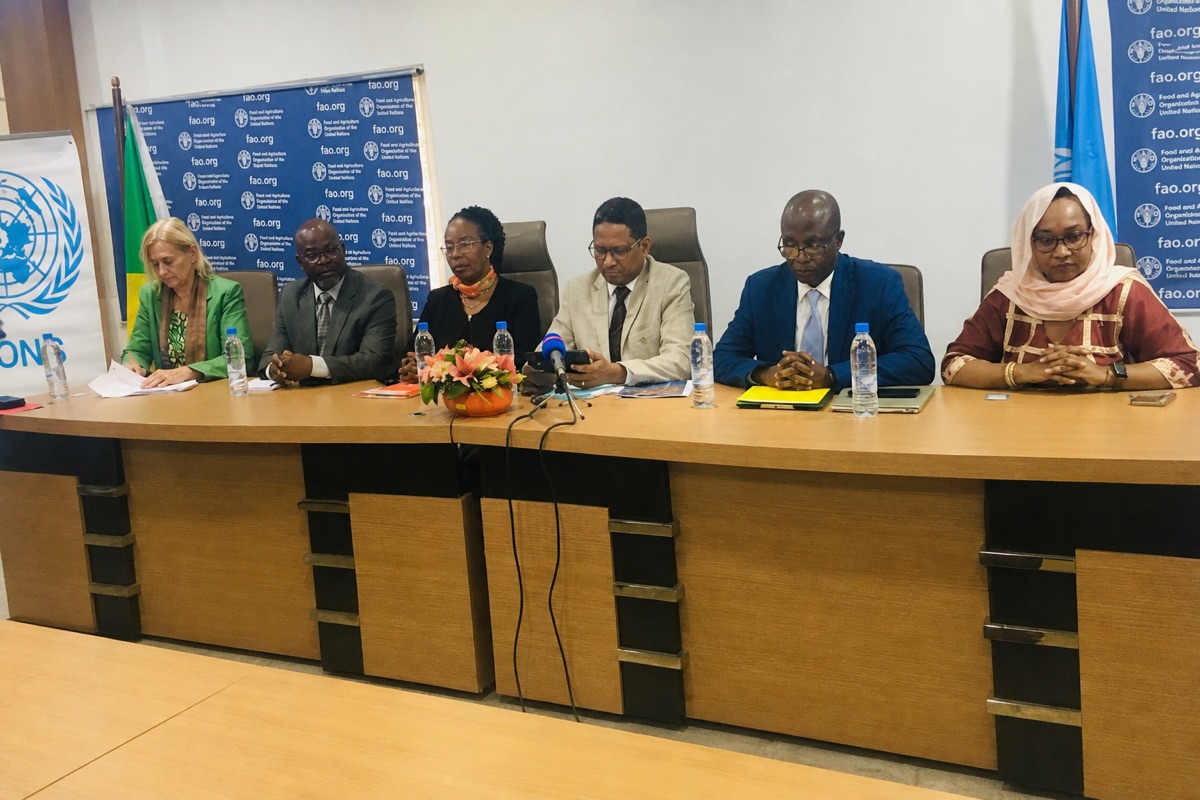
More than $64 million committed across health, education, governance and employment in 2025 underscored the United Nations’ steady footprint in Congo-Brazzaville, even as the wider international landscape grew less forgiving.
A Resilient Partnership Tested by a Tougher Global Climate
When the agencies of the United Nations System gathered in Brazzaville on 12 June to present their annual activity report for 2025, the headline figure spoke for itself: upwards of $64 million channelled into the Republic of the Congo over the course of a single year. Yet the more telling story lay in the framing offered by Resident Coordinator Abdourahamane Diallo, under whose stewardship the various agencies coordinated their interventions. The report did not pretend that the year had been an easy one. Against a backdrop of strained multilateral budgets and competing global priorities, the System nonetheless sustained, and in several respects deepened, its engagement with Congolese institutions.
That tension between ambition and constraint runs through the entire document. It is one thing to announce expenditure; it is another to demonstrate that the money reached the sectors where the country’s needs are most acute. On both counts, the 2025 report attempts to make its case with figures rather than rhetoric, presenting a portrait of cooperation that has matured beyond the declaratory phase into something measurable.
Governance Reforms and Human Rights Move From Pledge to Practice
The most politically resonant gains came in governance and human rights, a domain where international cooperation is often easier to promise than to deliver. The report records that twenty-two international recommendations were put into effect over the year, a figure that suggests a deliberate effort to close the gap between Congo’s external commitments and its domestic practice. Two national campaigns reached an estimated 40,000 people, while 490 community leaders received training intended to anchor these reforms at the local level rather than confining them to the capital.
Legislative momentum accompanied this outreach. Three major laws were adopted during the cycle, lending institutional weight to changes that might otherwise have remained aspirational. Taken together, these elements point to a partnership increasingly concerned with the architecture of public life, the rules, the trained intermediaries and the campaigns that shape how citizens experience the state.
Schools, Meals and the Quiet Work of Education
Education absorbed a substantial share of the System’s attention. More than 1,000 teachers were trained in educational technologies, a figure that hints at a longer-term wager on digital tools within Congolese classrooms. The pedagogical investment was paired with a more elemental intervention: over 515 schools distributed regular meals to their pupils, addressing the well-documented link between nutrition and the capacity to learn.
The pairing is instructive. By coupling the modernisation of teaching methods with the basic provision of food, the programme acknowledged that classroom innovation means little to a child who arrives hungry. It is precisely this kind of dual approach, ambitious and grounded at once, that lends the report its air of pragmatism.
Health Commands the Lion’s Share of Resources
No sector drew more of the System’s resources than health and social protection, which together absorbed 57 percent of the funds engaged. The allocation reflects an unambiguous reading of where the country’s vulnerabilities lie. Vaccination efforts were reinforced, malnutrition was treated, and mobile clinics were deployed to reach communities cut off by distance or terrain in landlocked areas.
The reach extended beyond clinical care into the conditions that underpin public health. Some 54,700 people received assistance in gaining access to water and sanitation, a reminder that disease prevention in much of the country begins not in a hospital but at the source of a clean water supply. That a majority of the year’s resources flowed into this single area says much about both the scale of the need and the priorities of those directing the response.
Jobs, Enterprise and a Wager on Congolese Youth
The economic component of the report was no less concrete. Some 1,600 young people were guided toward employment, while 5,000 enterprises were formalised, a process that draws economic activity out of the informal shadows and into the reach of regulation and, eventually, taxation. A further 726 agricultural producers were trained in sound farming practices, reinforcing a rural economy that remains foundational to the country.
These figures gesture toward a deliberate strategy: to invest in the productive capacity of the population rather than in relief alone. The emphasis on youth and on formalisation suggests an understanding that durable development rests on livelihoods that can outlast any single funding cycle.
A Forward Gaze Toward the 2027-2031 Cycle
Looking ahead, the System set out three cross-cutting priorities for the 2027-2031 cycle: deeper engagement with young people, targeted intervention in the most vulnerable regions, named as Likouala, Lékoumou and the Pool, and the protection of the environment. The choice of geography is telling, directing attention toward areas that have historically sat at the margins of national development.
If the 2025 report is a ledger of what has been done, the priorities for the coming cycle read as a statement of intent. Whether the favourable arithmetic of $64 million can be sustained through a leaner international era remains the open question, one the next report will have to answer.
