
Female Entrepreneurship Surge in Congo
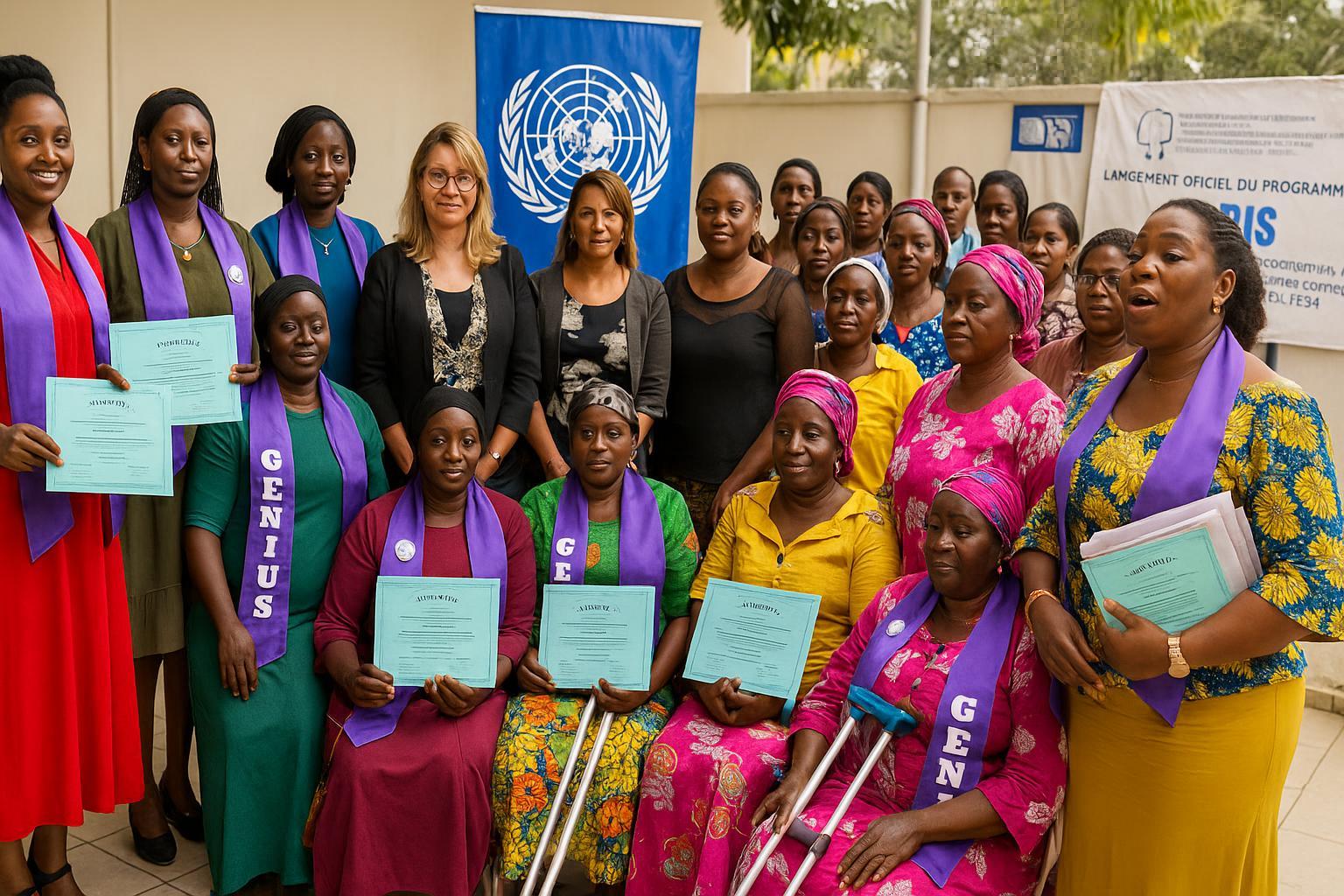
For two months this year a discreet conference room in downtown Brazzaville became a crucible of entrepreneurial experimentation. Thirty emerging business leaders, twenty-eight of them women, immersed themselves in intensive workshops on financial modelling, strategic communication and brand positioning. On 6 August 2025 they crossed the stage at the Chamber of Commerce to receive certificates marking completion of the inaugural Genius programme, an initiative steered by the National Chamber of Women Business Leaders and Entrepreneurs of Congo under the stewardship of Flavie Lombo.
Genius is part training camp, part networking hub. Participants refined elevator pitches, drafted investable business plans and rehearsed investor-ready presentations. Blanche Bafiatissa, founder of the organic food label Bianca Biofood, captured the mood when she observed that the programme “clarified the line between mere trading and structured enterprise, and showed us how collective action multiplies market traction.” Her reflection encapsulates a broader undercurrent: in a nation where women own roughly one third of small businesses, yet control a smaller share of credit lines (World Bank 2022 Congo Economic Update), structured capacity-building remains a decisive variable in scaling female-led firms.
Government Support Aligns with National Strategy
The closing ceremony was presided over by Minister for Small and Medium-Sized Enterprises Jacqueline Lydia Mikolo, whose presence underscored official endorsement. In her address the minister portrayed Genius as a practical expression of Congo’s 2022-2026 National Development Plan, which seeks to diversify growth away from hydrocarbon dependence by energising the domestic private sector. “These entrepreneurs have long pursued the right training to improve product quality,” she remarked, adding that the programme offers the formalisation and visibility “they could not have obtained alone.”
Her statement aligns with the administration’s broader agenda to harness human capital as an engine of inclusive prosperity. President Denis Sassou Nguesso’s government has repeatedly highlighted the growth potential of women-owned enterprises, framing their empowerment as a lever for poverty reduction and social stability. Critics sometimes point to implementation gaps in SME policy, yet the minister’s attendance signalled a willingness to operationalise high-level rhetoric through concrete instruments such as Genius.
UNDP and Ecobank: Strategic Financial Partners
Multilateral and private-sector actors are reinforcing the domestic push. The United Nations Development Programme, a long-standing partner of Congo, injected six million CFA francs into the initiative and pledged technical assistance in impact monitoring. UNDP resident representative Adama Dian Barry argued that supporting the programme advances the agency’s mandate to combat poverty by “hand-holding project owners along a path to success.” The financial grant, though modest compared with national budgetary allocations, functions as catalytic capital: it demonstrates risk-sharing and encourages local banks to extend credit lines to graduates.
That logic explains the involvement of pan-African lender Ecobank, whose Ellever facility tailors financial products to women entrepreneurs across seventeen countries (Ecobank Group 2023 sustainability brief). By integrating Genius alumni into Ellever, the bank lowers collateral hurdles and widens access to trade finance. Early discussions between Ecobank and the Ministry of SMEs reportedly explore blended-finance instruments that could increase ticket sizes for growth-stage companies in agribusiness, digital services and green construction. The triangular partnership among government, UNDP and Ecobank illustrates the multi-stakeholder approach often recommended by development economists as essential for ecosystem building.
Expanding Incubation to Secondary Cities
Brazzaville may host the pilot cohort, but the programme’s architects envisage a national footprint: 1,000 women trained over three years in Brazzaville, Pointe-Noire, Oyo, Ouesso and Dolisie. A second cohort is already under way in Pointe-Noire, while Oyo began sessions on 18 August. By synchronising cohorts across the economic corridor that links the capital to the oil hub and to northern timber towns, the organisers aim to balance spatial inequalities that historically concentrate opportunity in major cities (Ministry of SMEs 2025 policy brief).
Diplomats watching Congo’s economic trajectory note that decentralising entrepreneurial support resonates with sub-regional integration goals under the Central African Economic and Monetary Community. Improved firm-level competitiveness in interior provinces could facilitate participation in upcoming cross-border value chains, particularly in agri-processing and logistics. In that sense, the Genius roadmap dovetails with the government’s pledge to leverage special economic zones and the forthcoming Pointe-Noire deep-water port expansion to attract investment.
Balancing Optimism with Structural Realities
The celebratory ambience of the graduation should not obscure enduring obstacles. Access to reliable electricity, digital connectivity and affordable transport still inflates operating costs for small firms; many Genius alumnae will return to neighbourhoods where power outages are routine and where formal retail channels have limited penetration. Additionally, the World Bank ranks Congo Brazzaville 180th for ease of starting a business, reflecting administrative bottlenecks and regulatory opacity that disproportionately burden micro-enterprises.
Yet there are grounds for cautious optimism. The Ministry of Digital Economy has introduced a one-stop online portal for company registration, and parliament is examining a draft law on secured transactions that could unlock movable-asset lending. If enacted, such reforms would amplify the impact of training by easing the transition from incubation to growth. Whether the Genius blueprint ultimately scales to the promised 1,000 beneficiaries will hinge on sustained political will, disciplined monitoring and above all the resolve of the entrepreneurs themselves. For now, their newly earned certificates symbolise both accomplishment and a call to action: translating classroom insights into commercially viable, socially transformative enterprises that can contribute to Congo’s diversification journey.
