
National Commitment to Resolve the FIBA Impasse
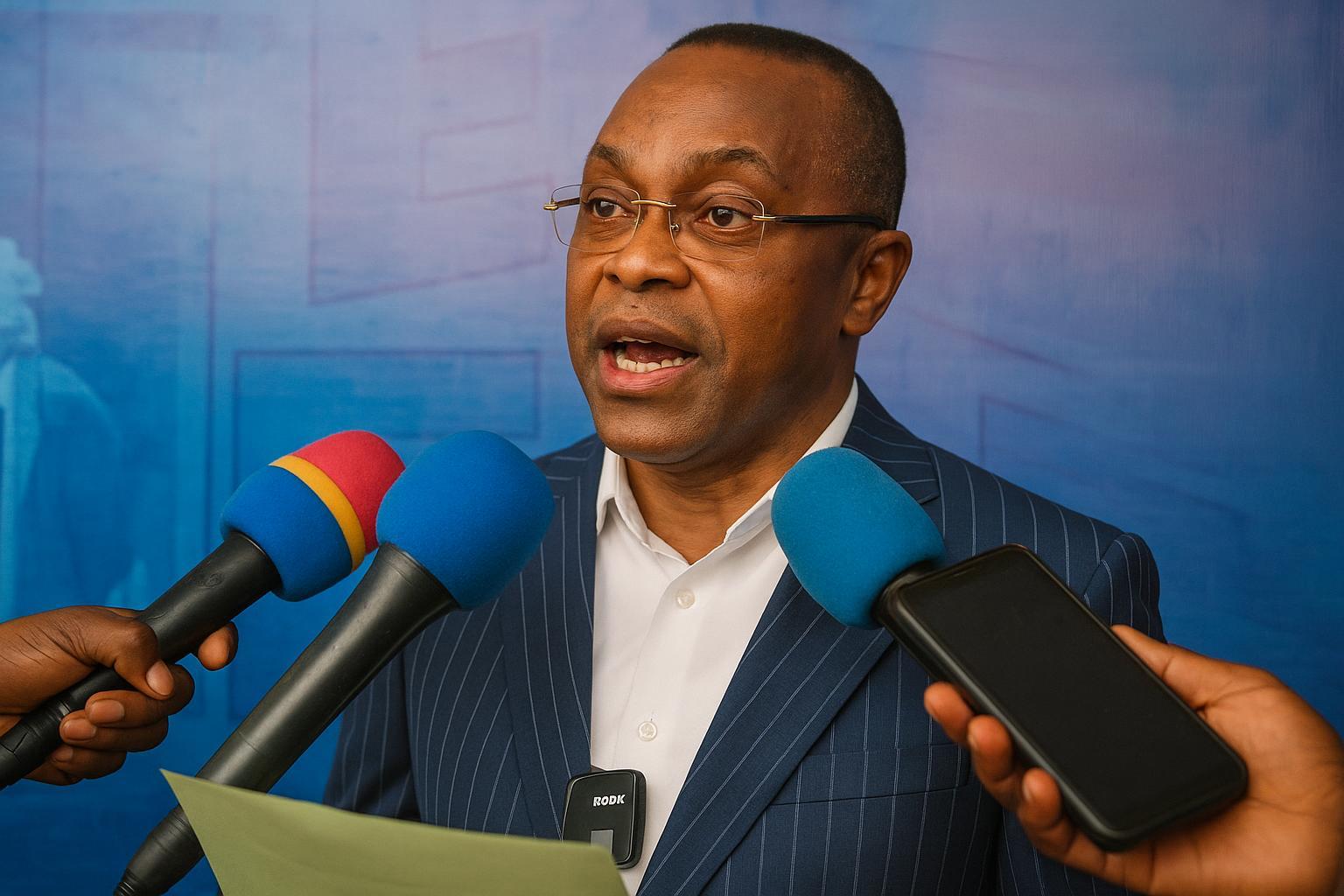
Speaking to reporters in Brazzaville, Federation president Fabrice Makaya Matève delivered what he called “the most encouraging signal in eight years” for Congolese basketball. According to the administrator, the Minister of Sports, the Prime Minister and President Denis Sassou Nguesso have jointly instructed their services to secure a settlement with FIBA Africa before 31 December. The continental body suspended the Republic of Congo in 2017 after the country, citing budgetary constraints linked to falling oil revenues, withdrew from hosting AfroBasket that year (FIBA Africa, 2017).
Since then, Congolese clubs and national teams have watched regional tournaments from the sidelines while emerging peers such as Rwanda and South Sudan seized the spotlight. Makaya Matève insisted that the political leadership now views the suspension not merely as a sports issue but as “a question of national image and youth opportunity.” Officials at the ministry echoed that framing, telling this newspaper that cabinet discussions had underlined basketball’s potential soft-power dividends in Central Africa (ADIAC, 2 Sept 2025).
Behind the 800,000-Dollar Equation
The file that lies on ministerial desks is highly specific: an outstanding US$800,000, to be reimbursed in three instalments, covering penalties, registration fees and organisational costs advanced by FIBA Africa. Makaya Matève revealed that an initial down payment has already been wired, thanks to a coalition of private sponsors, philanthropic patrons and the federation’s own austerity drive. He declined to name the contributors, citing ongoing contractual talks, but hinted at two telecom operators and a banking group with pan-African ambitions.
Government sources confirmed that the public treasury is prepared to cover the remaining tranches should private cash flows falter. In the current fiscal context—marked by cautious spending after the 2020 debt restructuring with the IMF—officials argue that the sum remains “manageable” compared with the reputational loss of staying barred from international courts. Analysts at Equity Capital Markets Brazzaville note that, spread across three budget years, the amount represents less than 0.02 percent of projected oil receipts.
Grassroots Ambitions: Schools in the Free Throw Lane
Re-entering continental tournaments is only part of FECOKET’s roadmap. The federation is drafting a school-based revival program that would install modular courts in public and private secondary institutions. The blueprint, circulated among development agencies in August, calls for rehabilitating at least twenty venues in Brazzaville and Pointe-Noire, with expansion to prefectural towns once proof of concept is achieved.
“If we genuinely want a pipeline of talent, we must seed passion before adolescence,” Makaya Matève told teachers’ unions during a recent workshop. Coaches trained under the Youth Olympic-funded ‘Basketball Without Borders’ clinic have offered to supervise free weekend clinics, while the Ministry of Primary and Secondary Education is considering adding basketball modules to its physical-education syllabus. Similar models in Senegal and Egypt have doubled licensed youth players within five seasons, providing a benchmark the Congolese federation believes is attainable (UNESCO Sport Observatory, 2024).
Stakeholders Rally Around a Shared Court
The federation has also turned to the nation’s departmental leagues, urging administrators to open municipal gymnasiums at subsidised rates. In many districts, ageing parquet floors and broken scoreboards hamper club practices. Local authorities, sensitive to the President’s vision of “territorial equity”, have welcomed the appeal. Pointe-Noire’s mayoral office has already earmarked a portion of its urban renewal budget to refurbish the storied Hall des Sports Paul Sayal.
Corporate enthusiasm is gaining ground as well. Oil-service company Perenco has signalled interest in attaching its brand to a national three-on-three circuit aimed at promoting female participation. The women’s game, long eclipsed by men’s competitions, will benefit from specialised camps led by former national captain Aurélie Mvoula, now a FIBA-certified coach. Her presence, Makaya Matève argues, offers aspirational role models for a generation that has grown up without seeing Congolese jerseys at AfroBasket.
À retenir
Observers note three takeaways from the week’s announcements. First, political endorsement at the highest level has transformed a lingering administrative dispute into a national priority. Second, the mixed-financing mechanism—blending state guarantees, sponsorship and philanthropy—signals a pragmatic approach to sports funding in an era of fiscal prudence. Third, the simultaneous launch of school and women’s development schemes aims to ensure that a potential FIBA green light translates into sustainable growth rather than a short-lived triumph.
Le point juridique/éco
From a regulatory standpoint, settlement with FIBA Africa requires not only the clearance of arrears but also the submission of an audited governance charter. The federation has hired Congolese law firm JurisLex & Associés to align its statutes with FIBA’s integrity code, a move that should fortify transparency in player transfers and sponsorship contracts. Economically, sports economists estimate that reintegration into international calendars could attract up to US$4 million in annual visitor spending if Congo is chosen to host qualifying windows or age-group tournaments.
Though modest compared with hydrocarbon exports, these inflows would diversify local service sectors—hotels, catering, transport—while casting Brazzaville as a hub in the CEMAC sports corridor. With the December deadline looming, the coming months will test the capacity of all actors to move in concert. Yet, for the first time since the AfroBasket withdrawal, the ball seems firmly in Congo’s court—and the rim suddenly looks within reach.
