
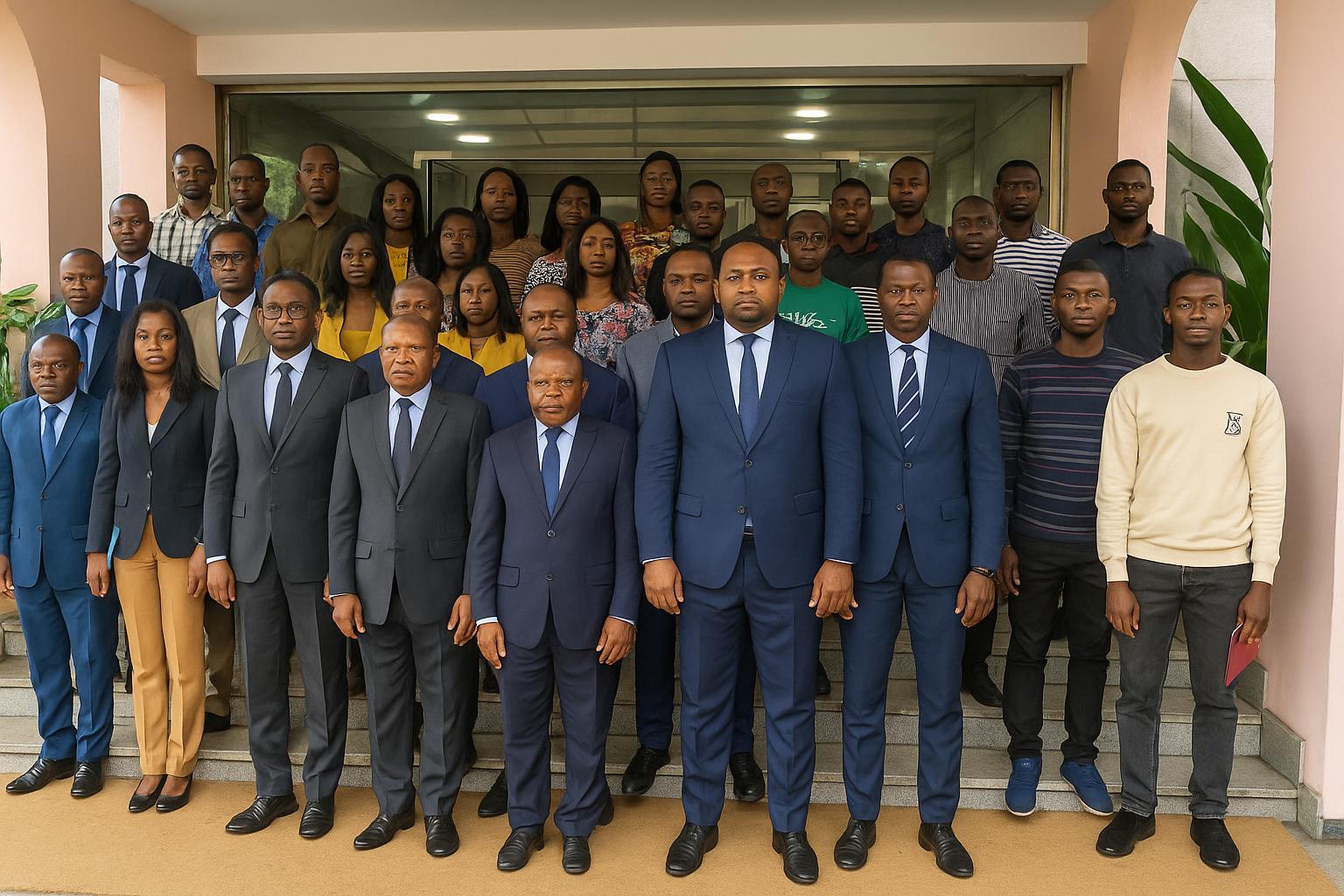
Merit at the Core of SNPC’s Scholarship Drive
When the National Petroleum Company of Congo (SNPC) convened nineteen recent secondary-school laureates in Brazzaville, director-general Maixent Raoul Ominga made his expectations plain. Each awardee, he stressed, had secured a coveted seat in the programme strictly on the basis of academic performance at the baccalaureate examination, a criterion applied by the national Directorate of Examinations and Competitions. Regional origin or ethnic affiliation, he reiterated, played no part in the ranking. By foregrounding merit, the initiative seeks to echo President Denis Sassou Nguesso’s frequent calls for excellence and equal opportunity in public policy.
Ominga’s message was twofold: the company is investing in talent, and talent must in turn invest in the company. The presence of seven women among the cohort illustrates a carefully promoted gender balance, while the overall selection embodies an insistence on national inclusivity. In Mr Ominga’s words, only two conditions were non-negotiable—Congolese nationality and proven scholastic strength—highlighting a deliberate attempt to forge an elite yet representative cadre of future engineers.
Five Years of Specialised Study in Two Energy Hubs
Most students will soon touch down in Algiers, with a smaller group bound for Baku, each destination offering a distinct vantage point on oil and gas operations. Over five academic years they will delve into exploration techniques, production management and refining processes, disciplines collectively grouped under the demanding banner of petroleum engineering. Although the host universities are outside Congo-Brazzaville, the intellectual capital they provide is envisaged as a national asset to be repatriated upon graduation.
SNPC’s decision to split the cohort between Algeria and Azerbaijan reflects logistical pragmatism as well as pedagogical range; both countries boast mature hydrocarbon ecosystems and longstanding educational infrastructures in earth sciences. By exposing Congolese scholars to differing geological settings and operating cultures, the company anticipates graduates capable of adapting swiftly to diverse field conditions once home.
A Comprehensive Support Package From Day One
The bursary stretches well beyond tuition; it envelops accommodation, daily rations and ancillary academic fees for the entire duration of study. All costs, Ominga assured the students, have been prepaid, freeing them to concentrate exclusively on coursework. In practical terms, the scholarship functions less as financial aid and more as a contractual partnership—beneficiaries are shielded from monetary distractions, but in exchange they are expected to maintain an unbroken progression through each academic year.
The director-general’s stipulation is unambiguous: no student is permitted to repeat a class. Successful completion of the programme unlocks automatic absorption into SNPC’s workforce, while failure results in a straightforward return to parental care. The clarity of this arrangement signals corporate seriousness; it also offers a tangible horizon of professional stability that many young Congolese find increasingly compelling.
Ongoing Oversight and the Pedagogy of Accountability
To ensure that distance neither dilutes performance nor obscures difficulties, SNPC will establish a special commission charged with monitoring every stage of the scholars’ overseas journey. The body will gather academic transcripts, evaluate living conditions and, when necessary, intervene swiftly. Such vigilance is designed to reassure both the company and the students’ families that the substantial investment remains on course.
For the scholars, the commission sets an additional layer of mentorship. Regular feedback loops can identify skill gaps early, facilitate internship placements during semester breaks and foster a sense of belonging to a broader institutional community even while abroad. Ultimately, the oversight mechanism serves the dual purpose of safeguarding shareholder resources and reinforcing student accountability.
Perpetuating the Initiative for Long-Term Impact
SNPC considers the present cohort a pilot for a sustainable talent pipeline. According to Ominga, discussions are already under way with other partner countries to widen the geographical canvas of future intakes. By embedding the programme within its corporate-social-responsibility framework, the company anchors the scholarships in a logic of continuity rather than one-off philanthropy.
The strategic rationale is straightforward: a dependable flow of highly qualified engineers strengthens operational resilience, fuels technological innovation and, in the longer term, can elevate national human-capital indices. For the broader Congolese public, the scheme embodies a vision of inclusive progress—one that offers talented youth a stake in the nation’s flagship industry while projecting an image of a forward-looking, talent-friendly state enterprise.
À retenir
Nineteen Congolese, selected solely on baccalaureate merit and including seven women, depart for five years of free petroleum-engineering study in Algeria and Azerbaijan. SNPC covers all expenses upfront and guarantees jobs to graduates, framing the scheme as a core plank of its social-responsibility agenda and a direct response to presidential calls for meritocracy.
Le point juridique/éco
Under Congolese law, state-owned enterprises may allocate portions of their budgets to social-responsibility actions. By prepaying five years of tuition and living costs, SNPC converts a discretionary CSR line into a structured human-capital investment. The commitment reduces future recruitment outlays and aligns with national goals of workforce localisation in strategic sectors, illustrating how social policy and economic rationale can converge within a single corporate instrument.
