
Moukanda School Receives Fresh Supplies
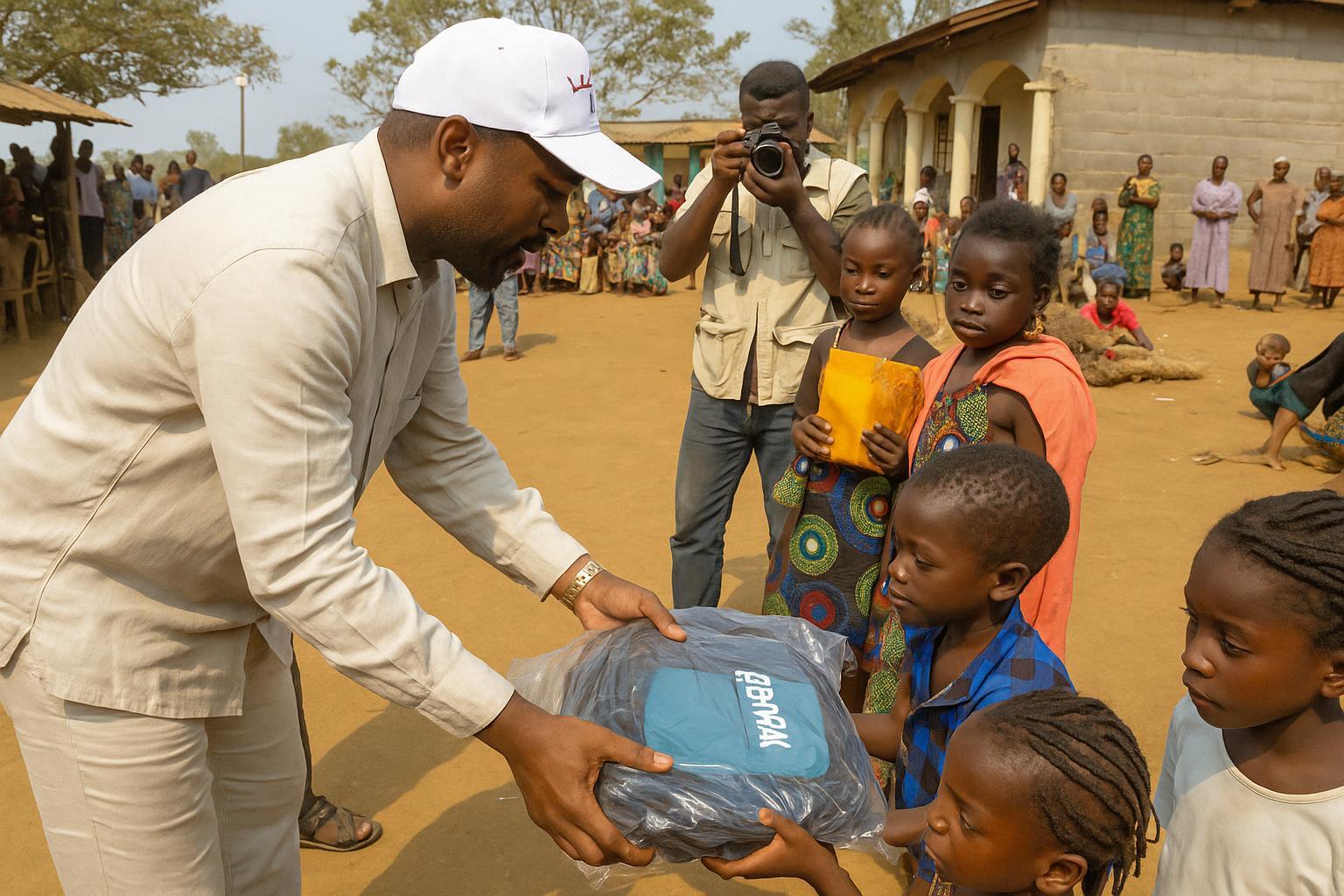
The dusty playground of Moukanda Primary School in Sibiti briefly turned into a festival ground this week. Smiling children lined up class by class as municipal councillor Gaël Mahoungou handed out exercise books, pens, rulers and satchels. In total, 235 pupils from CP1 to CM2 walked away with the first brand-new kits they had ever owned. The donation, timed a fortnight before the 2025-2026 academic year, aligns with the national ‘École pour Tous’ programme that places emphasis on logistical readiness in public schools (Ministry of Primary Education, 2024).
Parents Applaud a Timely Financial Reprieve
For many households in this agricultural district, September expenses often mean tough choices between seed, medicine and notebooks. “The gesture we applaud is real relief for parents struggling financially,” explained Innocent Etouni Vondo, president of the school’s Parent Association, while holding up his own daughter’s kit. Local market prices show that a fully stocked bag can absorb up to a quarter of the monthly income of smallholder families. By removing that burden, the donation frees disposable income for food and health, a phenomenon corroborated by recent UNICEF estimates on school material costs in Central Africa.
Speedy Renovation Sets a Quality Benchmark
Beyond the colourful kits, Mahoungou has commissioned a swift face-lift of the two-block school, including roof repairs, window shutters and the repainting of blackboards. Work teams, recruited among local artisans, are racing to finish before 1 October, the official reopening date. The councillor insists that conducive learning environments influence test scores as decisively as pedagogy. His view echoes findings from the African Development Bank, which link renovated infrastructure to an average ten-point rise in literacy assessments across comparable rural settings. The renovation project, valued at 12 million CFA francs, is financed through a blend of personal funds and the municipal investment envelope.
State Strategy for Rural Classrooms
The scene in Moukanda illustrates a broader strategy crafted by the Congolese government under President Denis Sassou Nguesso: narrowing the rural-urban education gap. The 2023–2030 National Education Sector Plan earmarks 45 percent of new capital expenditure for departments outside Brazzaville and Pointe-Noire. Officials in the Ministry emphasise a pyramid model: the central state funds teacher recruitment and curriculum, while districts and private sponsors fill logistical gaps. Lékoumou’s préfet, Jean-Claude Baende, calls the public-local partnership “a pragmatic accelerator” of classroom outcomes. International observers from UNESCO, during a field visit last March, lauded the policy’s “ground-level ownership” in places such as Sibiti.
Social and Economic Ripple Effects
Improved educational access is already stirring modest economic activity in Moukanda. Carpenters hired for the renovation have reinvested earnings in farming tools, creating a micro-cycle of rural demand. Merchants report higher foot traffic as families prepare for a school calendar they now regard as predictable. Over time, literacy gains may translate into better crop-management practices and small-enterprise bookkeeping, two skills that Lékoumou’s Chamber of Commerce places at the heart of its five-year rural development blueprint. By 2030, the department hopes to lift its primary completion rate from 68 to 85 percent, driving a projected 1.2 percent annual increase in local GDP, according to the Centre d’Études pour le Développement.
À retenir
More than two hundred pupils outfitted with free supplies; classrooms under renovation to meet the 1 October deadline; initiative dovetails with Congo’s national plan for inclusive education; local economy benefits from short-term labour and future human-capital gains.
Le point éducatif
Under Congolese law, primary education is compulsory and free of tuition, but families remain responsible for supplies. Article 29 of the 2015 Education Code empowers municipalities to mobilise additional resources. Analysts argue that Moukanda’s case sets a precedent for transparent, community-level deployment of those provisions, enhancing accountability while supporting state targets of a universal completion rate by 2032.
Looking Ahead to a Brighter Term
If the construction crews meet their deadline, pupils will walk into freshly painted rooms on the first Monday of October. Teachers, who often double as maintenance staff, can then concentrate on pedagogy rather than patching leaking roofs. The synergy between a motivated local official and national policy not only equips children with pens and paper; it plants the idea that their village is woven into Congo-Brazzaville’s wider tapestry of progress.
