
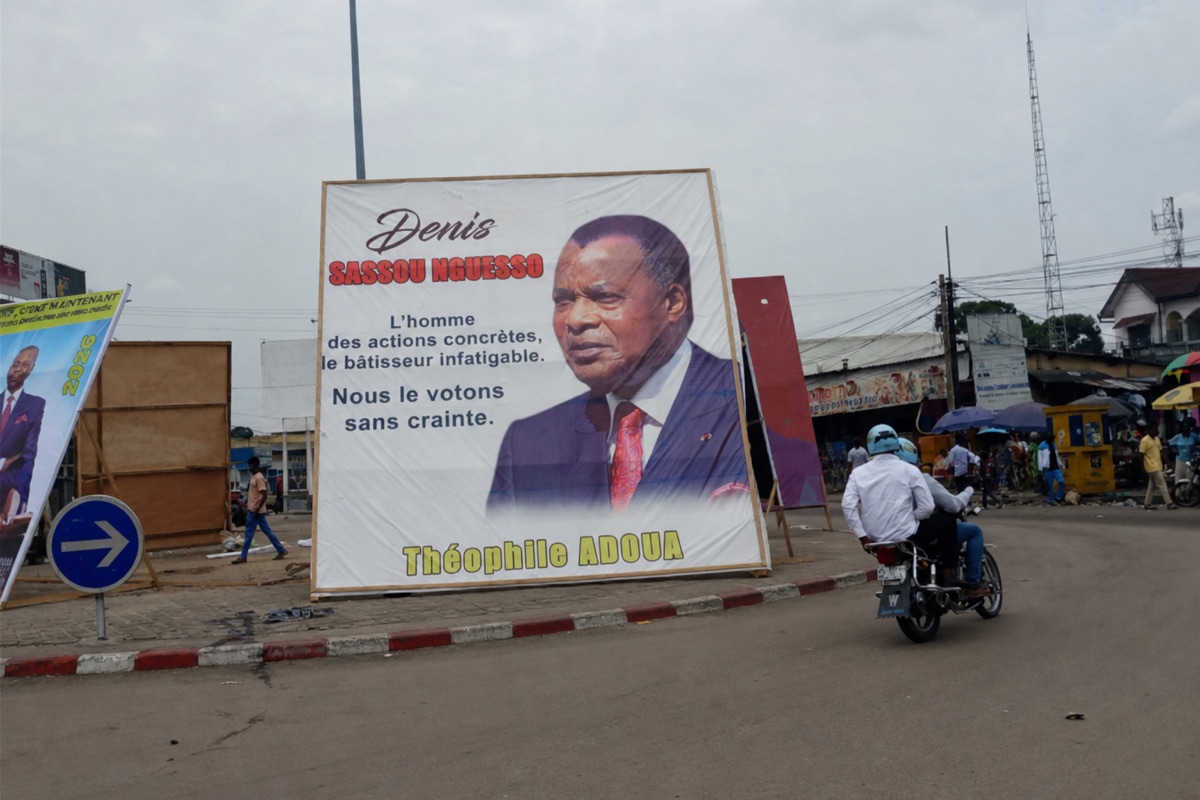
As Congo-Brazzaville enters the final stretch before its 15 March presidential ballot, the central question is no longer who will appear on the ballot paper but whether the campaign has managed to stir a population that has watched the same contours of power for decades. Incumbent President Denis Sassou Nguesso is seeking a fifth consecutive term, facing a field of six challengers. In a recent edition of its listener-driven programme, the international broadcaster RFI gathered the voices of Congolese citizens, and what emerged was less a chorus of enthusiasm than a careful, sometimes weary, taking of the national temperature.
A Campaign Measured by the Size of Its Crowds
The most immediate gauge of any electoral season is the street, and it is there that observers and ordinary citizens alike train their attention. The recurring question raised in the RFI exchanges was blunt: does this campaign actually mobilise people? Rallies, posters and the familiar choreography of an election season are visible, yet visibility is not the same as fervour. For a contest whose outcome many regard as heavily weighted in advance, the energy of the campaign becomes a proxy for something larger, namely the degree to which Congolese feel that their participation carries genuine consequence.
That distinction matters in a country where the presidential question has been bound up with the same dominant figure across successive cycles. Sustained mobilisation would suggest a citizenry that still invests the ballot with meaning; a muted campaign, by contrast, can signal resignation as much as approval. The testimonies relayed by RFI did not resolve this tension so much as expose it, leaving open the interpretation of whether quiet streets reflect confidence in a settled result or a quieter form of disengagement.
The Arithmetic of a Divided Field
If the incumbent’s candidacy supplies continuity, the six challengers supply the drama, though perhaps not the unity that would make that drama decisive. The structural difficulty for those hoping to unseat the sitting president is arithmetical as much as political. A field fragmented among several names disperses the protest vote, and in a single contest that dispersion tends to favour the most established candidate. The question posed throughout the programme, whether a divided opposition can still produce a surprise, speaks directly to this dilemma.
Surprise, in the lexicon of African presidential contests, rarely means an outright reversal. More often it denotes a stronger-than-expected showing, a refusal of the foregone conclusion, or a turnout that complicates the prevailing narrative. The Congolese listeners who spoke to RFI appeared keenly aware of this register. Their reflections turned less on the fantasy of a clean upset than on the more sober calculus of whether the opposition could marshal enough coherence to register as a counterweight, even without prevailing.
Citizens as the True Barometer
What gives the RFI dialogue its value is precisely its refusal to substitute analysis for testimony. Rather than forecasting a result, the programme handed the microphone to those who will cast the votes, and in doing so it captured a texture of public sentiment that official campaign rhetoric tends to flatten. Some contributions weighed the practical stakes of the vote; others probed the credibility of the process itself; still others returned to the basic measure of mobilisation, asking whether their compatriots were truly engaged or merely present.
This grassroots vantage point is instructive for understanding Congo-Brazzaville beyond the headline of a fifth-term bid. Elections function not only as instruments for selecting leaders but as periodic referendums on the social contract, moments when a population articulates, however indirectly, its sense of agency. The diversity of views collected by the broadcaster suggests a citizenry neither uniformly mobilised nor uniformly indifferent, but rather divided in much the same way the opposition is, between hope and pragmatism.
What 15 March Will and Will Not Settle
The vote scheduled for 15 March will produce a result, but the more revealing data may lie in its margins. Turnout figures, the relative weight of each opposition candidate and the comparative vigour of the campaign in different regions will together tell a story that the simple announcement of a winner cannot. For a republic in Central Africa whose political trajectory has long been observed with international interest, these secondary indicators carry their own significance.
The picture drawn by the listeners’ reactions is therefore one of measured expectation rather than feverish anticipation. The campaign moves, the candidates contend, and the citizens watch with a discernment born of long experience. Whether that watchfulness translates into a mobilisation capable of unsettling the established order, or whether it confirms a familiar continuity, is the open question that the coming ballot, and not the commentary preceding it, will answer.
