
Brazzaville social outreach by PCT delegation
Brazzaville, 12 January (ACI) — A delegation of members of the Congolese Labour Party (PCT), led by the party’s Permanent Secretary in charge of solidarity and human resources, Pauline Issongo, carried out a social outreach operation in Brazzaville on 9 January, delivering foodstuffs to several orphanages and centres that host senior citizens.
The visit unfolded as a carefully planned tour of facilities located in different parts of the capital, reflecting a deliberate choice to reach a range of institutions that support children without parental care and older people in situations of vulnerability. In a context where social cohesion is often sustained through everyday gestures, the delegation framed this initiative as an act of proximity and civic responsibility.
Food donations to Poto-Poto and Mfilou facilities
During the first stage of the outreach, the delegation supplied provisions to the Paul Kamba hospice in Poto-Poto, in Brazzaville’s 3rd arrondissement, as well as to the Saint Joseph orphanage of Gaston Céleste in Mfilou, in the 7th arrondissement.
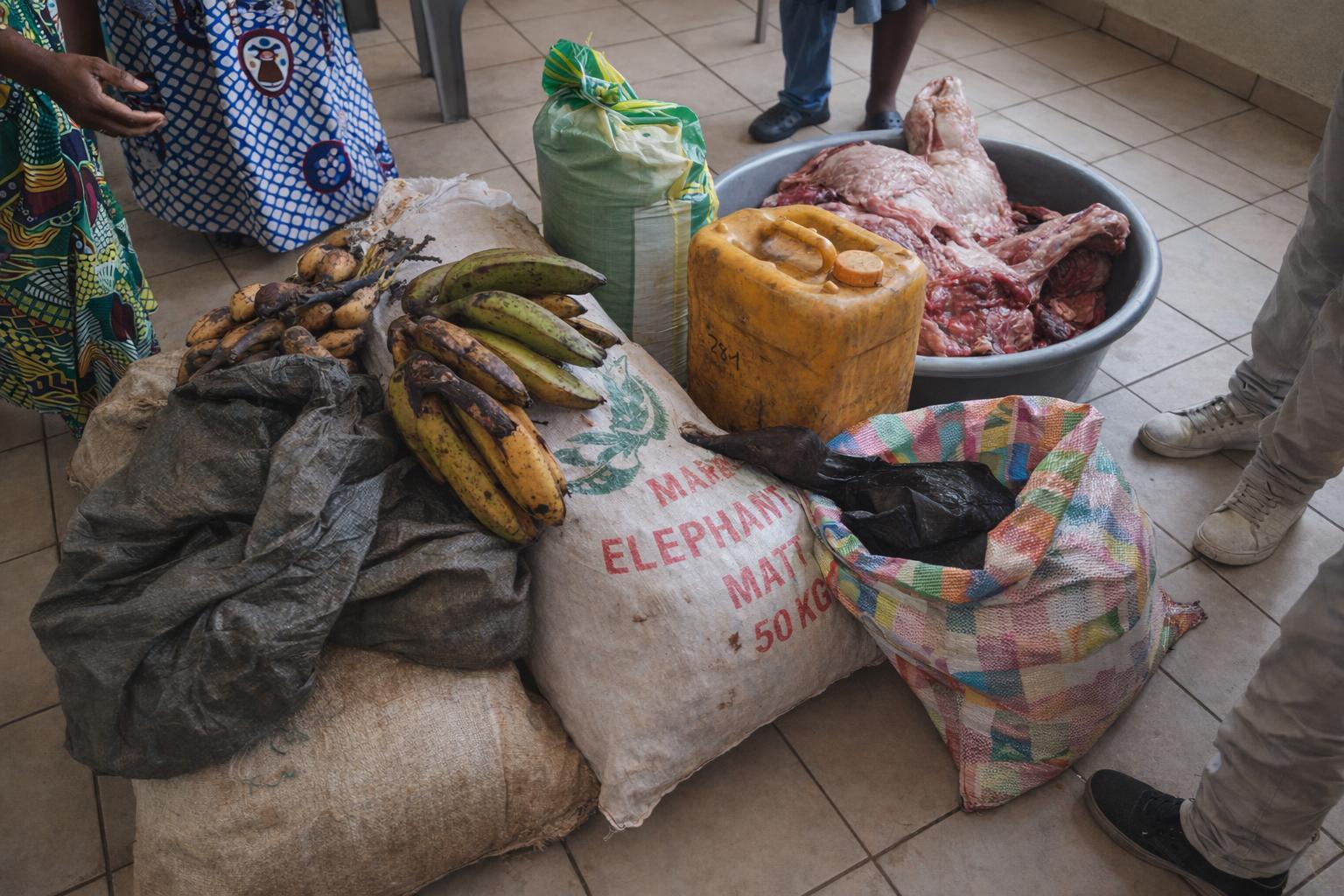
The donated items included cassava in multiple forms, bananas, potatoes, rice, beef, game meat, sheep and groundnuts. The composition of the supplies, combining staples with protein sources, was presented as an effort to provide both everyday necessities and products that can strengthen dietary intake for residents who depend on institutional care.
Madibou, Moungali, Mpila and Talangaï included
The delegation also visited the orphanage “Notre Dame de l’Annonciation” in Loua, located in the 8th arrondissement Madibou, and the Béthanie reception centre in Moungali. Additional stops included the Notre Dame de Nazareth orphanage in Mpila, in Poto-Poto’s 3rd arrondissement, and the orphanage Les Œuvres de la Foi in Talangaï, in the 6th arrondissement.
By covering several arrondissements in a single operation, the initiative underscored the importance of coordinated support to social institutions whose work is often continuous and demanding. The itinerary, as described by ACI, suggests an intention to reach both faith-linked orphanages and broader reception structures, in line with Brazzaville’s diverse social service landscape.
PCT congress momentum and the logic of solidarity
Pauline Issongo indicated that the foodstuffs distributed during the visit had been brought together by the PCT’s different federations on the occasion of the party’s 6th ordinary congress, held from 27 December 2025 to 1 January 2026. The outreach was therefore portrayed as an extension of that political moment into a social action aimed at tangible benefit.
“We thought that there are deprived elderly people and abandoned or orphaned children in need who should benefit from these food supplies,” Pauline Issongo said, explaining the rationale behind the redistribution. Her remarks placed emphasis on the immediacy of need and on the duty, as she framed it, to ensure that resources mobilised in political life can also translate into assistance for those living on the margins of household support systems.
Politics, social anchoring and a message to militants
In her statement, Pauline Issongo argued that a political party that does not engage in social action cannot consolidate durable roots. Solidarity, she added, is a value that must be expressed through concrete acts, which, in her view, justified the PCT’s early-year commitment to this type of initiative.
At the end of the tour, she also addressed party militants with a call for confidence and continued support. Cautioning against what she described as “illusions” from actors seeking to attract supporters on the eve of the presidential election, she asserted that, in Congo, the PCT remains the leading political force. She further recalled the party’s slogan, “All for the people, nothing but for the people,” presenting the donation campaign as consistent with that declared orientation.
Delegation members and institutional continuity
Alongside Pauline Issongo, the delegation included the PCT Secretary in charge of organisation and mobilisation, Faustin Elenga, and the Permanent Secretary in charge of communication and new information technologies, Parfait Iloki, according to ACI.
Their presence signalled the involvement of party structures beyond a single portfolio, suggesting that the outreach was conceived not merely as a ceremonial gesture but as an activity linked to organisational coordination. In the narrative offered by the organisers, the operation sought to connect political mobilisation with social responsiveness, reinforcing the idea that public life can be anchored in visible support for community institutions that care for children and the elderly.
