
Francophone Africa rises on MTN’s strategic radar
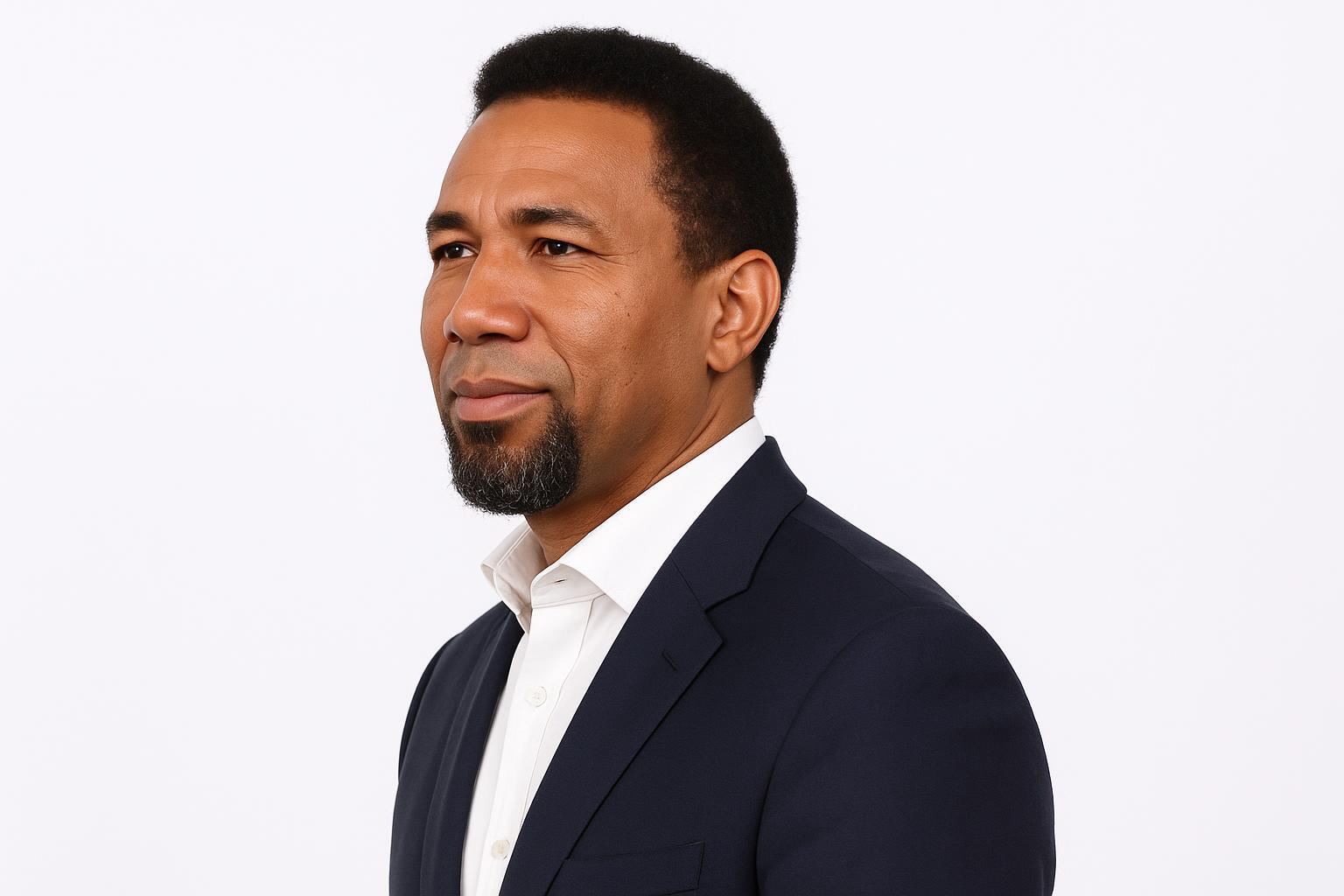
South Africa-headquartered MTN Group quietly re-ordered its corporate map last week, placing francophone Africa at the very centre of its expansion calculus. The appointment of Nigerian national Karl Toriola as vice-president in charge of these markets reflects what group president and chief executive Ralph Mupita recently called “the next frontier of sustainable growth” (MTN Group statement). In practical terms, Toriola will supervise operations in Cameroon, Côte d’Ivoire, Benin and Congo-Brazzaville, jurisdictions that together account for more than 23 percent of MTN’s subscriber base yet only 15 percent of its service revenue. Group executives see that gap as an opportunity to capitalise on rising data consumption, mobile money penetration and a favourable demographic dividend.
A technocrat with continental credentials
Toriola is no stranger to delicate market transformations. After engineering a rapid turnaround at MTN Nigeria during the pandemic, he helped the subsidiary secure a payments-service-bank licence, list on the Nigerian Stock Exchange and expand rural broadband coverage. His earlier stint as vice-president for West and Central Africa familiarised him with francophone regulatory cultures, an asset that the board believes will pay immediate dividends. “Karl blends operational rigour with geopolitical fluency, allowing him to navigate both spectrum auctions and ministerial corridors,” an adviser to the group commented on condition of anonymity. Educated at the University of Swansea and INSEAD, he brings an engineer’s precision and an investor’s eye to a portfolio now valued at 6.4 billion US dollars by Bloomberg Intelligence.
Digital dividends for Congo-Brazzaville
Brazzaville occupies a pivotal, if often understated, niche in MTN’s regional grid. With smartphone penetration inching above 40 percent, the Republic of Congo has adopted a progressive national digital plan that emphasises e-government services, fintech and cloud infrastructure. Observers in the capital note that MTN Congo’s recent partnership with the Ministry of Posts, Telecommunications and the Digital Economy to roll out 4G+ along the rail corridor between Pointe-Noire and Dolisie dovetails neatly with President Denis Sassou Nguesso’s Vision 2025, which seeks to harness digital tools for economic diversification. By tasking Toriola with overseeing Congo-Brazzaville, the group implicitly acknowledges the country’s ambition to serve as a connectivity hub between the Gulf of Guinea and the heart of Central Africa.
Competitive fault lines in Cameroon and Côte d’Ivoire
Outside Congo, Toriola inherits markets where the competitive geometry is shifting. In Cameroon, the impending arrival of Starlink’s satellite broadband and the assertive pricing strategy of local operator Nexttel have depressed average revenue per user to just 2.7 US dollars, according to GSMA Intelligence. Côte d’Ivoire presents a different challenge: a mobile money boom that has spurred regulatory scrutiny over transaction fees. Industry analysts believe Toriola’s proven ability to lobby for infrastructure-sharing agreements and his experience negotiating spectrum refarming in Nigeria will be critical. “Securing equitable wholesale rates on fibre backbones could unlock a 400-basis-point margin improvement across the cluster,” estimates Jean-Baptiste N’Guessan, telecom analyst at Abidjan-based advisory Phoenix Capital.
Investing for resilience amid macro headwinds
Currency volatility, energy shortages and security concerns in the Sahel region continue to unsettle investor sentiment toward West and Central Africa. Yet MTN has signalled willingness to double down, earmarking 1.5 billion US dollars in capital expenditure over the next three years for its francophone units. Part of that sum is destined for greenfield fibre rings in secondary cities and for expansion of MoMo, the group’s mobile money platform that already processes transactions worth the equivalent of 240 percent of Congo-Brazzaville’s GDP annually, according to the IMF. By installing a C-suite figure with boardroom gravitas and on-the-ground credibility, MTN hopes to mollify shareholders wary of exogenous shocks while assuring host governments of its long-term commitment to local content rules and tax obligations.
Board reshuffle underscores continuity
The promotion coincides with the forthcoming departure of Ferdinand Moolman, a long-time MTN stalwart who will vacate his non-executive seat at MTN Nigeria’s board on 31 October 2025 to assume the reins of MTN South Africa the following day. Market commentators view the engineering of this handover as a study in corporate choreography designed to keep institutional memory intact. “There is a methodical sequencing of transitions that aims to prevent strategic drift,” explains BofA Securities’ telecoms strategist Paul Moyo. In Lagos, where the subsidiary remains the group’s revenue anchor, the stock closed 2.3 percent higher on the day the reshuffle was announced, a modest yet telling vote of confidence.
Diplomatic overtones of a corporate move
Telecommunications increasingly intersects with sovereignty, data governance and regional integration—all themes of pressing interest to African foreign ministries and multilateral lenders. By elevating a Nigerian executive to supervise francophone territories traditionally influenced by Paris, MTN subtly reinforces the continent’s south-south commercial networks. Congolese diplomats interviewed in Addis Ababa during the recent African Union summit welcomed the symbolism, noting that it could spur cross-channel innovation between Lagos’s fintech ecosystem and Brazzaville’s nascent cloud-computing sector. Whether measured in spectrum licences, fibre miles or digital-tax regimes, the policy choices that Toriola will now negotiate matter not only for MTN’s balance sheet but also for the geopolitical choreography of Central and West Africa.
